

Most buyers walk into a negotiation thinking about one thing: the price. And that makes sense. The price is the number on the sign, the number everyone talks about. But in today's market, it is often not the most powerful lever you have.
According to Redfin, 44.7% of home sales in August 2026 included a seller concession, the highest August share on record. That means nearly half of sellers are bringing something extra to the table, whether that is help with closing costs, a rate buydown, or a repair credit. Here in Wilmington and the surrounding coastal counties, that shift is real and worth understanding before you write your next offer.
Key Takeaways
44.7% of August 2026 home sales included a seller concession, a record high for that month per Redfin
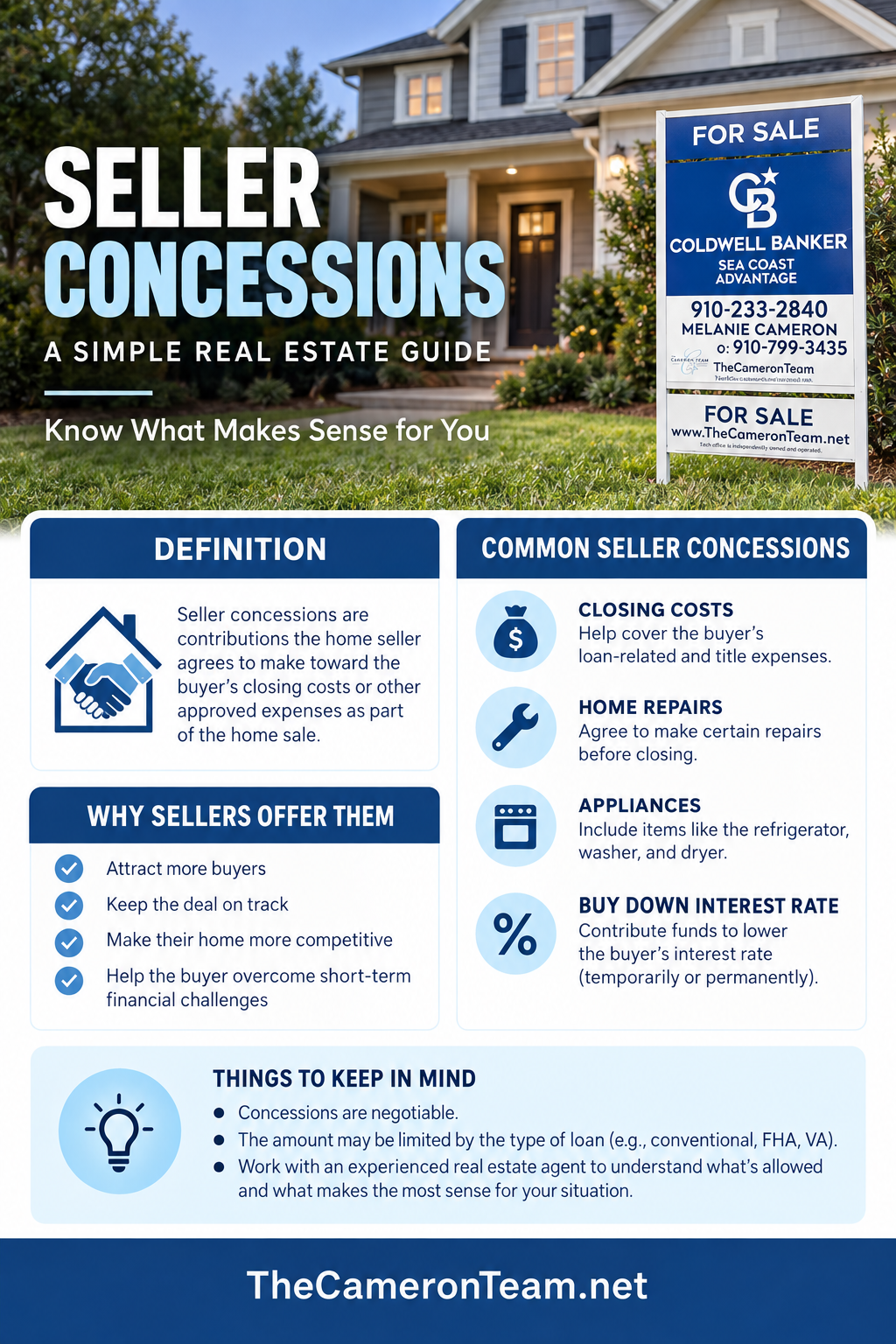
Concessions can cover closing costs, repairs, rate buydowns, appliances, and home warranties
A rate buydown often saves more per month than an equivalent price reduction
15.8% of August sales included both a price cut and a concession, showing how motivated many sellers currently are
Concession limits are set by loan type: 3% to 9% for conventional, 6% for FHA, 4% for VA
What you can realistically request depends on the property, the competition, and how long it has been sitting
New construction buyers often have access to builder concessions that resale buyers do not
What Are Seller Concessions and How Do They Work?
A seller concession is when the seller agrees to cover certain costs on your behalf at closing. It comes out of their proceeds rather than your pocket, and it shows up as a credit on your Closing Disclosure, the document that lays out every dollar changing hands.
Here is the part most buyers do not realize: a concession is not the same as a price reduction, even though both affect what the seller walks away with. A lower price shaves a little off your monthly payment. A concession can reduce what you need to bring to closing or permanently lower your interest rate, which can actually be more valuable depending on your situation.
One rule to know upfront: concessions cannot exceed your actual closing costs. Any credit beyond what you owe at closing is typically forfeited, so there is a ceiling on how much you can put to work.

What Can Wilmington-Area Buyers Ask Sellers to Pay For?
There are four main types of concessions worth knowing. Which one makes the most sense for you depends on your loan, your cash position, and how long you plan to stay in the home.
Closing-Cost Credits for Upfront Savings
Closing costs in North Carolina generally run between 2% and 4% of the purchase price. On a $450,000 home, that is anywhere from $9,000 to $18,000 due at closing, covering things like lender fees, title insurance, prepaid taxes, and homeowner's insurance.
For buyers coming to the Wilmington area, flood-zone costs add another layer: flood insurance and wind coverage in New Hanover, Brunswick, and Pender Counties can run several thousand dollars annually, and the first year's premium is often due at closing. Having the seller cover part of your closing costs can free up cash you will want to have on hand.
Repair Credits for Post-Closing Work
After your home inspection, you can ask the seller for a credit instead of requesting repairs. This gives you more control over who does the work and at what quality, though lenders sometimes require certain repairs to be completed before closing, especially on FHA and VA loans.
In this market, the inspection items that tend to generate the biggest credit conversations are:
Roof condition: Particularly important here given how insurance underwriting works along the coast
HVAC systems: An older unit at the end of its useful life is a reasonable ask
Crawl space moisture: This comes up regularly in older homes across New Hanover and Brunswick Counties
Wood-destroying insects: Termite activity is something lenders take seriously
Plumbing and electrical: Dated systems can carry real cost that buyers should not absorb silently
Rate Buydowns for Lower Mortgage Payments
This one surprises a lot of buyers, and honestly it is one of the most underused tools in a negotiation. A rate buydown is when the seller pays upfront fees, called discount points, to lower your interest rate on the loan.
There are two versions. A permanent buydown reduces your rate for the entire loan term. A temporary buydown, often structured as a 2-1 buydown, lowers the rate for the first two years before settling at the fixed rate.
Here is why this matters in real numbers. On a $450,000 home with 10% down, a $10,000 price reduction saves roughly $60 per month. That same $10,000 applied toward discount points could lower your rate by around 0.6%, saving closer to $160 per month over the life of the loan. The monthly difference is not small.
Temporary buydowns are especially common in new construction. If you are looking at communities like Brunswick Forest, RiverLights, Compass Pointe, or developments along the Topsail area, ask the builder's sales team about rate incentives directly. That conversation is worth having before you fall in love with a floor plan.
Appliances and Warranties for Move-In Costs
Sometimes a seller will offer to leave appliances, include a home warranty, or cover the first year of HOA dues. These are smaller in dollar terms but can reduce what you spend in the first few months after move-in, which matters more than people expect when you are also dealing with moving costs, furniture, and first-year maintenance surprises.
A home warranty typically runs $400 to $700 for the first year. It is not a substitute for a thorough inspection, but it can offer some peace of mind, particularly in an older home where systems are aging.
Should You Ask for a Credit, Buydown, or Lower Price?
The honest answer is: it depends on your situation. Here is a simple way to think it through:
Situation | Best Concession to Request |
|---|---|
Cash is tight at closing | Closing-cost credit |
Monthly payment feels stretched | Permanent rate buydown |
First two years are the tightest | 2-1 temporary buydown |
Inspection found real issues | Repair credit |
Staying long-term (7+ years) | Permanent rate buydown |
Short-term or uncertain horizon | Closing-cost credit or price reduction |
Before you write the offer, ask your lender to run actual scenarios. They can show you the real monthly difference between a rate buydown and a price reduction so you are working with numbers, not guesses.
How Much Can a Seller Contribute?
Concession limits are set by your loan type, not by what a seller is willing to do. If a concession exceeds the allowed amount, the extra does not go back to you. It disappears.
Conventional loans: 3% with less than 10% down; 6% with 10% to 25% down; 9% with more than 25% down
FHA loans: Up to 6% of the purchase price or appraised value, whichever is lower
VA loans: Up to 4% plus standard VA closing costs
USDA loans: Up to 6%
One thing worth flagging for buyers purchasing investment properties or second homes near the beach: conventional loan concession limits drop to 2% regardless of down payment on non-primary residences. Talk to your lender before building a concession into an offer on a Carolina Beach condo or a Topsail rental.
How Can Buyers Request Concessions Without Losing the Home?
This is the part buyers worry about most. Ask for too much and you risk the deal. Ask for nothing and you leave money on the table. The key is reading the situation correctly before you make your move.
Review the Seller's Likely Priorities
A home that just listed last Tuesday is a different conversation than one that has been sitting for 75 days. Look at whether the price has already been reduced. Check whether the home is vacant, which often signals that carrying costs are adding up. Wilmington-area homes were averaging around 56 days on market through August 2026, though that shifts by neighborhood and price point.
Confirm the Credit With the Lender
Get your actual estimated closing costs in writing before making an offer. That number sets the ceiling on what you can use. Your lender can also model buydown scenarios so you go in with real numbers rather than a rough idea.
Support the Price With Comparable Sales
A concession request paired with a price that cannot survive the appraisal creates problems. Appraisers review seller contributions as part of the transaction, and an unusually large concession relative to the purchase price can raise flags. Keep the price well-supported by recent comparable sales.
Keep the Remaining Offer Terms Competitive
A concession request paired with strong earnest money, clean financing, and practical due diligence terms is far easier for a seller to accept than one surrounded by other conditions. Focus the ask, keep everything else simple, and give the seller a clear path to yes.
What Changes Across Wilmington-Area Property Types?
Concession conversations are not one-size-fits-all. What works in a Porters Neck resale is not the same conversation you would have at a new development in Leland or a waterfront condo in Carolina Beach.
Resale Homes and Inspection Requests
North Carolina uses a due diligence period where buyers have a negotiated window to investigate the property fully. Repair credit requests typically happen during that period. Focus on high-cost items with clear documentation: roof reports, HVAC age, crawl space moisture assessments, and pest inspections. Cosmetic items are a much harder sell after a competitive offer.
New Construction and Builder Incentives
Builders in communities like St. James Plantation, Mallory Creek Plantation, and Castle Bay Country Club often package concessions through their preferred lenders rather than as price reductions. This protects the value of comparable sales within the community. Rate buydowns, closing-cost credits, and upgrade packages are common, but always compare the preferred lender's total loan costs against an outside lender. The rate may look attractive while the fees quietly offset part of the savings.
Beach, Condo, and Waterfront Properties
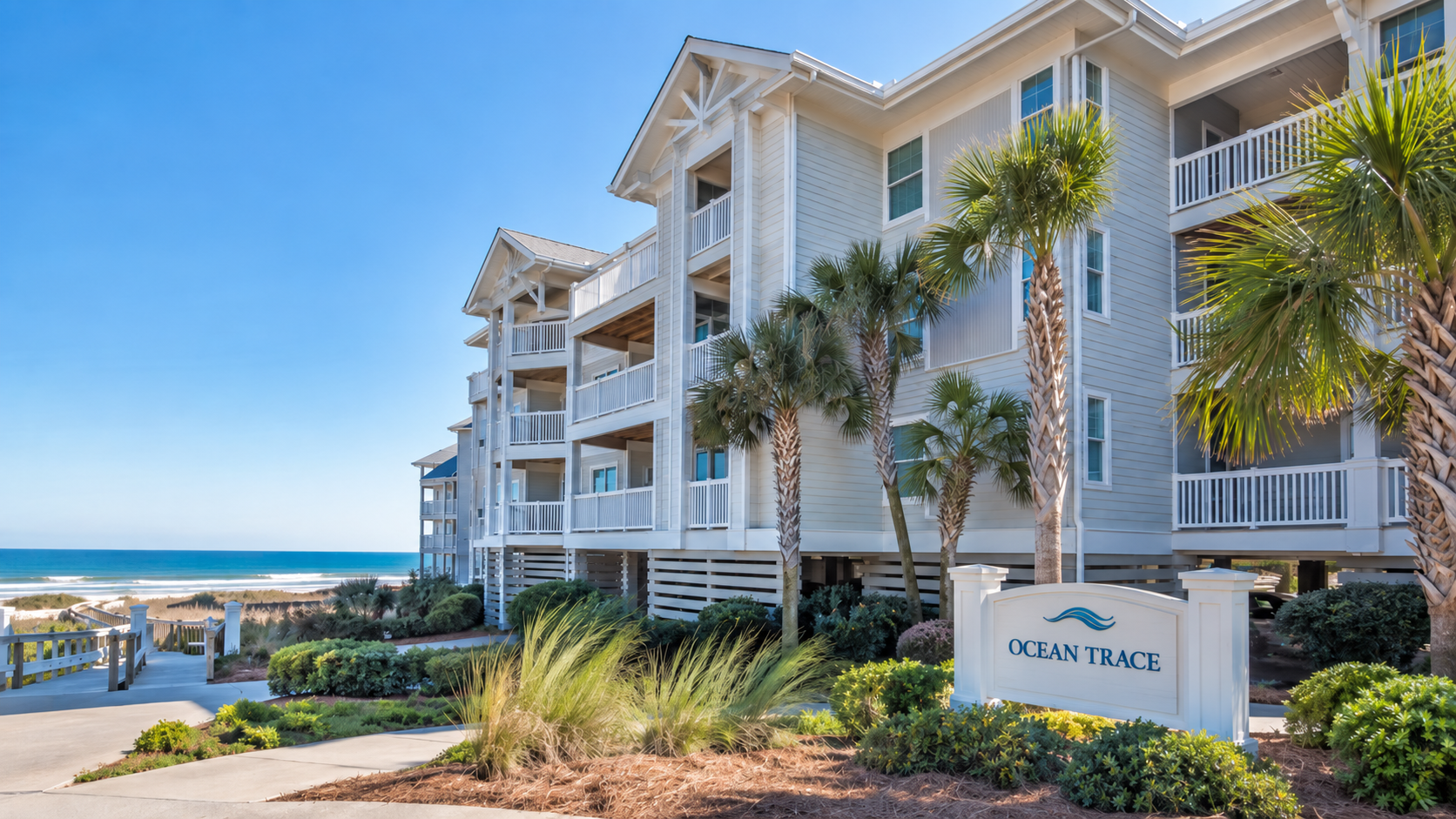
Coastal properties carry costs that catch some buyers off guard. HOA dues, flood insurance, wind and hail coverage, and reserve assessments can add thousands per year beyond the mortgage. A seller credit that offsets the first year of flood insurance or covers part of an HOA assessment is genuinely meaningful here.
Worth knowing: a 2% named-storm deductible is standard on many North Carolina coastal policies. On a home with $300,000 in dwelling coverage, that is $6,000 out of pocket per storm event. Buyers looking in Kure Beach, Surf City, North Topsail Beach, or Topsail Beach should factor that into how they think about cash reserves at closing.
Check out this article next