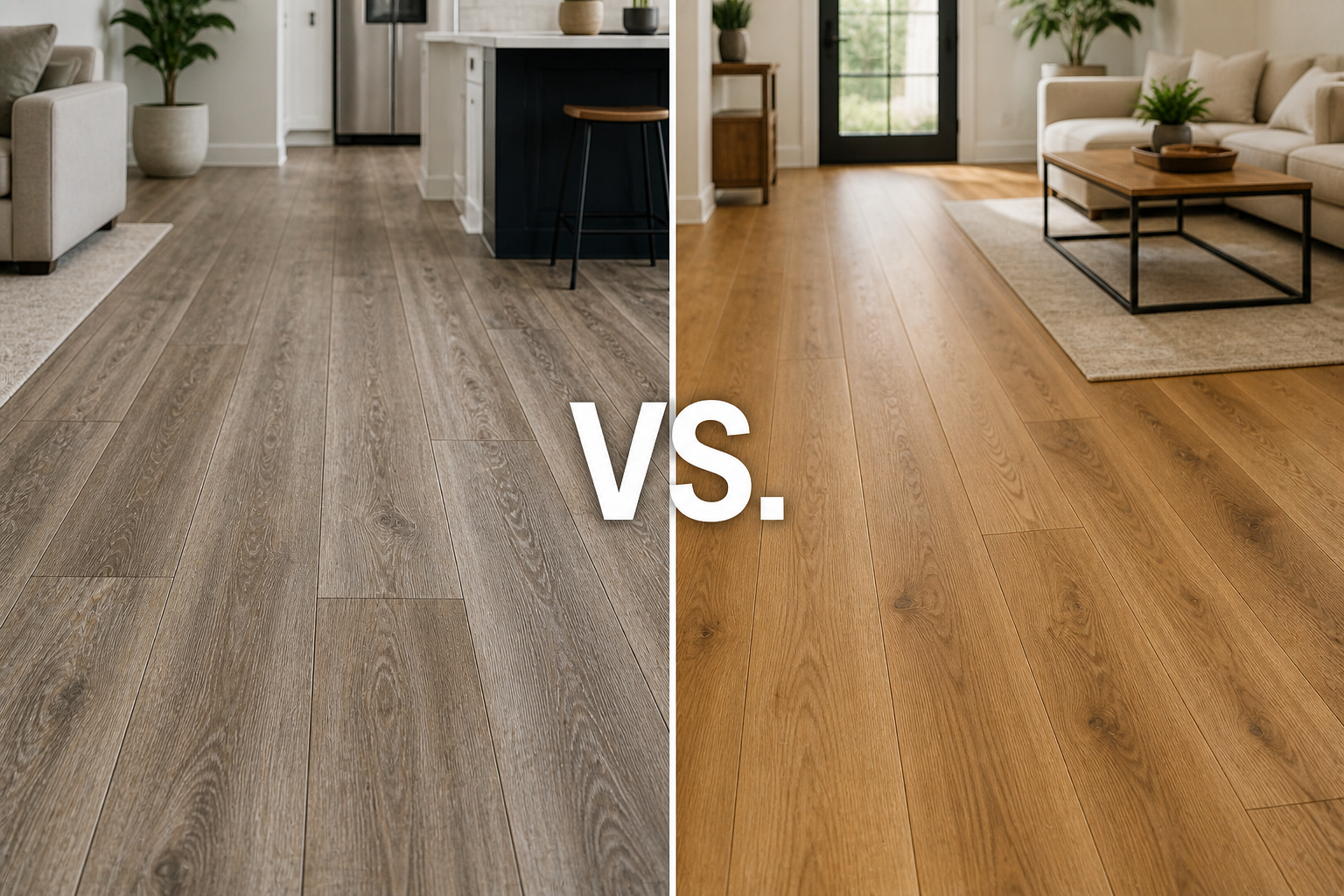
Choosing between engineered wood flooring and luxury vinyl plank (LVP) comes down to how you live, your long-term goals, and how your home handles moisture—especially in coastal areas like Wilmington, NC. Engineered wood offers the look and resale appeal of real hardwood, while LVP provides durability, water resistance, and lower maintenance. This guide breaks down the key differences, costs, and real-world performance so you can make a smart, informed decision.
What’s the Difference Between Engineered Wood and Luxury Vinyl Plank?
At a glance, both options can look similar—but they’re built very differently.
- Engineered Wood Flooring:
- Real hardwood veneer on top
- Plywood or high-density core underneath
- Can sometimes be refinished (depending on thickness)
- Luxury Vinyl Plank (LVP):
- 100% synthetic material
- Photographic layer mimics wood
- Waterproof or highly water-resistant
In simple terms, engineered wood is a real wood product. LVP is a performance-driven alternative designed to handle wear, moisture, and daily life.
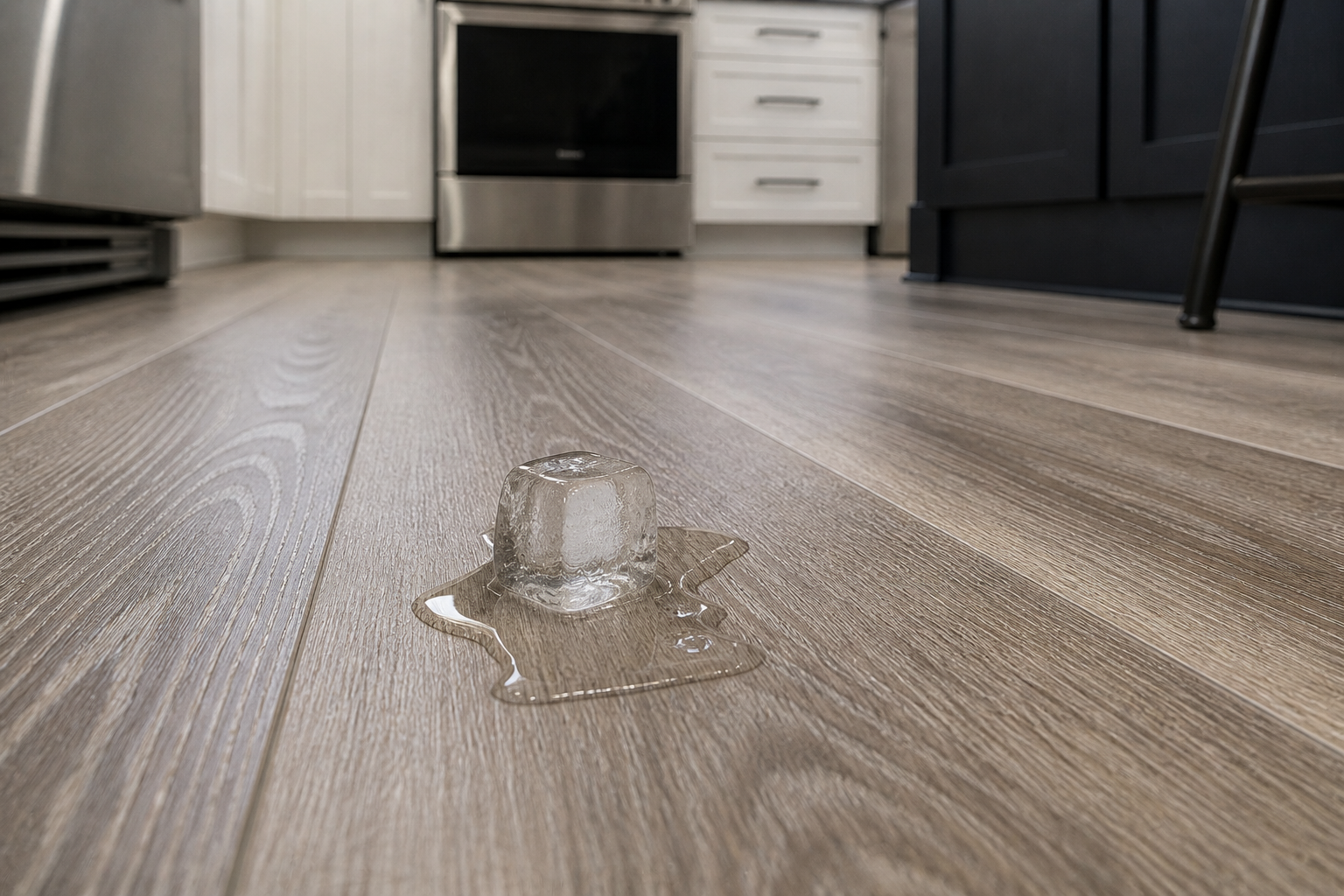
Melting Ice Cube on LVP
Which Flooring Performs Better in Coastal North Carolina Homes?
Wilmington and surrounding areas bring humidity, sand, and moisture into the equation—factors that matter more than most buyers initially realize.
Moisture Resistance
- LVP: Fully waterproof options available
- Engineered Wood: More stable than hardwood, but still sensitive to water
This is a major factor in coastal homes. High humidity, occasional flooding concerns, and day-to-day moisture (think wet feet from the beach or pool) make LVP the safer choice for many households.
Temperature and Humidity Stability
- LVP: Expands and contracts minimally
- Engineered Wood: Designed to resist warping, but still reacts to humidity
Engineered wood performs better than traditional hardwood in our climate—but LVP still wins on consistency.
Sand and Wear
- LVP: Highly scratch-resistant (especially with wear layers)
- Engineered Wood: Can scratch more easily
Living near the coast often means sand gets tracked inside. Over time, that can wear down real wood finishes faster than vinyl.
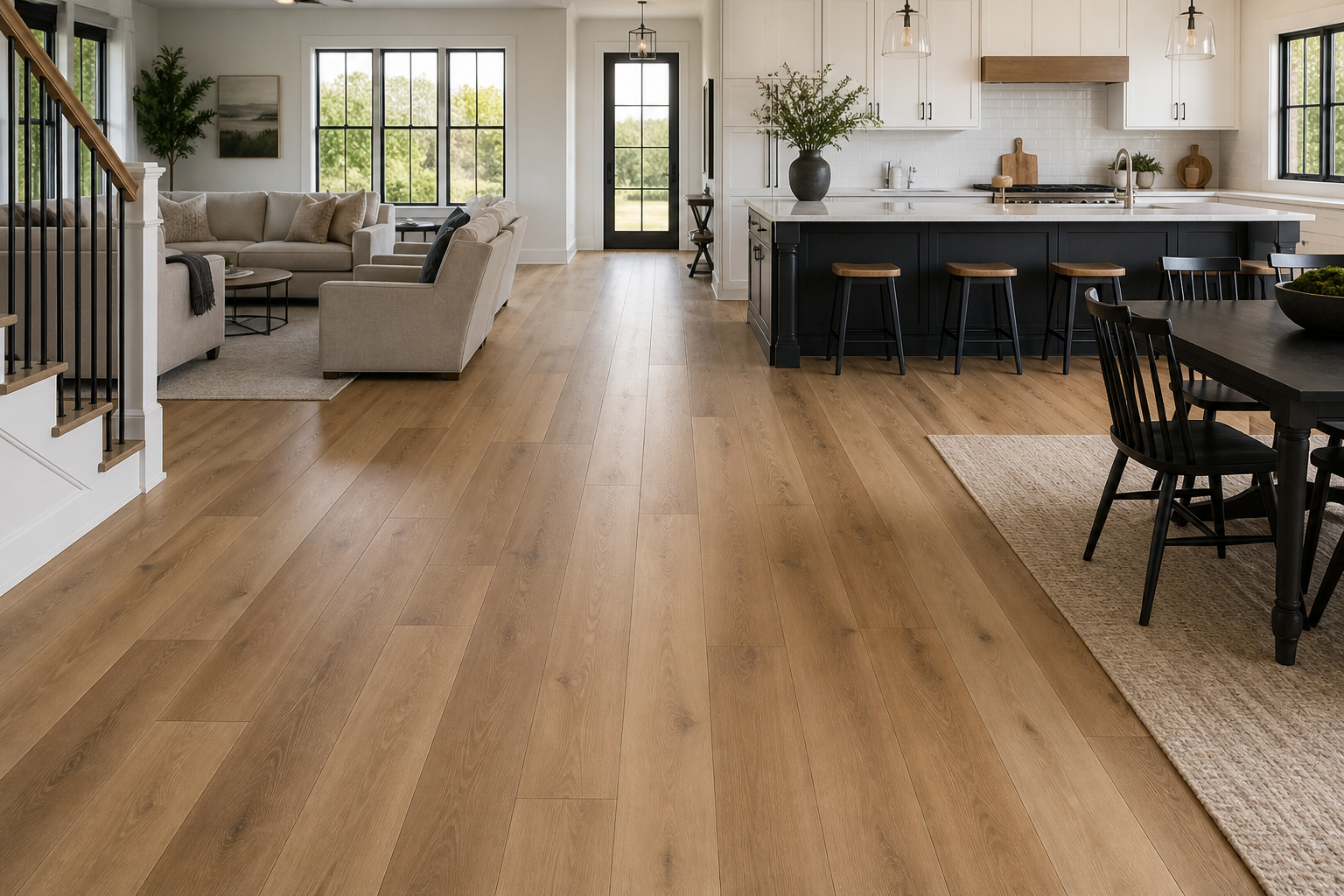
Engineered Wood Flooring
Which Option Looks Better?
This is where engineered wood has a clear advantage—at least for buyers prioritizing authenticity.
- Engineered Wood:
- Real wood grain and texture
- Unique variation between planks
- Higher-end appearance
- LVP:
- Highly realistic designs (especially newer products)
- More uniform look
Today’s LVP is significantly more convincing than it was even five years ago. However, in direct comparison, most buyers can still tell the difference.
Which Flooring Adds More Resale Value?
This is one of the most important questions for homeowners thinking ahead.
Engineered Wood and Resale
- Often perceived as a premium feature
- Appeals to buyers looking for traditional finishes
- Can help differentiate your home in higher price points
LVP and Resale
- Widely accepted in today’s market
- Seen as practical and low-maintenance
- May not command the same emotional appeal as wood
In Wilmington’s market, both options are common. However:
- Higher-end homes tend to favor engineered wood
- Mid-range and investment properties often use LVP
If you're preparing to sell in a few years, it’s worth reading this renovation strategy guide to align your upgrades with buyer expectations.
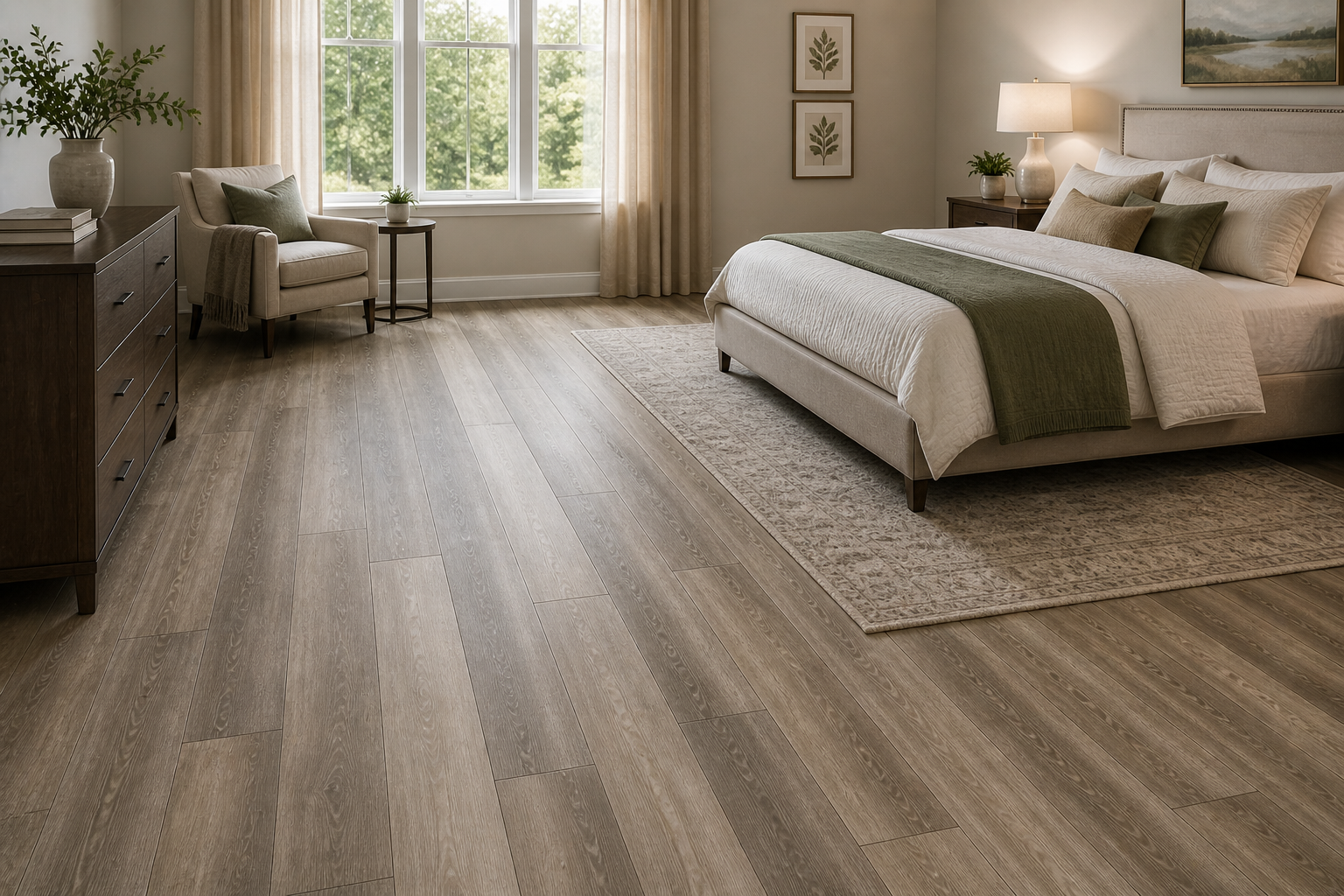
Luxury Vinyl Plank Flooring
What Are the Cost Differences?
Costs vary widely depending on quality, but here’s a realistic breakdown:
- Engineered Wood:
- $6–$12+ per square foot installed
- Higher upfront investment
- LVP:
- $3–$7 per square foot installed
- More budget-friendly overall
Keep in mind:
- Installation costs can vary depending on subfloor conditions
- Higher-quality LVP can approach engineered wood pricing
- Long-term maintenance costs are typically lower with LVP
Which Flooring Is Easier to Maintain?
Maintenance is where LVP stands out.
LVP Maintenance
- Waterproof surface makes cleaning simple
- No need for refinishing
- Resistant to stains and scratches
Engineered Wood Maintenance
- Requires more careful cleaning
- Can be damaged by standing water
- May need refinishing depending on wear layer
If your lifestyle includes pets, kids, or frequent entertaining, LVP often aligns better with daily use.
When Should You Choose Engineered Wood?
Engineered wood is the right choice when:
- You want a high-end, traditional look
- You’re in a price point where buyers expect real wood
- Moisture exposure is limited (e.g., second floors, formal spaces)
- You’re focused on long-term resale positioning
When Should You Choose Luxury Vinyl Plank?
LVP is the better option when:
- You want durability and low maintenance
- Your home deals with moisture or humidity
- You’re updating a rental or investment property
- You want a cost-effective upgrade with strong ROI
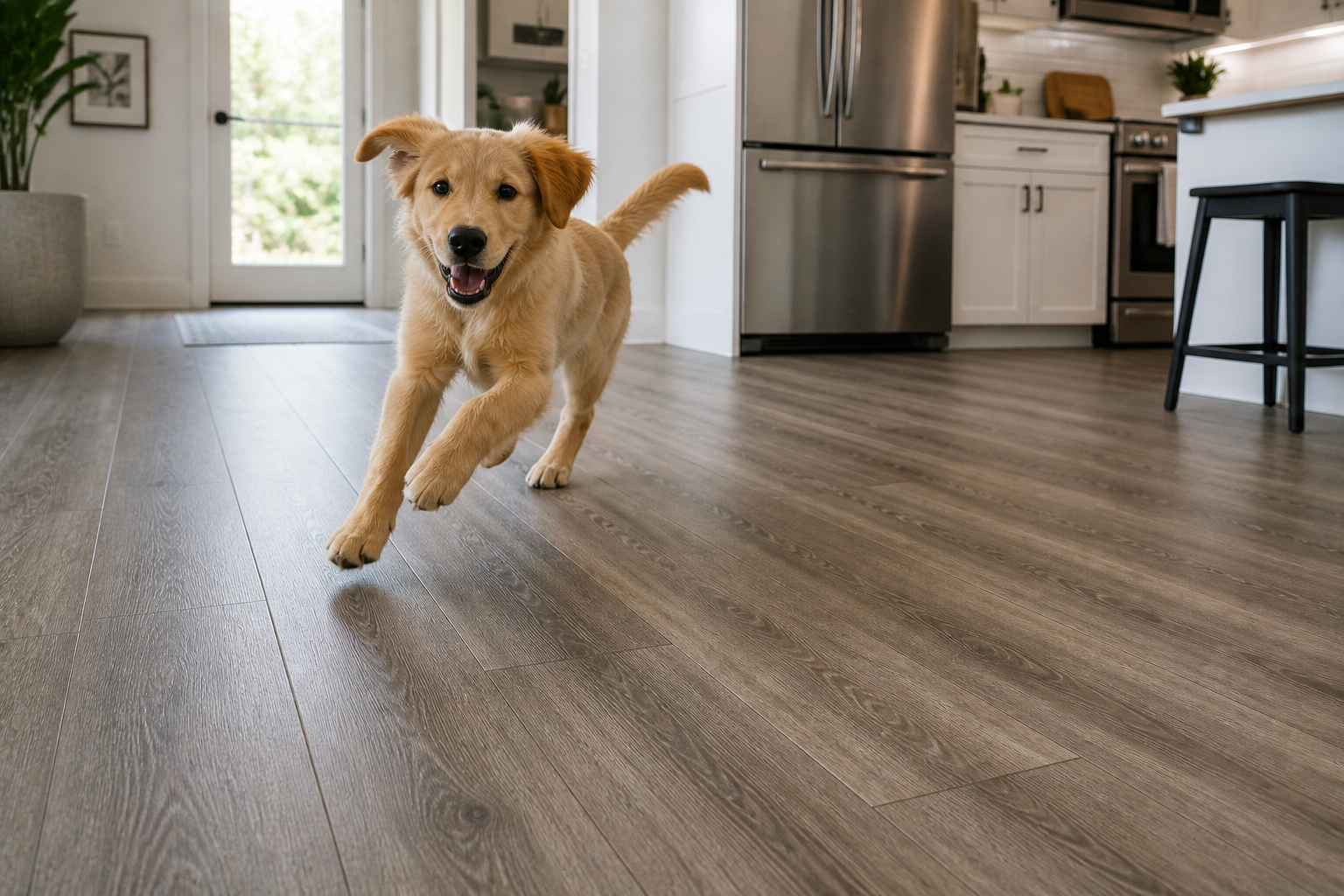
Dog Running Across LVP
Common Misconceptions About Flooring Choices
Buyers often approach this decision with assumptions that don’t hold up in real-world conditions.
- “LVP looks cheap.”
- Modern LVP can closely mimic real wood
- “Engineered wood is waterproof.”
- It’s more stable than hardwood—but not waterproof
- “Only hardwood adds value.”
- Today’s buyers often prioritize condition and durability just as much
The right choice isn’t about what’s “better” universally—it’s about what fits your home, your goals, and your market segment.
Final Takeaway: Which Flooring Is Better?
There isn’t a one-size-fits-all answer—but there is a clear framework:
- Choose engineered wood if you prioritize aesthetics and long-term resale appeal
- Choose LVP if you prioritize durability, moisture resistance, and practicality
In coastal North Carolina, many homeowners lean toward LVP for everyday living and engineered wood for select spaces where appearance matters most.
If you’re unsure how your flooring choice could impact resale, buyer perception, or timing, it’s worth reviewing this guide on long-term home strategy before making a decision.
Check out this article next