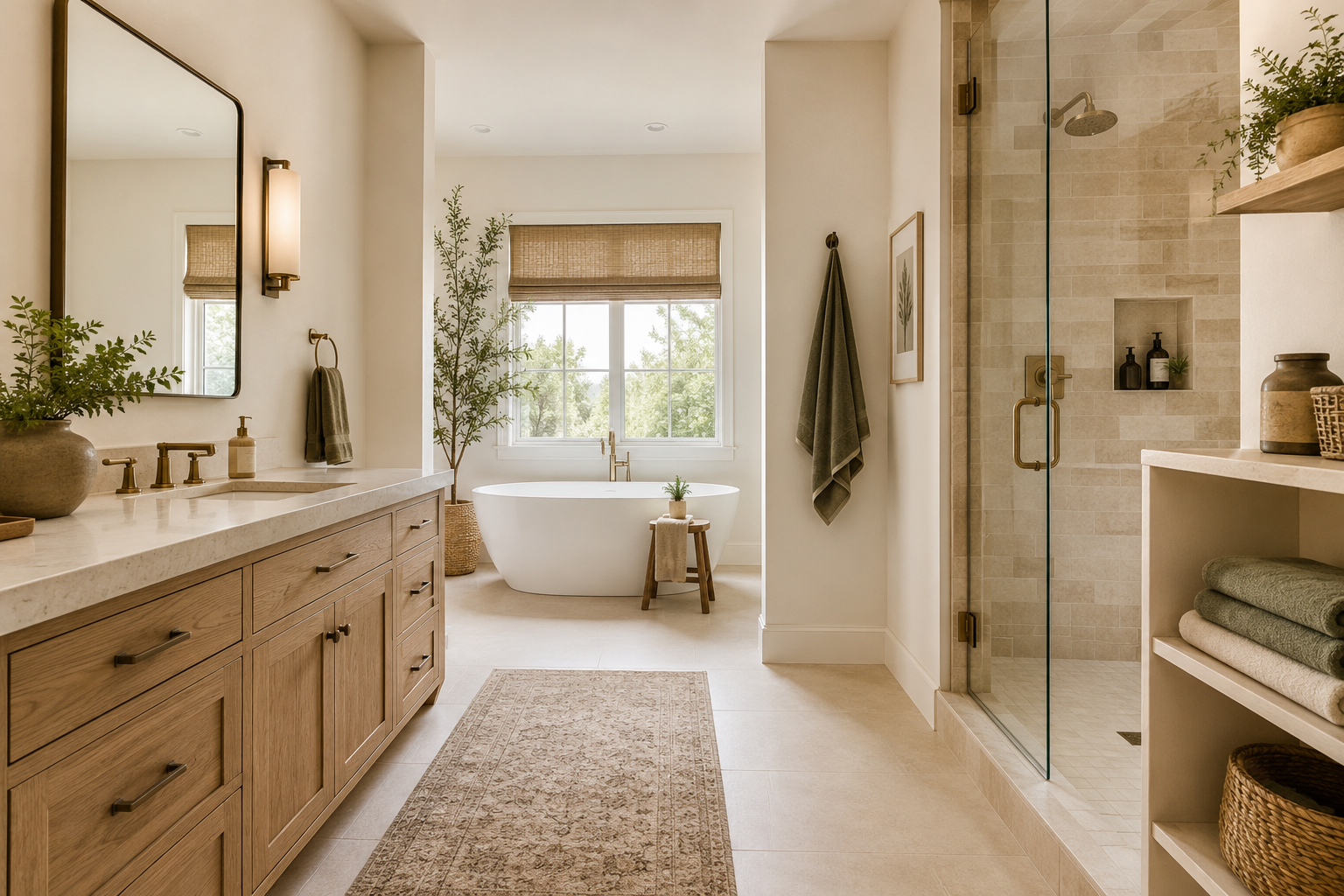
- Best colors: Clay, sand, mushroom, taupe, warm white, olive, cocoa, stone gray, muted sage, and soft charcoal.
- Best materials: Porcelain tile, ceramic tile, sealed natural stone, wood-look finishes, linen, cotton, rattan, teak, and brushed metals.
- Best coastal NC strategy: Choose finishes that look natural but can handle humidity, frequent use, and easy cleaning.
- Best resale approach: Keep permanent finishes warm, neutral, and broadly appealing; use stronger earth tones in towels, art, trays, rugs, and paint.
- Best upgrade order: Start with lighting and textiles, then update hardware, mirrors, faucets, tile, vanity surfaces, and ventilation as budget allows.
Please note: The Cameron Team has not been paid or received any other compensation to include any of the products featured on this post, but the author has included affiliate links and content. If you click on a link, they may earn a commission – a high-five for great content!
What Is an Earth Tone Bathroom Design?
An earth tone bathroom design is built around colors and textures found in the natural landscape. Instead of bright white, cool gray, or high-contrast black-and-white schemes, earth tone bathrooms lean into warmth, softness, and organic texture.
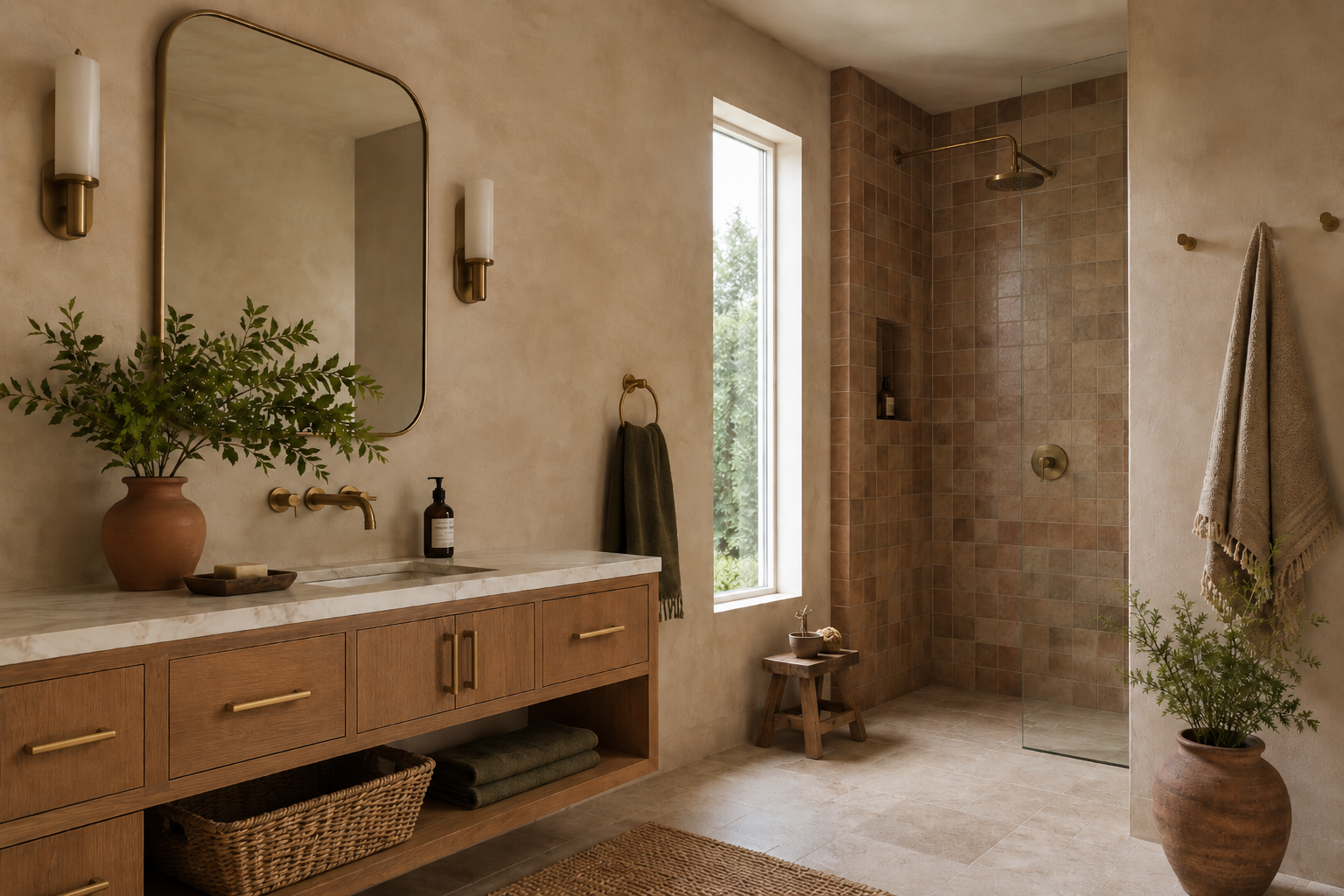
In practical terms, that might mean a bathroom with sandy tile, a mushroom-colored vanity, a champagne bronze faucet, terracotta towels, a teak stool, and a warm white wall color. It may also mean a more dramatic look with clay tile, deep olive cabinetry, stone countertops, and soft amber lighting.
Earth Tone Bathroom
Which colors count as earth tones?
Earth tones are not limited to brown. They include a wide range of natural, grounded colors that work especially well in bathrooms because they feel calm and livable.
- Warm neutrals: Sand, cream, oatmeal, beige, flax, ivory, and warm white
- Clay tones: Terracotta, rust, muted coral, paprika, and burnt sienna
- Stone tones: Greige, mushroom, taupe, limestone, slate, and warm gray
- Wood tones: Oak, walnut, teak, driftwood, and medium brown
- Green tones: Olive, moss, eucalyptus, sage, and muted forest green
- Deep grounding colors: Cocoa, espresso, charcoal brown, and blackened bronze
For more background on how color can influence the way a home feels to buyers, see The Psychology of Color in Home Design.
Why Do Earth Tone Bathrooms Work Well in Wilmington, NC Homes?
Wilmington homes often sit at the intersection of coastal style, everyday function, and resale awareness. Earth tone bathrooms fit that mix because they feel natural without leaning too heavily into a theme.
A bathroom does not need seashell wallpaper or navy-and-white stripes to feel appropriate for coastal Southeastern North Carolina. In many homes, a warm sand, clay, stone, or driftwood palette feels more timeless because it reflects the local environment in a softer way.
What makes earth tones a strong coastal design choice?
- They complement natural light. Warm neutrals can soften bright coastal sunlight instead of making a bathroom feel stark.
- They work with many home styles. Earth tones can suit beach cottages, brick ranches, new construction homes, townhomes, and luxury properties.
- They photograph well. Warm, neutral bathrooms tend to look inviting in listing photos when the lighting and finishes are balanced.
- They age better than extreme trends. A clay towel is easy to change; a very bold permanent tile choice is a bigger commitment.
- They pair well with coastal textures. Rattan, linen, teak, white oak, and woven baskets all look natural in earth tone palettes.
This is similar to the approach behind Coastal Boho home decor, where natural materials and relaxed textures help a space feel connected to the coast without becoming overly themed.
Earth Tone Bathroom
Which Earth Tone Bathroom Palette Should You Choose?
The best palette depends on the bathroom’s size, natural light, existing finishes, and whether you are decorating for yourself or preparing to sell. Earth tones can feel bright and spa-like, rich and dramatic, or soft and minimal.
What is the safest earth tone palette for resale?
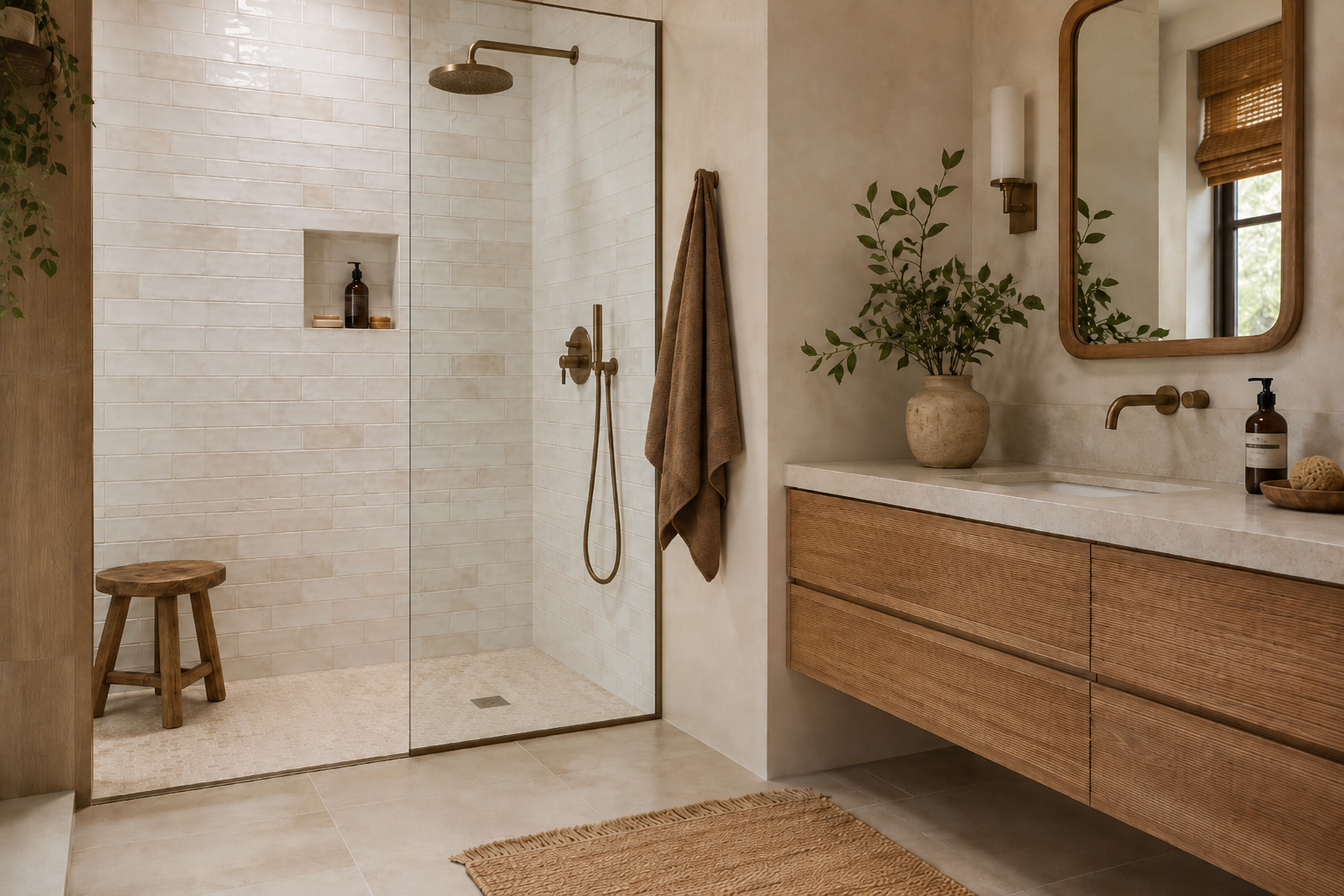
For resale, the safest earth tone bathroom palette is warm neutral with subtle contrast. This keeps the room appealing to a wide range of buyers while still feeling more current than plain white or builder-grade gray.
- Walls: Warm white, soft beige, light greige, or pale mushroom
- Vanity: White oak, warm taupe, soft gray-beige, or muted olive
- Tile: Sand, limestone, travertine-look porcelain, or warm white ceramic
- Hardware: Champagne bronze, brushed nickel, aged brass, or matte black in small doses
- Accessories: Terracotta towels, woven baskets, a stone tray, and simple greenery
This type of palette is especially useful when you want a bathroom to feel updated but not overly personal. It gives buyers a finished look while still allowing them to imagine their own towels, art, and decor in the room.
What palette feels more modern and design-forward?
For a more custom look, use deeper earth tones with strong texture. This works especially well in powder rooms, primary bathrooms, and guest baths where you want a little more personality.
- Walls: Limewash-look beige, clay, deep taupe, or warm plaster tones
- Vanity: Walnut, dark oak, olive green, or espresso-stained wood
- Tile: Terracotta-look ceramic, zellige-look tile, handmade-look subway tile, or stone mosaic
- Lighting: Warm bulbs around 2700K to 3000K for a flattering glow
- Accents: Bronze mirror, linen shower curtain, amber glass, and natural wood stool
For inspiration on using natural textures in a coastal home without making the design feel too literal, see Modern Coastal Decor.
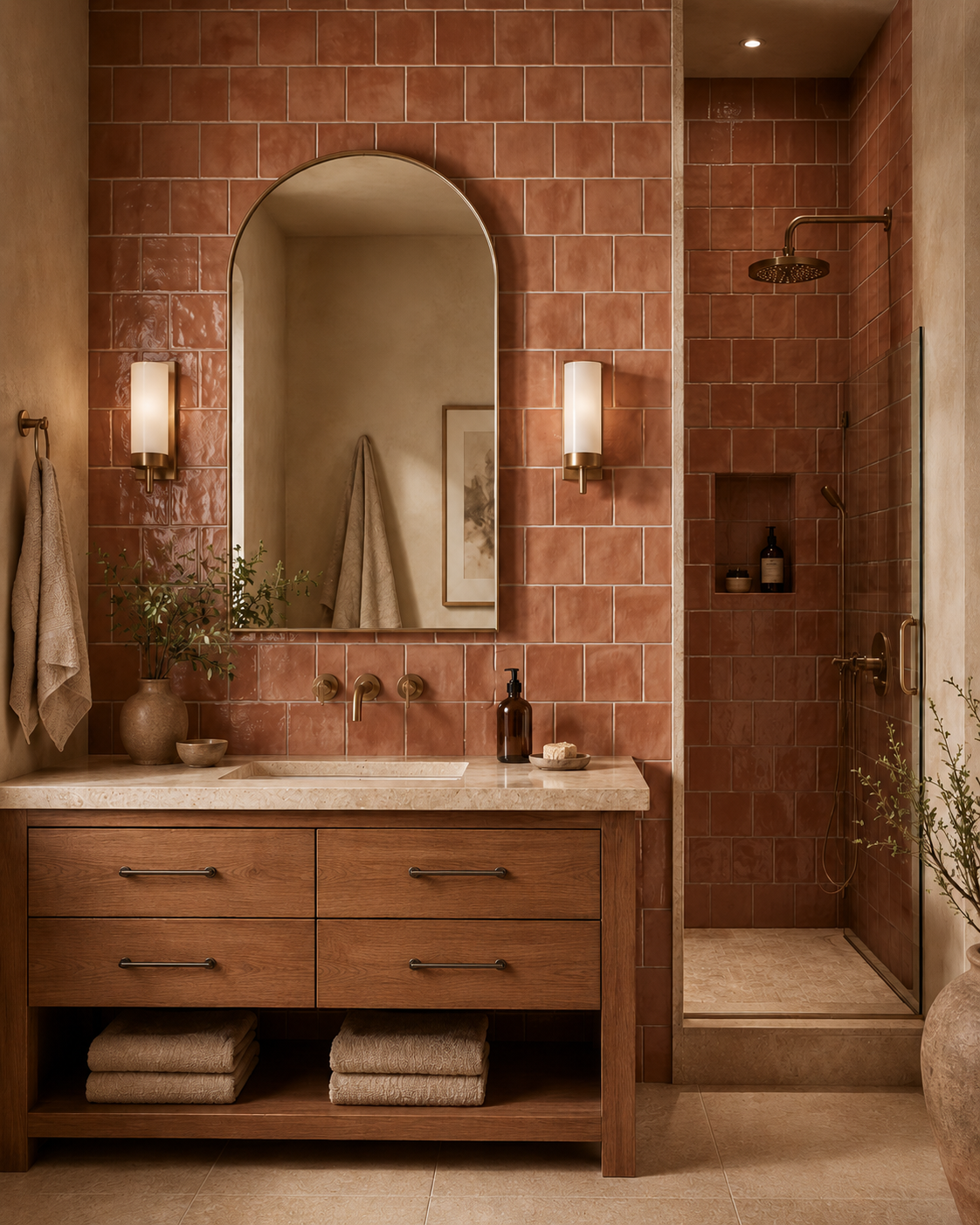
Montauk Terracotta 4x4 Mixed Finish Ceramic Tile - Earth Tone Bathroom
What Tile Works Best in an Earth Tone Bathroom?
Tile is one of the most important choices in a bathroom because it affects style, cleaning, durability, and long-term value. In an earth tone bathroom, tile should add texture without making the room feel too busy.
Which tile colors are easiest to live with?
- Sand: Works well on floors and shower walls because it hides light dust and water spots better than bright white.
- Warm white: Keeps small bathrooms feeling open while still pairing well with wood and bronze accents.
- Taupe: Adds depth without feeling dark, especially in larger bathrooms.
- Clay or terracotta: Best used as an accent, floor, niche, or powder room feature if you want stronger color.
- Stone gray: Works when it has warm undertones; avoid icy gray if the rest of the bathroom is earthy.
Which tile styles fit the earth tone look?
- Zellige-look tile: Adds handmade character through uneven-looking surface variation.
- Terracotta tile: Adds warmth and Mediterranean character.
- Travertine-look porcelain: Offers a natural stone appearance with easier maintenance than many real stone products.
- Stacked subway tile: Feels cleaner and more modern than a traditional offset pattern.
- Pebble or stone mosaic: Works best in small doses, such as a shower floor or niche.
Design tip: In coastal NC bathrooms, confirm that shower tile, grout, and sealants are suitable for wet areas. Natural materials can be beautiful, but bathrooms need finishes that can handle moisture and regular cleaning.
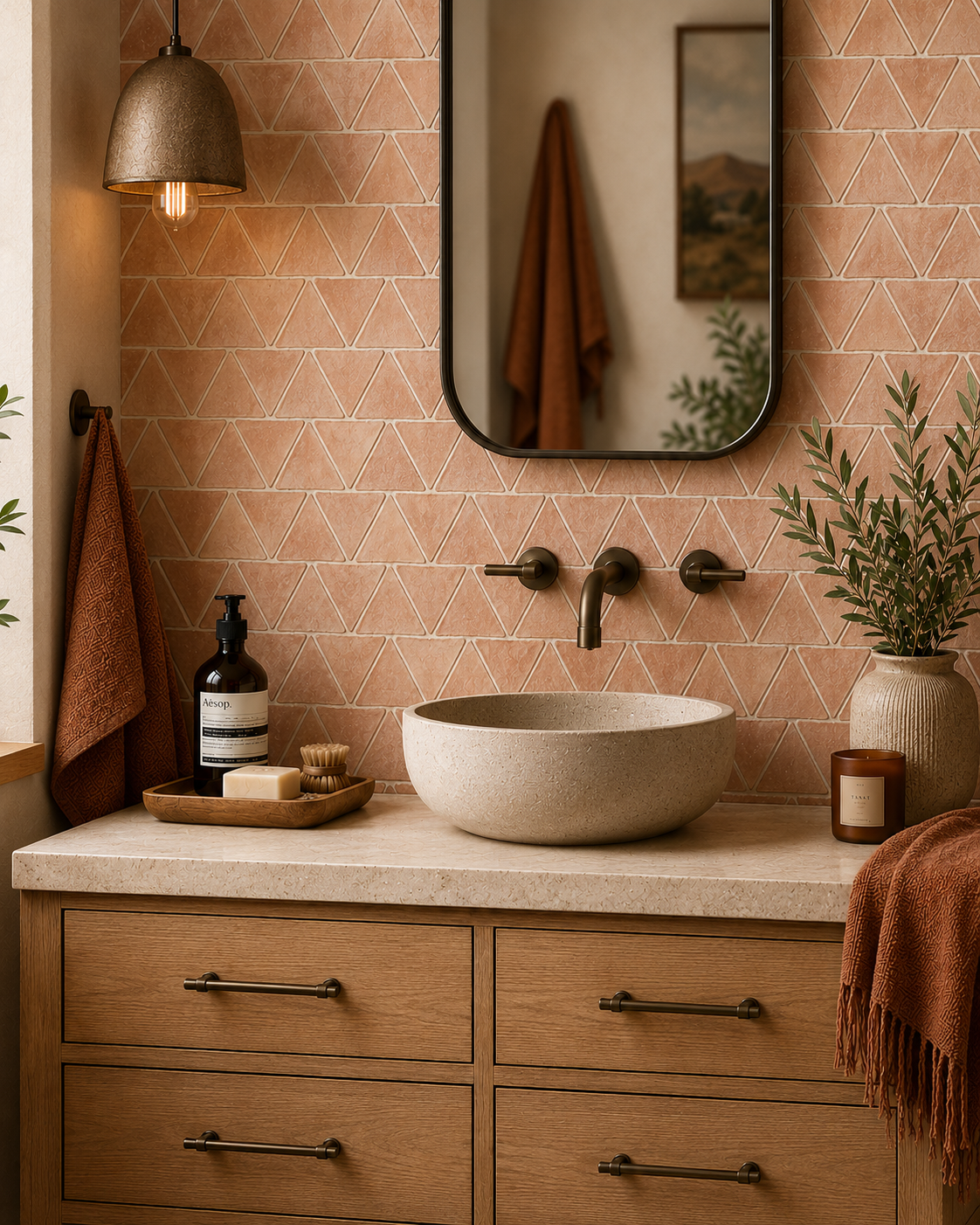
Terra Villa Sand Beige 6" Triangle Matte Presealed Genuine Terracotta Tile - Earth Tone Bathroom
Should You Use Real Stone or Stone-Look Materials?
Real stone can be beautiful, but it usually needs more maintenance than porcelain or ceramic. That matters in Wilmington and nearby coastal communities, where bathrooms may already work harder because of humidity, sandy feet, wet towels, and frequent guest use.
When does real stone make sense?
- You are comfortable with sealing and maintenance.
- The stone is installed by a qualified professional.
- The bathroom has strong ventilation.
- The stone is used in a lower-splash area, such as a vanity backsplash or accent wall.
- You want a luxury look and understand the care requirements.
When is stone-look porcelain the better choice?
- You want easier cleaning.
- You are updating a rental, vacation property, or frequently used guest bath.
- You are preparing a home for sale and want broad buyer appeal.
- You like the look of travertine, limestone, or slate but not the upkeep.
- You want a consistent product that is easier to source and replace.
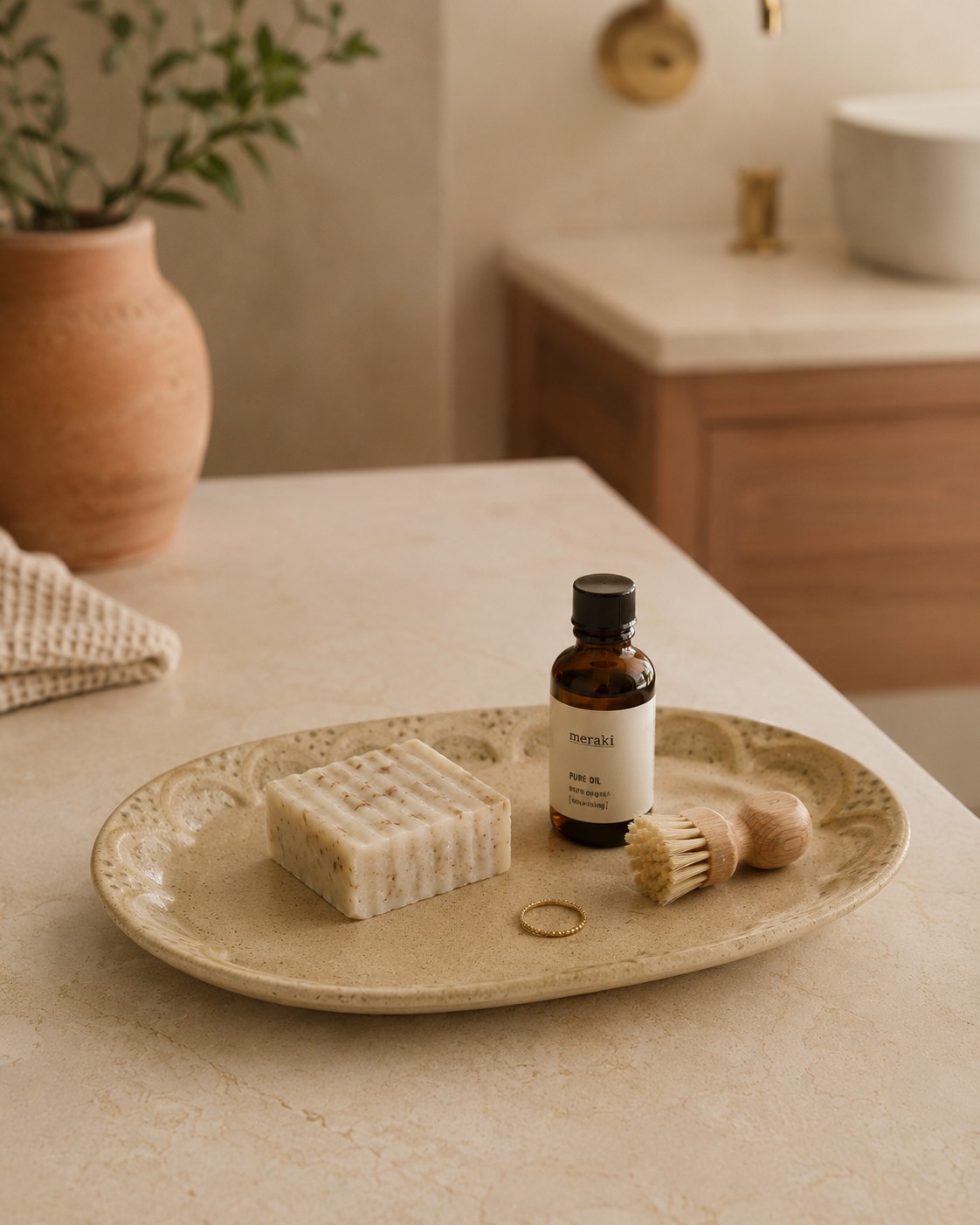
Terracotta Bathroom Tray from Zara Home - Earth Tone Bathroom
For smaller accents, a real stone accessory can provide the look without the commitment. A terracotta bathroom tray or a travertine tray can warm up a vanity without changing the permanent finishes.
What Vanity Colors Work with Earth Tone Bathroom Designs?
The vanity often sets the tone for the whole bathroom. In an earth tone design, the goal is to avoid finishes that feel too cold, too glossy, or too disconnected from the rest of the room.
Which vanity finishes are most versatile?
- White oak: Light, warm, and current without feeling heavy.
- Natural walnut: Richer and more dramatic, especially with creamy tile and brass fixtures.
- Mushroom paint: A soft gray-brown that works with both warm and cool elements.
- Muted olive: A stylish color that still reads natural, especially in powder rooms and guest baths.
- Warm taupe: A resale-friendly option that adds color without feeling risky.
What countertop colors pair well with earth tones?
- Warm white quartz: A clean choice that does not fight with clay, wood, or bronze accents.
- Beige quartz: Softer than white and helpful if the bathroom has warm tile.
- Marble-look quartz: Works best when the veining is warm gray, taupe, or beige.
- Honed stone: Beautiful, but check maintenance needs before using it in a wet bathroom.
Resale note: If you are renovating before listing, avoid highly unusual vanity colors unless the rest of the home supports that design direction. A warm neutral vanity with updated hardware is usually easier for buyers to accept than a very bold statement color.
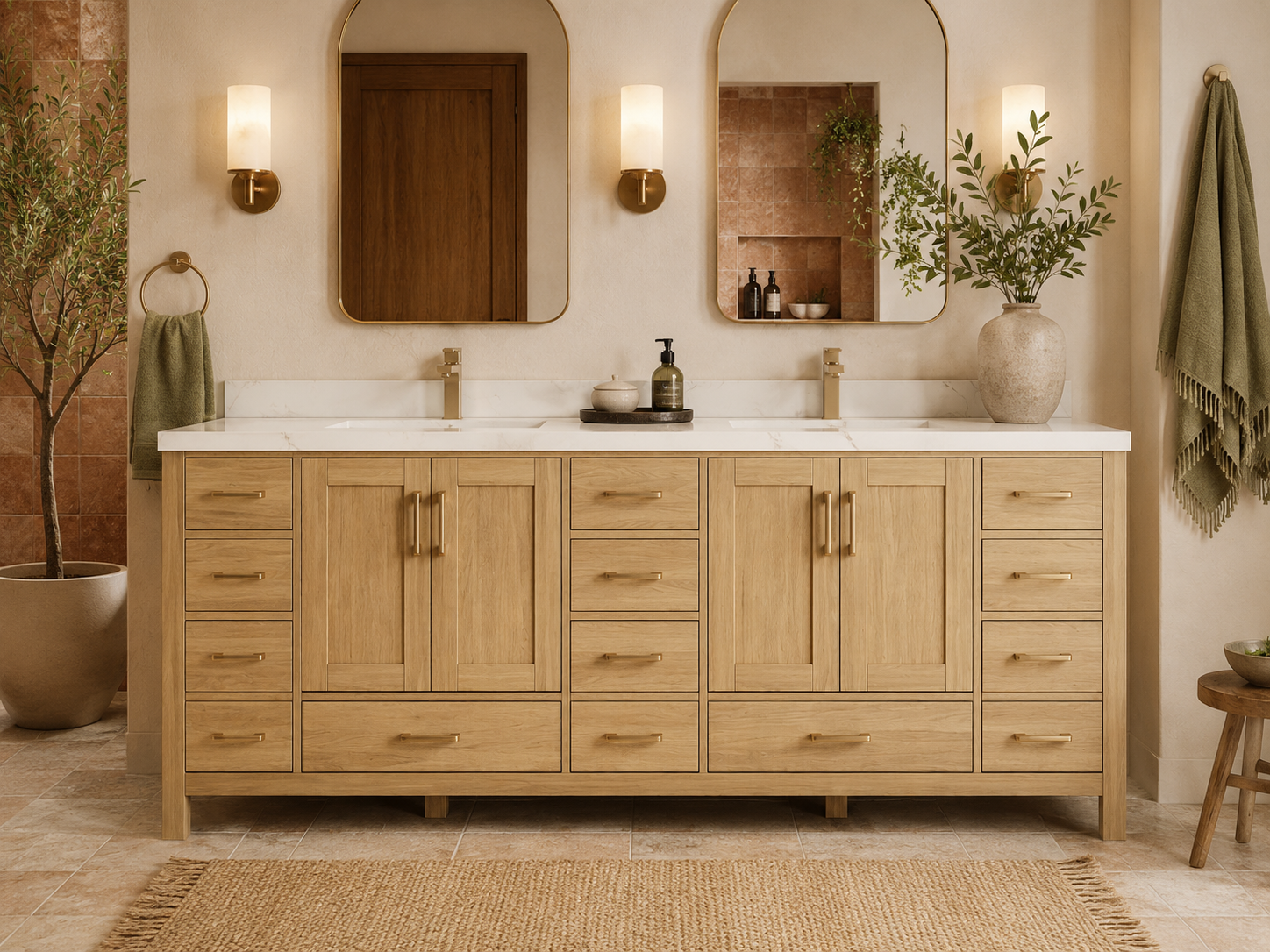
Malibu White Oak Double Sink Vanity - Earth Tone Bathroom
Which Fixtures and Hardware Look Best with Earth Tones?
Fixtures are one of the easiest ways to make an earth tone bathroom feel intentional. The right metal finish can warm up tile, connect to lighting, and make a simple vanity look more polished.
What metal finishes pair well with earth tones?
- Champagne bronze: Warm, soft, and less yellow than bright brass.
- Aged brass: Works well with vintage-inspired, organic, or traditional bathrooms.
- Oil-rubbed bronze: Adds contrast and depth, especially with cream or travertine-look tile.
- Matte black: Best as a controlled accent so the room does not become too high-contrast.
- Brushed nickel: A safe option when the home already has cooler finishes nearby.
For a warm faucet option, see the Delta Chamberlain Widespread Bathroom Faucet in Champagne Bronze. For a single-handle style, the Delta Arvo Single-Hole Bathroom Faucet in Champagne Bronze has a simpler profile.
Should all bathroom metals match?
They do not have to match exactly, but they should look coordinated. A good rule is to use one dominant finish and one supporting finish.
- Simple approach: Use the same finish for faucet, towel bars, robe hooks, and cabinet pulls.
- Layered approach: Use bronze for plumbing fixtures and black for mirror frames or lighting.
- Existing-home approach: If the shower door is brushed nickel, choose brushed nickel or mixed-metal lighting that ties it together.
Design tip: Mixing metals works best when it looks deliberate. Randomly combining chrome, black, bronze, and brass in one small bathroom can make the room feel unfinished.
How Can You Add Earth Tones Without Remodeling the Bathroom?
You do not need a full renovation to create an earth tone bathroom. In fact, many bathrooms can shift dramatically with paint, linens, hardware, lighting, and accessories.
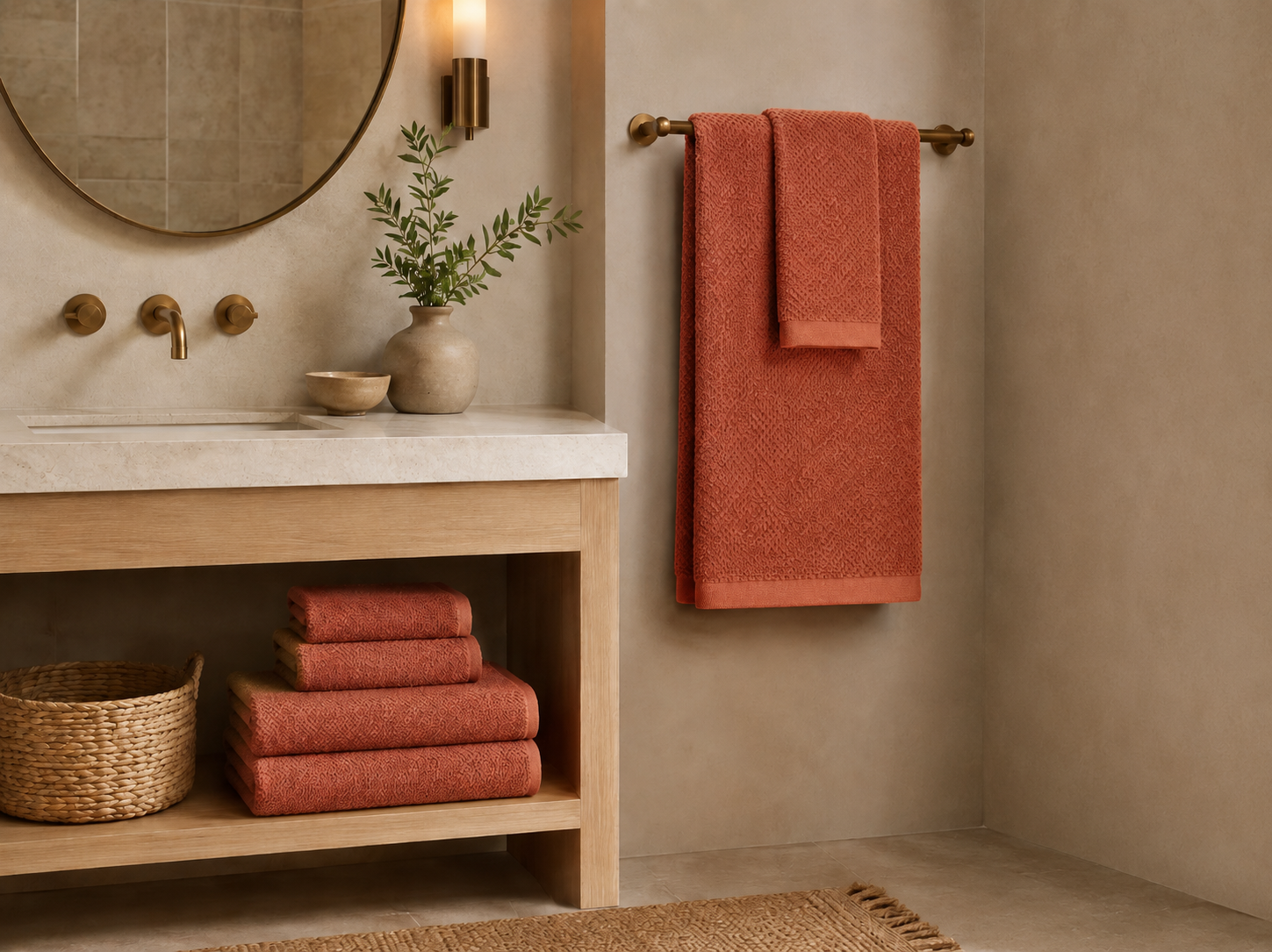
Under The Canopy’s Textured Organic Cotton Towel in Terracotta - Earth Tone Bathroom
What are the easiest earth tone bathroom updates?
- Swap white towels for clay, olive, sand, or cocoa.
- Add a warmer bath mat. A terracotta, sand, or taupe bath rug can soften cool tile.
- Use a wood or stone tray. Place one on the vanity to organize soap, lotion, and a small vase.
- Replace the mirror. Choose a wood, bronze, or softly rounded frame instead of a frameless builder mirror.
- Install warmer bulbs. Harsh cool lighting can make beige tile look dingy; warm white lighting is usually more flattering.
- Add woven storage. Baskets can hold extra towels, toilet paper, or bath products while adding texture.
- Use simple greenery. A humidity-tolerant plant or realistic faux stem can bring in a natural element.
What is a good no-renovation starter plan?
If you want the look without committing to tile or cabinetry, start with this simple sequence:
- Step 1: Remove overly bright, mismatched, or worn accessories.
- Step 2: Choose one main earth tone, such as clay, olive, or sand.
- Step 3: Add towels and a bath mat in that color family.
- Step 4: Add one natural texture, such as teak, rattan, linen, or stone.
- Step 5: Upgrade the mirror or light fixture if the existing one dates the room.
- Step 6: Reassess before spending money on permanent materials.
For more on decorating with purpose instead of chasing every new trend, read The Rise of Intentional Home Decor.
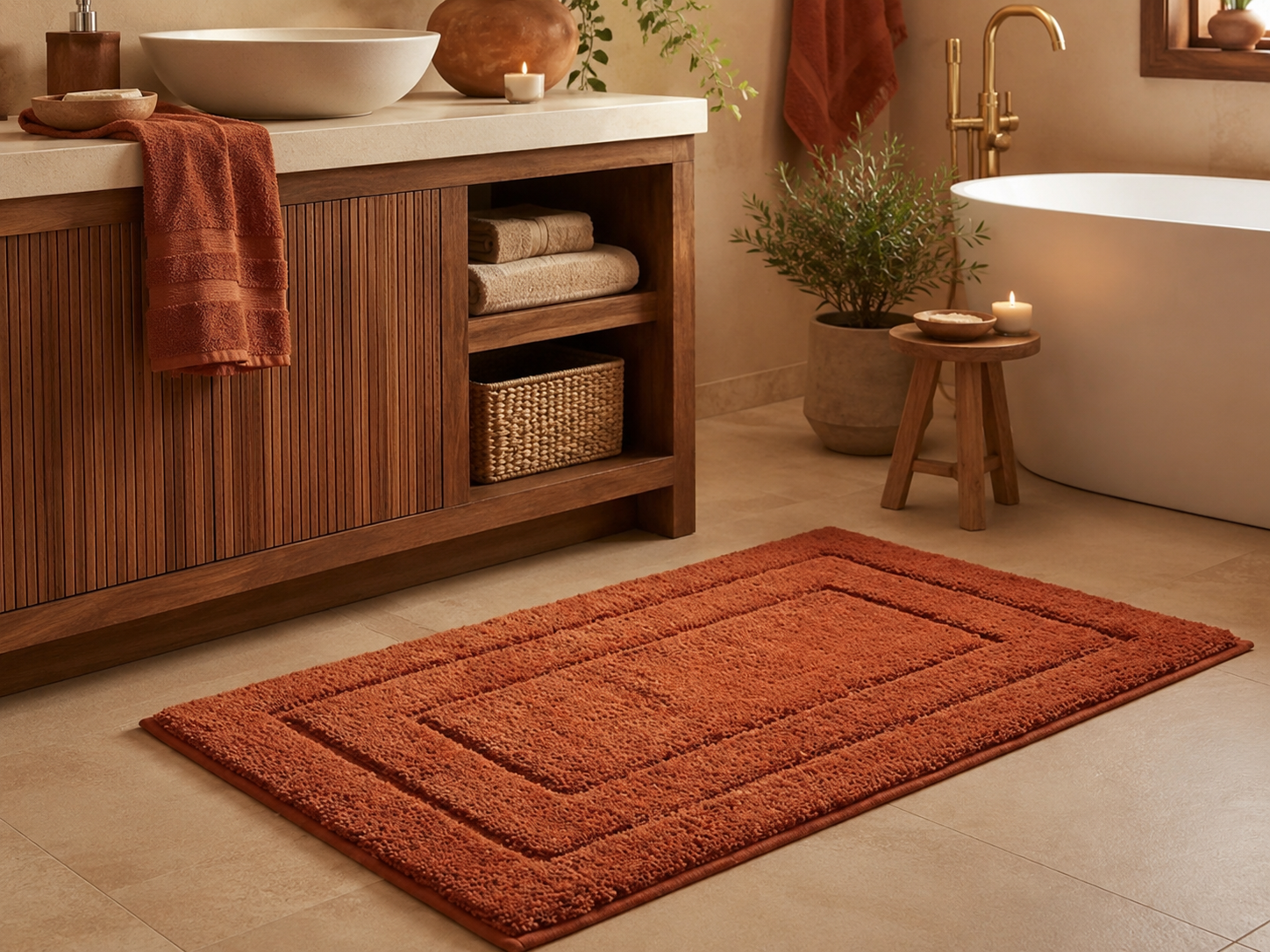
Granny Says Terracotta Bathroom Rug - Earth Tone Bathroom
What Lighting Makes an Earth Tone Bathroom Look Best?
Earth tones rely heavily on good lighting. The wrong bulb can make warm beige look yellow, olive look muddy, and terracotta look too orange.
What light temperature should you use?
- 2700K: Warm and cozy; best for powder rooms or bathrooms where atmosphere matters most.
- 3000K: Warm but clearer; often a good balance for everyday bathrooms.
- 3500K: More neutral; can work if the bathroom has limited natural light.
- 4000K and above: Usually too cool for earth tone bathrooms unless there is a specific reason to use it.
What lighting layout works best?
- Vanity lighting: Use sconces at face level when possible, or a well-placed fixture above the mirror.
- Ceiling lighting: Recessed lights can provide general brightness.
- Shower lighting: A wet-rated recessed light helps the shower feel clean and usable.
- Accent lighting: Soft lighting under a floating vanity or inside a niche can add a spa-like feel.
Practical note: Always use fixtures rated for the location where they will be installed. Bathrooms have wet and damp zones, and lighting should be chosen accordingly.
How Do You Make an Earth Tone Bathroom Feel Coastal Without Looking Themed?
In Wilmington, Carolina Beach, Kure Beach, Leland, Hampstead, and nearby Southeastern North Carolina communities, coastal design is popular for good reason. However, a bathroom can feel coastal without relying on obvious beach decor.
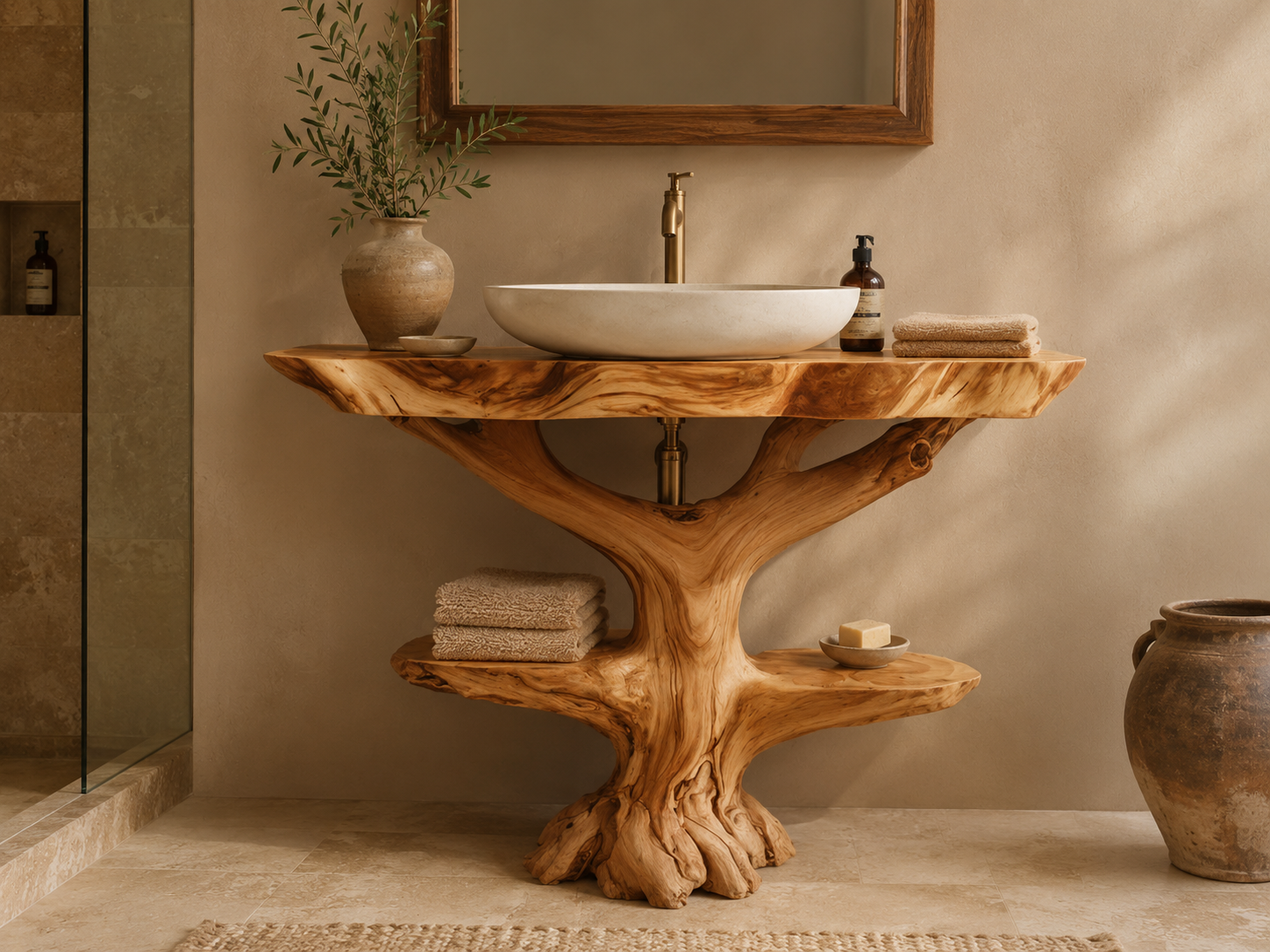
Handcrafted Driftwood Vanity - Coastal Earth Tone Bathroom
Which coastal details work with earth tones?
- Sand-colored tile: References the coast without being literal.
- Driftwood-style vanity: Adds natural texture while staying neutral.
- Warm white walls: Keep the room bright and airy.
- Linen shower curtain: Softens hard surfaces and adds movement.
- Woven baskets: Add texture and practical storage.
- Muted blue-green accent: Works well if you want a subtle water-inspired note.
What should you avoid?
- Too many shell, anchor, or starfish motifs in one room
- Cool gray tile paired with warm beige walls without a transition color
- Bright turquoise accents if the goal is a grounded earth tone look
- Overly rustic wood in a bathroom that already has dated finishes
- Dark tile in a small bathroom without enough lighting
For additional seasonal inspiration that works in coastal homes, see Affordable Summer Decorating Ideas for Your Home or Vacation Beach House.
What Moisture and Maintenance Issues Matter in Coastal NC Bathrooms?
Style matters, but bathrooms also need to perform. In coastal North Carolina, moisture control should be part of the design conversation, especially in bathrooms with limited natural light, older ventilation, or heavy use.
The EPA emphasizes moisture control as an important part of preventing mold growth in homes. That is especially relevant in bathrooms because showers, tubs, sinks, towels, and poor airflow can all contribute to lingering moisture.
What should Wilmington-area homeowners check before updating a bathroom?
- Ventilation: Confirm the exhaust fan works and vents outdoors, not into an attic or enclosed space.
- Fan capacity: Bathroom fan capacity is measured in CFM, or cubic feet per minute. HVI guidance commonly uses about 1 CFM per square foot of bathroom area, with 50 CFM as a common minimum for smaller bathrooms.
- Humidity control: A humidity-sensing fan, such as the Broan-NuTone Roomside Series Humidity Sensing Bathroom Exhaust Fan, can help when people forget to turn the fan on.
- Grout and caulk: Cracked grout or failing caulk should be addressed before cosmetic updates.
- Water stains: Staining around the toilet, vanity, ceiling, or shower can point to past or active moisture issues.
- Slip resistance: Bathroom floors should be chosen with wet feet in mind, not just appearance.
What materials are easier to maintain in humid bathrooms?
- Porcelain tile: Durable and available in stone-look, concrete-look, and terracotta-look styles.
- Ceramic wall tile: Often budget-friendly and easy to clean.
- Quartz countertops: Low-maintenance compared with many natural stones.
- Teak accessories: Often used in wet environments because of its natural durability.
- Washable textiles: Choose towels, bath mats, and shower curtains that can be cleaned regularly.
Local note: If a home is in a flood-prone area or near water, bathroom renovation decisions may overlap with broader insurance, elevation, drainage, and disclosure considerations. New Hanover County provides floodplain resources that homeowners can review when evaluating property risk and long-term maintenance planning.
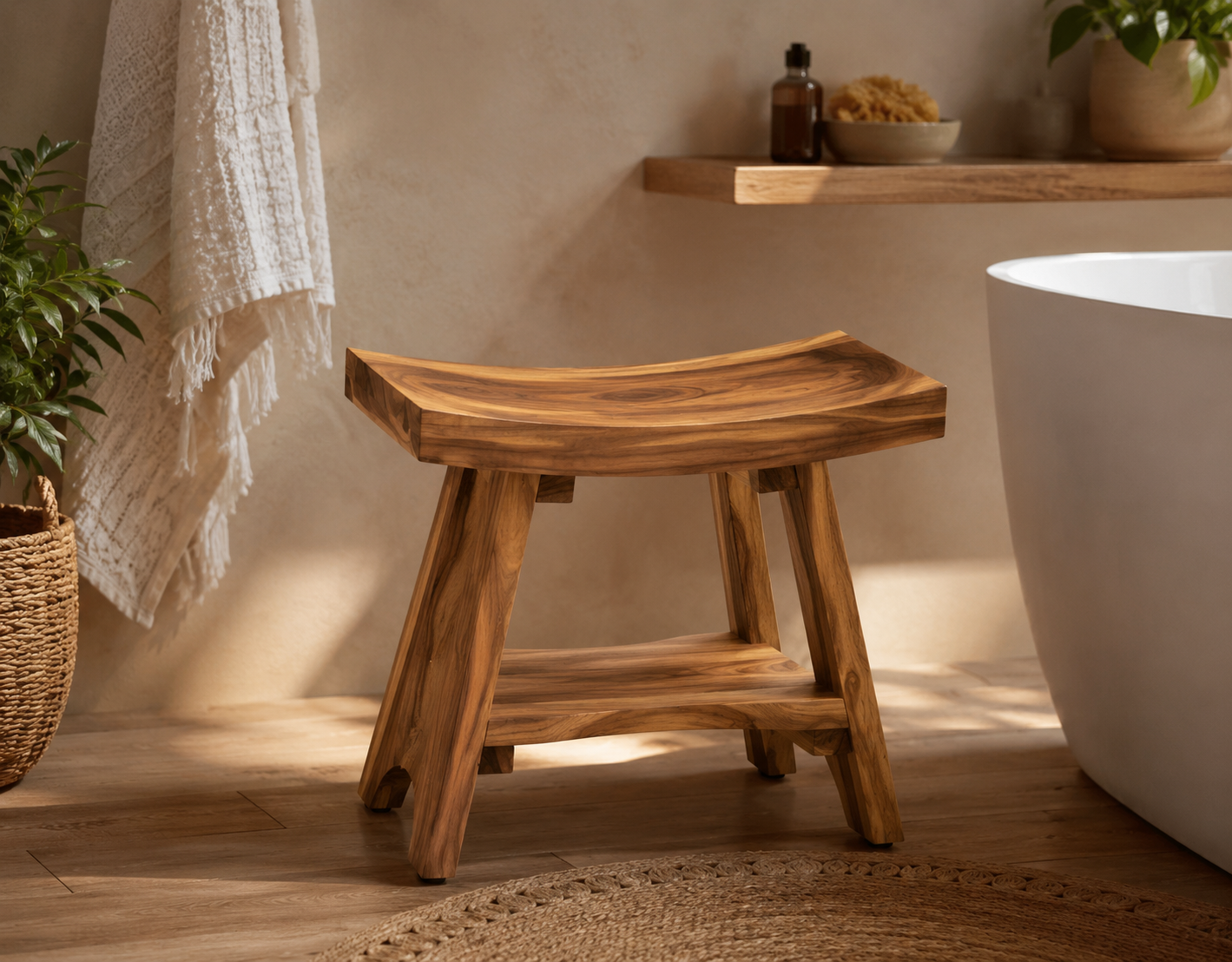
EcoDecors Teak Shower Bench - Coastal Earth Tone Bathroom
Can Earth Tone Bathroom Designs Help with Resale?
Earth tone bathrooms can help with resale when the design looks clean, updated, and broadly appealing. Buyers usually respond well to bathrooms that feel fresh, functional, and move-in ready.
That does not mean every bathroom needs expensive tile or custom cabinetry. Often, the biggest resale impact comes from making the space feel well-maintained, bright, cohesive, and free of obvious moisture concerns.
Which updates are most resale-friendly?
- Replacing worn or dated lighting with a clean, warm fixture
- Updating cabinet hardware in bronze, nickel, black, or brass
- Installing a modern mirror instead of a large frameless builder mirror
- Using warm neutral paint to soften cool tile or dated cabinetry
- Replacing stained caulk around tubs, showers, and vanities
- Adding fresh towels and simple accessories before photos or showings
- Improving ventilation if the bathroom feels humid, musty, or slow to dry
Which earth tone choices can hurt resale?
- Overly dark tile in a small bathroom that lacks natural light
- Permanent orange-heavy terracotta everywhere if it overwhelms the room
- Highly textured tile that is difficult to clean in wet areas
- Too many competing wood tones in the vanity, mirror, floor, and shelves
- Unsealed or poorly maintained natural stone in heavy-use bathrooms
- Trendy fixtures that do not match the rest of the home
As Realtors who regularly evaluate how homes present online and in person, The Cameron Team often looks at bathrooms through two lenses: how the space feels to the people living there now and how it may read to future buyers. A beautiful bathroom still needs to look clean, functional, and consistent with the rest of the home.
What Are the Best Earth Tone Bathroom Product Ideas?
The right products can help you test an earth tone palette before committing to a full remodel. Start with items that are easy to swap, then move toward permanent updates once you know the direction works in your space.
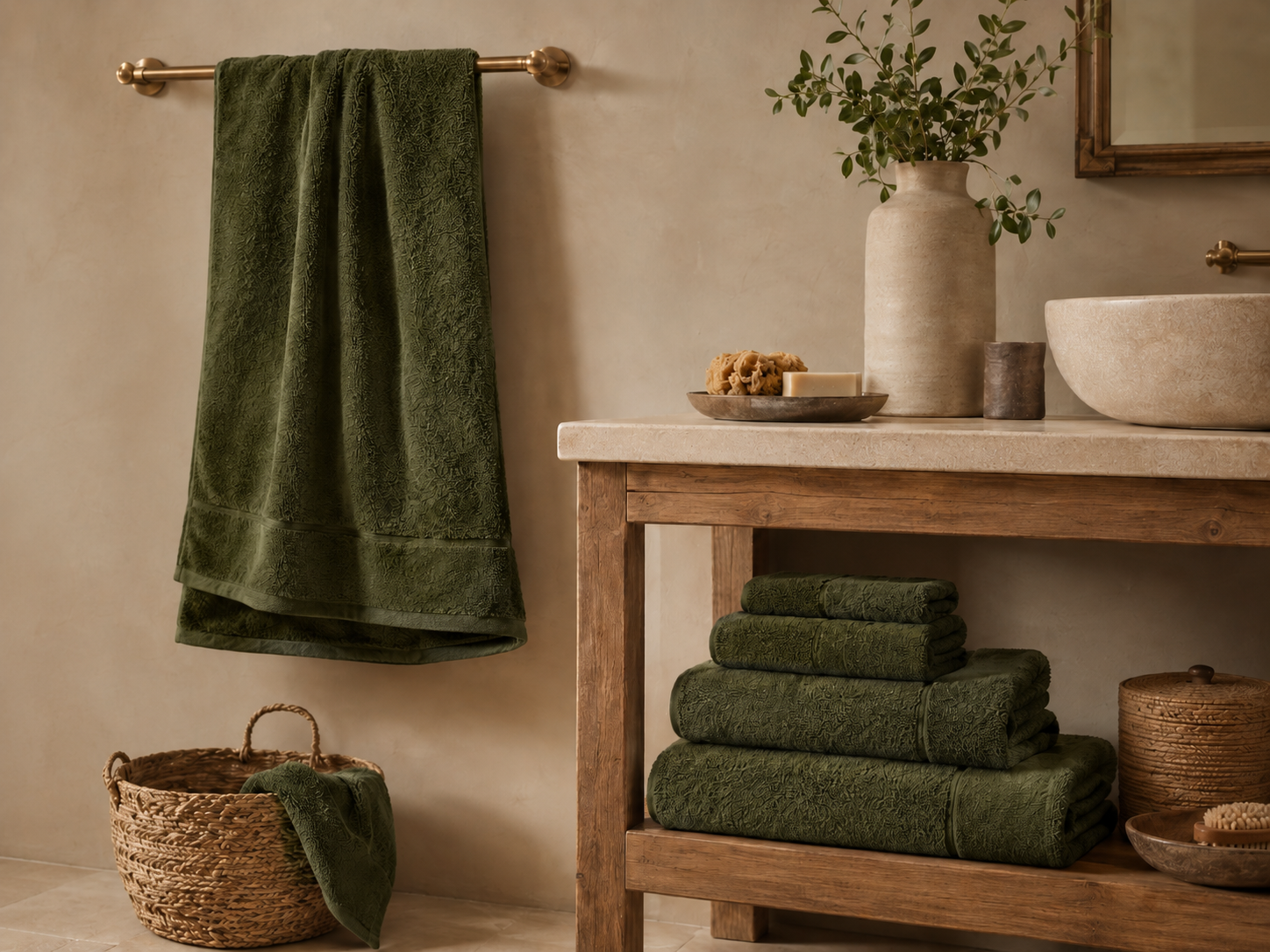
Adaste Home Earthy Towels - Earth Tone Bathroom
Which products can quickly warm up a bathroom?
- Terracotta towels: Try Under The Canopy Textured Organic Cotton Towels for a warm, clay-toned accent.
- Earthy towel set: Adaste Home’s Earthy Turkish Towels offer a more layered color story.
- Budget hand towels: A simple terracotta hand towel from At Home can be a low-cost way to test the color.
- Stone or terracotta tray: A vanity tray can organize daily items and add texture.
- Bronze faucet: Champagne bronze warms up white, beige, and stone-look bathrooms.
- Teak stool: Useful beside a tub, inside some showers, or as a towel perch where appropriate.
- Terracotta tile sample: Order samples before committing to a full wall, shower, or floor.
What should you buy first?
If you are still deciding on the palette, start with textiles and accessories. They are the easiest to return, move, or replace.
- First purchase: Towels or bath mat
- Second purchase: Vanity tray, basket, or small stool
- Third purchase: Mirror or light fixture
- Fourth purchase: Faucet and hardware
- Final purchase: Tile, vanity, countertop, or shower materials
Practical tip: Always view samples in the actual bathroom before ordering permanent materials. Earth tones can shift dramatically depending on daylight, artificial lighting, and nearby finishes.
What Are Common Misconceptions About Earth Tone Bathrooms?
Earth tone bathrooms are popular, but there are a few misconceptions that can lead homeowners in the wrong direction.
Misconception 1: Earth tone means brown and boring
Earth tone design can be soft and subtle, but it does not have to be boring. The key is layering texture, contrast, and finish.
- Pair sand tile with a walnut vanity.
- Use clay towels against warm white walls.
- Add bronze hardware to a mushroom vanity.
- Mix matte tile with a lightly reflective zellige-look backsplash.
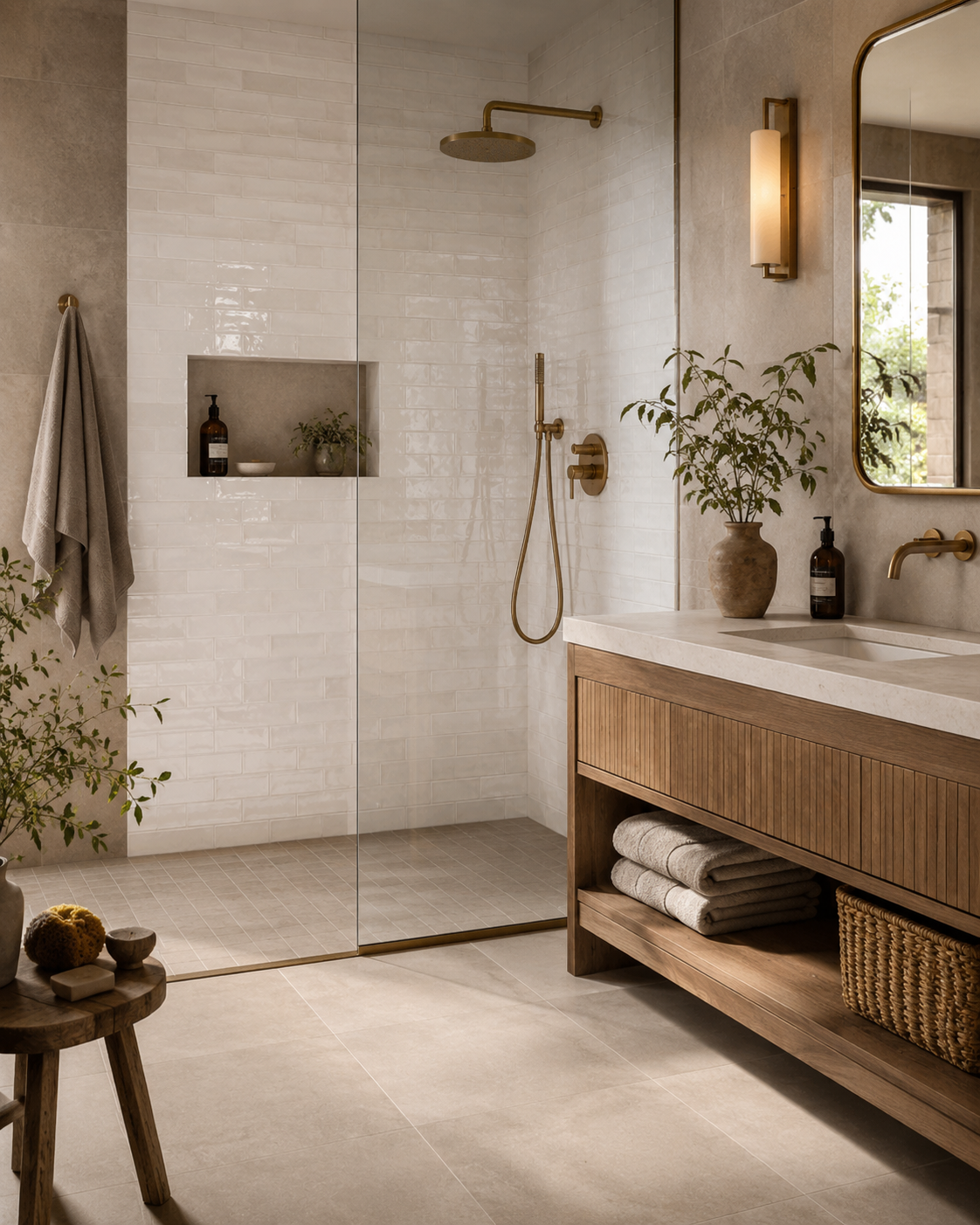
Zellige Style Tile - Earth Tone Bathroom
Misconception 2: Natural materials are always better
Natural materials are beautiful, but bathrooms need practical choices. A porcelain tile that looks like limestone may be a better fit than real limestone in a shower, depending on the household, budget, and maintenance expectations.
Misconception 3: Dark bathrooms always feel luxurious
Dark earth tones can look high-end, but only when the room has enough light, contrast, and ventilation. In a small windowless bathroom, too much dark tile or paint can make the space feel smaller and less fresh.
Misconception 4: Every update needs to be permanent
Some of the best design updates are reversible. Before changing tile, try earth tone towels, art, lighting, a mirror, cabinet hardware, and paint.
How Should You Plan an Earth Tone Bathroom Update?
A good bathroom update starts with the real conditions of the room, not just inspiration photos. Look at layout, light, storage, moisture, budget, and how long you plan to stay in the home.
What should homeowners do before buying materials?
- Take photos in daylight and at night. This helps you see how colors change.
- Identify fixed finishes. Note the tile, tub, toilet, countertop, flooring, and shower door that will remain.
- Choose one main undertone. Decide whether the bathroom is leaning beige, gray, yellow, pink, or green.
- Check ventilation. Style upgrades will not solve moisture problems.
- Set a budget range. Separate cosmetic changes from plumbing, electrical, and tile work.
- Order samples. Tile, paint, hardware, and countertop samples should be viewed in the actual room.
- Think about resale timing. If you may sell soon, keep the permanent choices more neutral.
What is a smart order of improvements?
- Maintenance first: Fix leaks, ventilation issues, caulk, grout, and damaged surfaces.
- Lighting second: Better lighting makes every design choice look more intentional.
- Paint third: Wall color can bridge existing tile and new accessories.
- Hardware fourth: Faucets, pulls, towel bars, and hooks can modernize the room.
- Textiles fifth: Towels, rugs, and shower curtains complete the palette.
- Tile and vanity last: These are bigger investments and should be chosen carefully.
For homeowners who are updating with a future sale in mind, The Cameron Team can help you think through which improvements are likely to matter most in your local price point and neighborhood. Not every bathroom needs a full remodel to make a stronger impression.
Check out this article next