

When showings slow down and your phone stops ringing, the instinct is to drop the price. I get it. Sitting with a home on the market feels uncomfortable, especially when you have a move to plan or a life transition tied to the sale. But a price cut is not always the right answer, and sometimes it is not even close to the right answer.
Before you do anything, let's figure out what the market is actually telling you.
Key Takeaways
Fall is slower by nature. September existing-home sales drop 15.4% from August historically, so fewer showings do not automatically mean your price is wrong.
Rates above 7% are making buyers cautious across the board, not just in your price range.
Days on market are up across New Hanover, Brunswick, Pender, and Onslow Counties compared to a year ago. Slower is the new normal right now.
A pricing problem and a presentation problem look the same from the outside. The fix depends on which one you actually have.
Seller concessions like a rate buydown can sometimes do more for a buyer than an equal price reduction.
Pulling a listing only makes sense when something real has changed. Relaunching with nothing new usually produces the same result.
Coastal and luxury sellers have extra homework right now, especially around insurance documentation and visual presentation.
What Does Slower Fall Demand Mean for Wilmington Sellers?
Here is something most sellers do not hear enough: the market slows every fall, even in good years. Families are back in school, fewer people want to move in October, and buyer urgency drops. That seasonal pattern is baked in.
This fall, though, there is more weight on the market than usual. Mortgage rates are hovering above 7%, which changes the math for a lot of buyers. Someone who stretched to afford a $450,000 home at 5.5% is looking at a very different monthly payment today, and many of them have simply paused.
That context matters before you make any decisions about your listing. Here is where things actually stand across our area:
County | Median Sale Price | Median Days on Market | Year-Over-Year Change |
|---|---|---|---|
New Hanover | $448,499 | 58 days | Up 21 days |
Brunswick | $408,622 | 98 days | Up 31 days |
Pender | $477,402 | 76 days | Up 14 days |
Onslow | $313,949 | 58 days | Up 26 days |
Homes are taking longer everywhere. That does not mean your home cannot sell. It means the window has stretched, and the sellers who are not paying attention to price and presentation are the ones sitting longest.
Is Price or Presentation Holding Back Your Home?
This is the question I ask every seller before we talk about changing anything. Price problems and presentation problems produce the same symptoms: slow showings, no offers, radio silence. But they need different solutions, and confusing the two can cost you.
A few signals worth paying attention to:
High online views but few showings: Something is giving buyers pause before they ever schedule a tour. That could be price, but it could also be a weak lead photo, a floor plan that photographs poorly, or a feature buyers are already factoring in, like flood zone status or a busy road nearby.
Showings without offers: Buyers are curious enough to visit but not convinced enough to move. This is where feedback matters most. If two or three different buyers mention the same thing, that is the market telling you something specific.
Low online engagement across the board: This usually points to a marketing problem, not a pricing one. In this market, your listing lives on a phone screen. Weak photos or a flat description can kill interest before anyone even reads the address.
The most useful thing you can do before drawing any conclusions is look honestly at what is active, pending, and recently sold in your neighborhood or price range. If similar homes in similar condition are going under contract and yours is not, price deserves a real conversation. If everything in your segment is sitting, the whole market may just be slow right now.
I have been doing this since 1994, and the sellers who make the smartest decisions are the ones who resist the urge to react before they have read the full picture.

Should You Cut the Price, Offer a Concession, or Wait?
The honest answer is that it depends, but there are clear patterns that point toward each option.
A price reduction tends to make sense when:
Recent comparable sales from the last 60 to 90 days land below your list price
Competing listings are priced lower and in similar or better condition
You have had real showing activity but no offers, and the feedback consistently circles back to value
Your days on market are climbing past the county median with no changes made
A concession can be more effective than a price cut when:
Your home is reasonably priced but buyers are feeling the rate pressure
A closing-cost credit or rate buydown would directly reduce their monthly payment in a way a price cut would not
The buyer's loan program allows it (conventional loan seller concessions typically range from 3% to 9% depending on occupancy and loan-to-value)
Here is the math that surprises most sellers: a $10,000 price reduction at a 7% rate lowers a buyer's monthly payment by roughly $60. That same $10,000 applied toward a rate buydown can sometimes lower the rate by half a point, which has a much larger monthly impact. For a buyer already stretched thin, that difference can be the thing that makes the deal work.
Waiting makes sense when:
Comparable sales support your current price
You have had showing activity and the seasonal slowdown is the more likely culprit
Your timeline is flexible and the cost of holding is manageable
This table can help you sort through it:
Factor | Points to Price Cut | Points to Wait or Pivot |
|---|---|---|
Showing frequency | Very low relative to competition | Present but slowing seasonally |
Buyer feedback | Repeated price or value objections | Mixed or specific condition concerns |
Comparable sales | Recent comps support a lower price | Comps support current price |
Competing listings | Lower-priced competition is selling | Competition is also sitting |
Your timeline | Move is time-sensitive | Flexibility exists |
Carrying costs | Holding costs are a real burden | Carrying costs are manageable |
When Does Withdrawing and Relaunching Make Sense?
Sometimes the right move is to step back, regroup, and come back stronger. But that only works if "stronger" actually means something different the second time around.
A pause can make sense when:
You are completing repairs that buyers flagged during showings
You are replacing weak photography or adding video and drone coverage for the first time
Staging changes have meaningfully shifted how the home presents
A disruption, like storm cleanup or a family situation, affected your early market exposure
What a pause cannot do is reset your days on market. Hive MLS rules track cumulative days on market separately and specifically prohibit manipulating those numbers through status changes. And even if the MLS clock looked different, portals like Zillow and Realtor.com typically hold onto price history regardless of what the MLS shows. Buyers notice.
Relaunching with nothing changed almost always produces the same outcome. If you are going to pause, make it count.
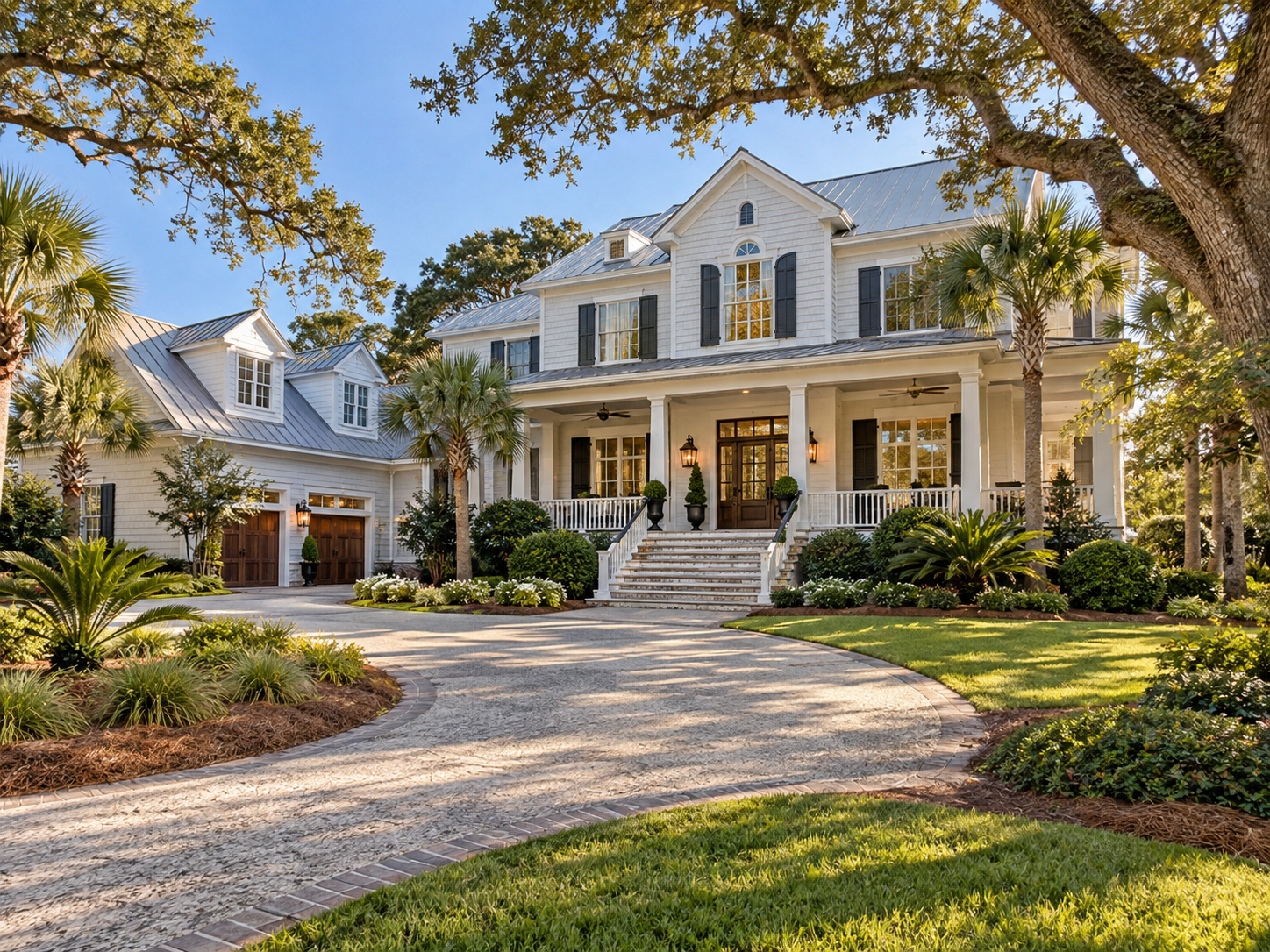
How Should Coastal and Luxury Sellers Adapt?
If you are selling a waterfront property, a beach home, or something in a community like Landfall, St. James Plantation, RiverLights, or along the Wrightsville or Carolina Beach corridors, the current environment has a few extra wrinkles worth knowing about.
Insurance is one of the biggest ones. North Carolina recently approved base-rate increases of 15.9% in beach territories and 10.1% in designated eastern coastal areas across Brunswick, New Hanover, Onslow, and Pender Counties. When a buyer runs their full monthly cost on a coastal property today, that insurance line is landing higher than it was two or three years ago. That affects how they price what they can afford.
A few things that make a real difference for coastal and luxury sellers right now:
Get your documentation together early. Elevation certificate, current flood policy details, roof age, wind mitigation report, HOA financials. Buyers will ask, and having answers ready signals that you are a seller worth trusting.
Check whether your flood policy is transferable. An existing NFIP policy can sometimes be assigned to the buyer, which may lock in a lower rate they could not get on their own. That is a genuine selling point.
Do not shortcut the visuals. Twilight photography, drone aerials, video, and floor plans are not extras for a coastal or luxury listing. They are the baseline. Buyers shopping in the $600,000 to $1.5 million range expect that level of presentation, and listings that fall short get scrolled past regardless of price.
The buyers still active in this segment tend to be serious, well-qualified, and doing thorough homework. Meeting them with complete information and a listing that looks the part is what separates a sale from a long sit.
Check out this article next