
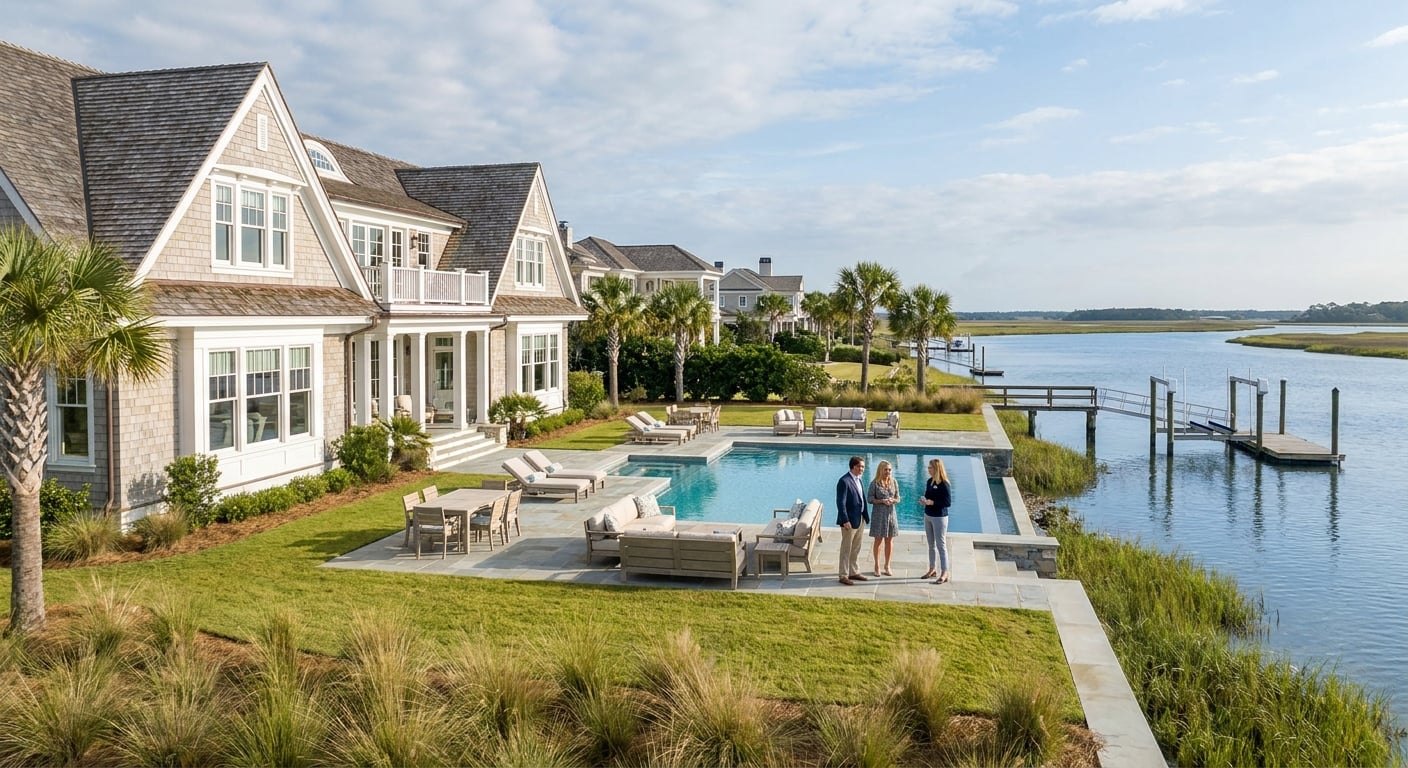
Something has shifted in the Wilmington luxury market, and if you're thinking about selling a higher-end home, it's worth understanding what's actually happening before you list.
Inventory has grown, particularly at Wrightsville Beach. Buyers are taking longer to decide. Demand is still real, including from people relocating here from other states, but the buyers who are active right now have more options than they did two or three years ago. And when buyers have options, they get selective. That changes what it takes to sell well.
Key Takeaways
Luxury inventory across the Wilmington area has expanded, and buyers now have enough choices to be patient and picky.
The market is separating truly distinctive properties from homes that are simply priced above $1 million.
Condition, presentation, and outdoor living matter more than they did when inventory was tight and buyers had to move fast.
Luxury activity is growing in Brunswick and Pender County communities, including St. James, Southport, Hampstead, Surf City, and Topsail Beach.
Relocating buyers often compare Wilmington against other coastal markets before committing, which raises the bar for first impressions.
Exceptional homes can still command strong prices, but buyers now have time and options to walk away from anything that feels unresolved.
Why Are Wilmington Luxury Buyers More Selective?
A few years ago, limited inventory meant buyers moved quickly and asked fewer questions. That's not the environment we're in right now.
At the upper price ranges, buyers are doing a much more careful accounting of what owning a coastal home actually costs. It's not just the purchase price. Homeowners insurance in North Carolina has increased sharply, with approved rate increases reaching 15.9% in beach territories and 10.1% in designated eastern coastal areas, according to the NC Department of Insurance. Add flood insurance, HOA dues, and the ongoing maintenance that comes with coastal living, and buyers are thinking through the full picture before they commit.
When someone is weighing a $1.5 million property at Wrightsville Beach against a newer home at St. James or a waterfront property in Hampstead, they're asking real questions:
Roof age and condition: A replacement on a larger coastal home can easily run $30,000 to $60,000 or more.
HVAC systems: Salt air accelerates wear, and buyers want to know what they're inheriting.
Moisture and crawlspace history: Inspectors look hard at this, and for good reason.
Dock, bulkhead, and shoreline condition: These are expensive repairs that buyers factor into their offer.
Flood zone and elevation: This affects insurability and long-term carrying costs in ways that can make or break a deal.
Relocating buyers, who make up a real portion of luxury demand here, often arrive having already looked at Charleston, Beaufort, and other Southeast coastal markets. Wilmington is competing for those buyers. A home that feels uncertain or unresolved can lose someone to another market entirely, not just another listing down the road.
What Makes a Wilmington-Area Home Distinctive?
Not every home priced above $1 million reads as luxury to a buyer who's done their homework. That gap between price and perceived value is where a lot of sellers get stuck.
True distinction tends to come from things that are genuinely hard to replicate: privacy, water orientation, lot placement, architectural cohesion, updated systems, and outdoor living that actually works. One area where sellers often blur the lines is water access, and buyers notice.
Type | What It Actually Means |
|---|---|
True waterfront | Direct frontage with a permitted dock and navigable water |
Water views | Views without direct access or a dock |
Community boat access | Shared ramp or marina within the community |
Near water | Close proximity but no frontage or view |
These aren't interchangeable, and pricing them as if they are is one of the fastest ways to sit on the market.
For genuine waterfront homes, documentation matters more than most sellers realize. CAMA permits, dock depth and lift capacity, shoreline stabilization records, elevation certificates, and flood zone details are all things buyers and their agents will ask for. Having that information organized and ready signals that the home has been cared for, not just cleaned up for photos.
Beyond water, things like golf frontage, gated access, first-floor living, generous storage, and flexible guest accommodations all factor into how broadly a home appeals. These aren't just amenities. They're the details that help a buyer picture the home actually fitting their life.
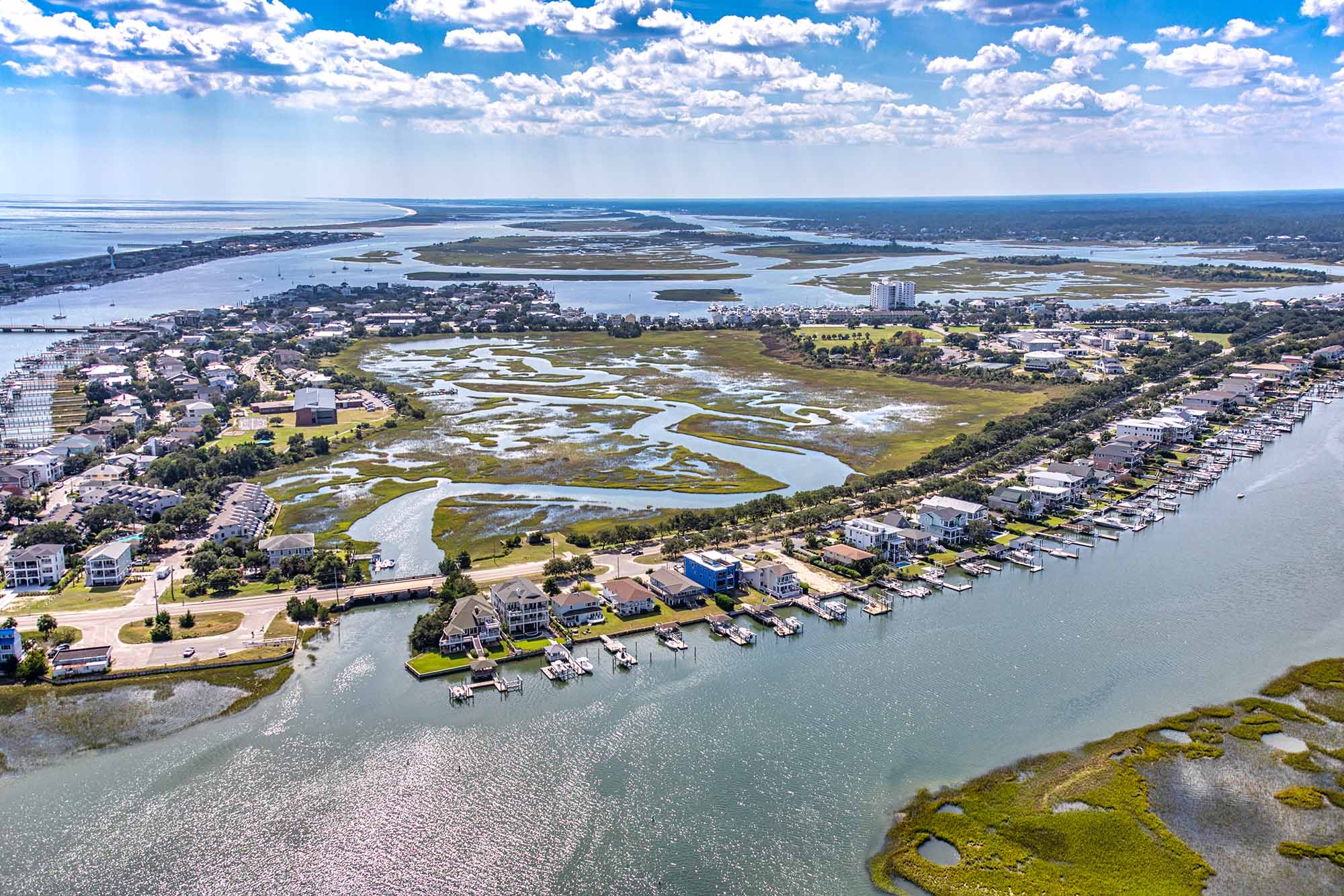
How Do Luxury Markets Differ Across the Coast?
The Wilmington region isn't one market. It's several, and knowing where your property fits shapes everything from pricing to who you're really selling to.
Wilmington draws buyers who want proximity to dining, medical care, and daily conveniences alongside privacy and water access. Neighborhoods like Landfall, Porters Neck Plantation, Airlie at Wrightsville Sound, and RiverLights each have their own character and their own buyer.
Wrightsville Beach is a scarcity story, even with more inventory than recent years. The August 2026 median asking price near Wrightsville Beach sat around $1.84 million, compared to roughly $475,000 in Wilmington. At that level, condition and presentation have to be exceptional. Buyers aren't paying a premium for potential.
Brunswick County has grown into a real luxury destination. St. James Plantation, Ocean Ridge, and The Bluffs on the Cape Fear attract buyers who want newer construction, resort amenities, golf, and a quieter coastal setting. The countywide median asking price is closer to $440,000, so luxury here is defined by the community and the specific property, not the county average.
Pender County, especially Hampstead, Surf City, and Topsail Beach, is seeing more activity at higher price points. Topsail Beach carried a median asking price near $1.2 million in recent data. Buyers there tend to value the low-key character of the island, but they still expect the home to perform at the price.
How Much Preparation Does a Luxury Home Need?
More than most sellers expect, and earlier than most sellers start. That's the honest answer.
Buyers at this price point hire inspectors. Sometimes they bring in specialists for roofs, crawlspaces, pools, docks, and shoreline structures. If a seller hasn't addressed known issues before listing, the inspection report becomes a negotiating document. In a market with real inventory, buyers have less reason to push through problems and more reason to ask for credits, price cuts, or simply move on.
A pre-listing walkthrough that looks at the property the way a buyer would is worth doing before anything else. A few areas that consistently matter:
Visible maintenance: Fresh exterior paint, clean gutters, trimmed landscaping, and pressure-washed surfaces tell a buyer the home has been looked after.
Interior condition: Consistent finishes, updated lighting, and a clear design direction throughout make a home feel cohesive rather than assembled over time.
Outdoor living areas: A worn pool deck, faded patio furniture, or neglected plantings undercut the lifestyle the home is supposed to represent.
Staging where it helps: 83% of buyers' agents reported that staging helped buyers visualize a property as their future home, according to the National Association of Realtors. In larger or less conventional floor plans, it removes the guesswork.
One thing I always tell sellers: not every improvement is worth making. A rushed kitchen remodel weeks before listing rarely returns its cost. Targeted repairs, fresh finishes, and thoughtful staging will almost always outperform a renovation done under pressure.
How Should Sellers Price and Market a Luxury Home?
Pricing a luxury home well means building the right comparison set. Square footage is a starting point, not a conclusion. Setting, water access, lot quality, community context, condition, and how hard the property would be to replicate all factor into what a buyer is actually willing to pay.
One of the most common mistakes at this price point is launching before the home is ready. A property with incomplete repairs, average photos, or inconsistent presentation gets seen by every active buyer in the first week. First impressions in this market are hard to recover from.
A stronger approach:
Finish all repairs, touch-ups, and staging as part of preparing your home for the market before any photos are taken.
Use professional photography, video, drone aerials, and floor plans. Many luxury buyers, especially those relocating from out of state, are making decisions largely based on what they see online.
Build the listing narrative around what makes the property genuinely rare, not just expensive.
Pair broad online exposure with targeted outreach to relocating buyers, second-home seekers, and retirement-focused buyers who are actively comparing coastal options.
Pricing also needs to reflect where the market is today, not where it was two years ago. Homes that launch at aspirational prices and sit accumulate market time, and in a buyer-friendly environment, market time works against you.
Check out this article next