
Summary: Saving money does not require extreme lifestyle changes. Many of the most effective strategies come from small, repeat decisions: canceling unused subscriptions, reducing takeout and delivery costs, cutting back on coffee and alcohol, using cash or rewards tools carefully, cooking at home, lowering utility usage, and being more intentional with spending. Tracking where your money goes is the foundation, because once you can see your habits clearly, it becomes much easier to adjust them in a realistic and sustainable way.
Please note: The Cameron Team has not been paid or received any other compensation to include any of the products featured on this post, but the author has included affiliate links and content. If you click on a link, they may earn a commission – a high-five for great content!
Why is tracking your spending the most important step?
If you are not tracking your spending, you are essentially guessing where your money is going. And guessing almost always leads to underestimating. Many people feel like they should be saving more, but until they review their actual spending, they do not know which habits are quietly draining their budget.
Start simple by reviewing the last two to three months of bank and credit card statements. Group your purchases into categories such as groceries, takeout, subscriptions, gas, coffee, shopping, utilities, and entertainment. Once you see the patterns, it becomes much easier to decide what to cut, what to reduce, and what is worth keeping.
- Review the last 2–3 months of bank and credit card statements
- Categorize spending into broad groups
- Highlight repeat purchases and impulse buys
- Look for charges that feel automatic rather than intentional
In Wilmington and Southeastern North Carolina, spending can shift with the seasons. Utility costs can spike in hot, humid months, dining out tends to rise during beach season and busy weekends, and storm prep or home maintenance can create unexpected expenses. Tracking gives you a clearer picture of what your normal really costs.
This first step matters because every other money-saving strategy works better when it is based on real numbers instead of assumptions. If you do not know where your money is going, you do not know how to save it.

Which subscriptions and apps should you actually keep?
Recurring expenses are one of the easiest places to find savings because they are often forgotten. Streaming services, app upgrades, delivery memberships, cloud storage plans, subscription boxes, and auto-renewing services can pile up quickly. Many of these charges are small enough to avoid attention, but together they can take a noticeable bite out of your monthly budget.
A practical rule is to eliminate any recurring expense you have not actively used in the last three months. That does not mean you need to cancel every paid service. In fact, cutting all entertainment and convenience at once can make a budget hard to stick with. The goal is to be selective, not extreme.
- Keep services you use regularly and genuinely value
- Downgrade anything where a cheaper plan would work
- Cancel anything you have not used or would not miss
It also helps to replace some paid services with free options. There are more legitimate no-cost entertainment and learning tools than many people realize.
- YouTube can be a free source for music, tutorials, podcasts, and long-form content
- Libby lets you borrow ebooks, audiobooks, and digital magazines through many library systems
- Tubi offers free movies and shows with ads
It is also worth checking what your local library already offers. Many people still think of libraries as book-only spaces, but that is no longer the full picture. The New Hanover County Library system provides access to far more than just print books and audiobooks.
- Free ebooks, audiobooks, and digital magazines
- Public computers and Wi-Fi access
- "Library of Things" to borrow, such as games, craft tools, instruments, etc.
- Online learning resources and research databases
- Programs, classes, and community events for different age groups
- Study spaces and other community services that may reduce the need to pay elsewhere
This is one of the most overlooked ways to cut entertainment and learning costs without feeling deprived. You are already contributing to library services through taxes, so using them can be a smart way to stretch your household budget.

How much are coffee runs and energy drinks really costing you?
This is one of the most common spending leaks because it feels small in the moment. A single coffee, latte, cold brew, or energy drink may not seem like a big deal, but repeated several times a week, it adds up quickly. Convenience caffeine is easy to normalize because it often gets bundled into a commute, workday, or afternoon crash.
The answer is not always to cut caffeine completely. For a lot of people, that is unrealistic. A better approach is to lower the cost per serving while keeping the routine manageable.
- Make coffee at home during the week and save café drinks for occasional treats
- Buy beans, grounds, pods, syrups, or creamers in bulk when the math works
- Use a travel mug to make skipping the coffee stop easier
- Reduce energy drink purchases to the days you really want them
You can also recreate many café-style drinks at home with ingredients from World Market, grocery stores, and online retailers. Flavored syrups, sugar-free creamers, espresso-style coffee, cold foam products, and flavored toppings are much easier to find now than they used to be. Buying the ingredients once and using them across multiple drinks can be much cheaper than buying each drink individually.
One simple upgrade that can make home coffee more appealing is a rechargeable milk frother. That small tool can make homemade coffee feel much closer to a café drink. Pairing it with a sugar-free, dairy-free creamer can also lower calories compared with many coffee shop lattes, which makes the at-home option easier to stick with for both budget and health reasons.
Some people also look into lower-cost caffeine options such as caffeine supplements or caffeine candy like Kopiko. Those can reduce cost per serving dramatically, but supplements are not right for everyone. Check with your doctor first, especially if you have heart issues, high blood pressure, anxiety, medication interactions, or caffeine sensitivity.
Even if you do not want to change your caffeine habits completely, simply reducing a few purchases per week can create noticeable savings over a month.
Why does making meals at home save more than people expect?
Cooking at home is one of the most repeated money tips for a reason. Eating out regularly, even in small ways, can become expensive very quickly. The total is not just the cost of the meal. It is also drinks, add-ons, sides, dessert, tips, and the extra purchases that happen when you are already hungry and looking for convenience.
One of the easiest ways to spend less is to always have at least one meal ready in the fridge. When people are tired and hungry, they are far less likely to be picky. Having something easy available can prevent an unnecessary takeout order.
- Meal plan several dinners before the week begins
- Cook enough for leftovers on purpose
- Take your lunch instead of buying it
- Keep quick fallback meals on hand for busy days
- Prep ingredients ahead of time to make cooking easier
Another helpful habit is to “shop” your freezer before ordering out. It is easy to forget what is already in there. Frozen meat, vegetables, leftovers, bread, soups, and prepared meals can become backup options that save money and reduce food waste.
Why should you pick up your own food instead of using delivery apps?
Delivery apps are convenient, but convenience usually comes with a steep markup. If you compare the prices on a delivery app to the restaurant’s actual menu, the difference can be striking. It is not just the delivery fee. Menu prices are often inflated, then service fees and tips are added on top.
- Menu prices can be higher in delivery apps than on the real menu
- Service fees and delivery fees raise the total even more
- Tipping increases the final price further
Choosing pickup instead of delivery can save a surprising amount of money, especially for households that order out more than once a week. It is not as convenient, but your wallet will usually notice the difference.
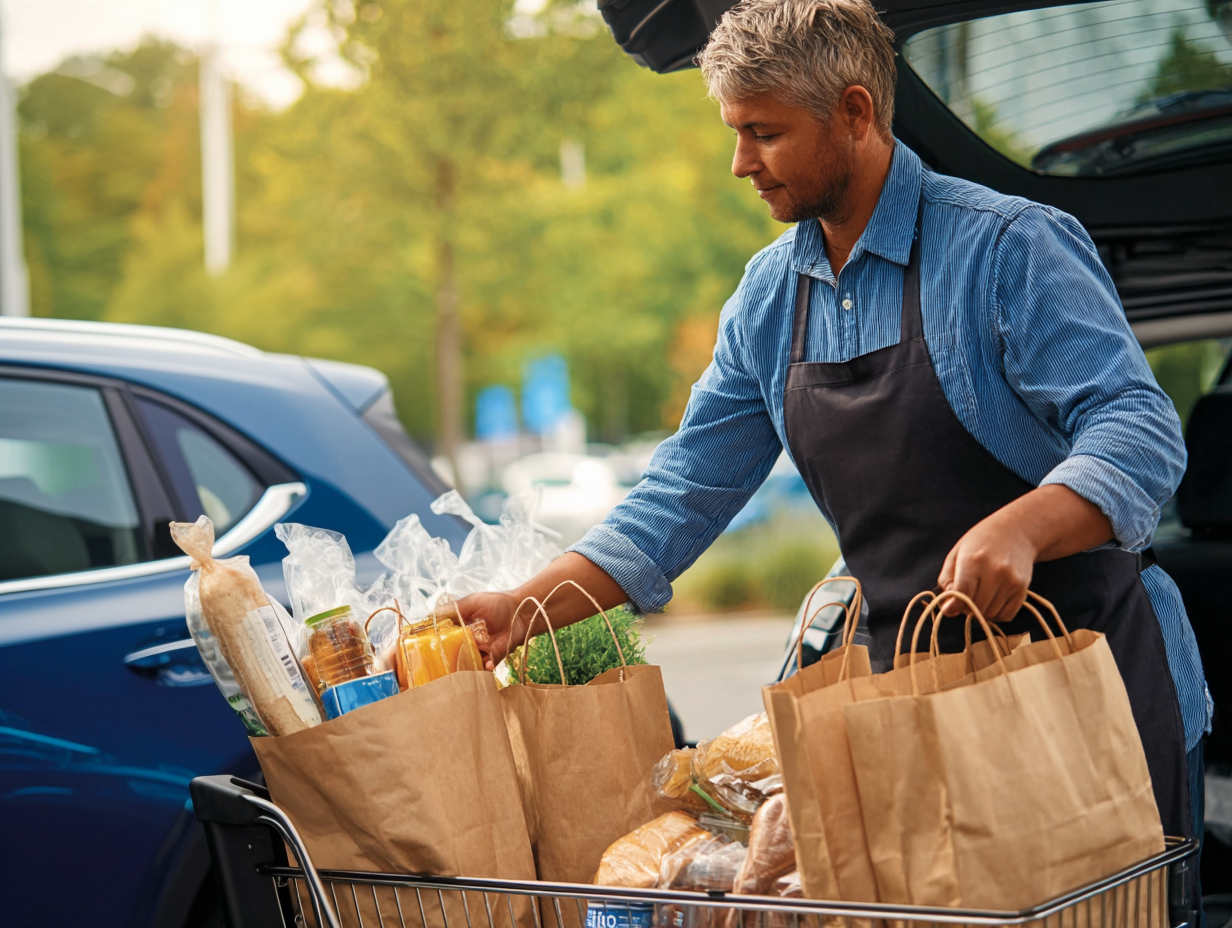
How can buying meat in bulk help lower grocery costs?
Protein is often one of the more expensive parts of a grocery bill, which is why buying meat in bulk can be such a useful strategy. If you have freezer space, purchasing larger quantities when prices are favorable can reduce your cost per pound.
- Look for warehouse options like Costco
- Check with local farmers who sell meat bundles
- Ask your favorite butcher if they offer package deals
- Divide larger portions into freezer bags for later use
This can work especially well in Southeastern North Carolina where many households have extra freezer space or the ability to plan around grilling, meal prep, and seasonal grocery cycles.
Can ordering groceries online actually save money?
It may sound backwards, but for many people, ordering groceries online for pickup can reduce total spending. One reason is that online ordering makes your choices more visible. Instead of tossing extra items into the cart as you walk through the store, you are reviewing prices, quantities, and totals in a more intentional way.
For some shoppers, online ordering became a habit during the pandemic and ended up staying useful. It can be especially helpful for households that tend to impulse buy in-store.
- You can compare prices more easily
- You can review coupons before finalizing your order
- You can plan meals in advance while shopping
- You see your total before checkout
- You may avoid impulse purchases that happen in the store
Some people also notice that certain prices in the app are lower than the in-store shelf price, depending on the retailer and promotions available at the time. Even when prices are similar, the improved visibility and reduced impulse spending can make grocery pickup a strong budget tool.
For busy households balancing work, errands, and home responsibilities, grocery pickup can also save time, which makes it more realistic to stick with meal planning.
How can you lower your utility bills without major upgrades?
You do not need a full home retrofit to reduce energy use. Some of the most practical savings come from small household habits. That is especially true in coastal North Carolina, where heating and cooling costs can be influenced by humidity, long summers, and frequent laundry from beach days, outdoor activities, and yard work.
Does line drying clothes really help?
Yes, it can. Clothes dryers use a meaningful amount of energy, and they also contribute to wear and tear on fabrics. Drying even part of your laundry on a rack can reduce electricity use and help clothes last longer.
- Hang lightweight items or small loads to dry
- Use an indoor drying rack if outdoor line drying is not allowed
- Place clothing near airflow so it dries faster
- Reduce dryer use for workout clothes, pajamas, or delicate items
If you live in an HOA community, outdoor line drying may not be allowed, so it is worth checking your rules first. Indoors, many people find that clothing dries fairly quickly when hung in a room with moving air or near a register.
Should you unplug appliances when not in use?
Yes. Many electronics and appliances still draw electricity even when they appear to be off. This is often called standby power or phantom energy. It may not seem like much from one device, but multiple plugged-in items across the home can add up over time.
- Unplug small appliances when they are not being used
- Use power strips for groups of electronics
- Pay attention to chargers, kitchen appliances, and entertainment devices
- Turn off what you can fully instead of relying on energy-saving mode alone
This is not likely to cut your electric bill in half, but it is one of those small habits that can contribute to lower costs over time.

Are you spending more because you use cards instead of cash?
Cards are convenient, but convenience can make spending feel abstract. Swiping a card or tapping a phone does not create the same mental pause as physically handing over cash. For some people, that difference is enough to affect how much they spend.
Using cash for discretionary categories can help create stronger boundaries. When you can see the money leaving your hand, it often feels more real.
- Withdraw a set amount for dining out, shopping, or entertainment
- Carry only what you are comfortable spending
- Stop when the cash is gone instead of extending the budget with a card
This approach can be especially helpful for people who feel like card usage makes them blind to how fast small purchases add up. Cash is not necessary for every expense, but it can be a powerful budgeting tool for categories where overspending tends to happen.
How should you use cash-back credit cards without getting into trouble?
Cash-back credit cards can still be useful, but only if they are handled carefully. The safest way to use them is to charge only what you already have money for in your bank account and pay the balance off in full every month. Rewards are only helpful if you are not paying interest.
- Use rewards cards for planned expenses only
- Pay the full statement balance every month
- Avoid spending extra just to earn points or cash back
- Treat the card like a payment tool, not extra income
For some people, debit cards or cash will be the better tool. The right choice is the one that supports your actual habits.
How do you reduce impulse purchases without relying on willpower alone?
Impulse purchases often feel urgent in the moment and unnecessary later. A simple waiting period can interrupt that cycle. One of the easiest rules is to add what you want to the cart and leave it there for 48 hours. After two days, check whether you still feel the need to buy it.
That pause works because emotions settle. What feels exciting or necessary right now may feel less important once the rush wears off.
- Add nonessential items to your cart and wait 48 hours
- Ask whether the item solves a real need
- Review whether it fits your priorities and current budget
- Use a wishlist instead of buying on the spot
You can make this even more effective by changing the systems around your spending.
- Unsubscribe from promotional emails and texts
- Remove saved payment methods from shopping sites
- Avoid boredom scrolling on retail apps
- Set a larger waiting period for more expensive items
Often, the issue is not a lack of discipline. It is too much easy access and too many purchase prompts throughout the day.

Can walking more actually help you save money?
It may not sound like a financial strategy at first, but walking can support better spending habits in a few different ways. Movement can help your body relax, improve your energy, and reduce the kind of stress that often drives impulse purchases. It can also make it easier to cut back on caffeine when part of the problem is mental fatigue or sluggishness.
- Walking can reduce stress and improve mood
- Better energy may help reduce caffeine spending
- Lower stress can make impulse shopping easier to resist
In Wilmington, this can be a particularly easy habit to build because there are so many neighborhoods, parks, paths, and mild-weather days that support walking for part of the year. It is one of the lowest-cost ways to support both your health and your budget.
If you want a small extra incentive, you can use an app like WeWard or Winwalk, which reward walking with credits that can be redeemed for gift cards. That alone will not replace a savings plan, but it can turn a healthy free activity into a small added benefit.
How do receipt and cash-back apps fit into a savings plan?
Receipt and cash-back apps are not a substitute for budgeting, but they can be a useful way to earn a little money back on purchases you were already planning to make. These tools work best when they are layered on top of good shopping habits rather than used as an excuse to buy more.
- Ibotta offers cash back on selected grocery and household items
- Pogo provides points and cash-back opportunities
- Fetch rewards receipt scanning
- Rakuten gives cash back for qualifying online purchases
These apps can help in different ways:
- Rewarding you for buying items already on your list
- Giving rebates after you upload receipts
- Offering cash back when you shop through their links
They will not transform your finances overnight, but when used consistently, they can help reduce the net cost of everyday purchases.
Should cutting out alcohol be part of a money-saving plan?
For many people, this can make a significant difference. Alcohol is expensive on its own, especially when purchased at restaurants, bars, concerts, or events where markup is high. It can also weaken the self-control that helps people stick to a budget, making it easier to order more, buy more, or stop caring about the total in the moment.
- Alcoholic drinks at restaurants often carry large markups
- Regular purchases can add up quickly over a month
- Alcohol can make it harder to say no to additional spending
Cutting back or cutting it out entirely can lower costs directly and may help improve decision-making around other purchases too. There can also be non-financial benefits such as better sleep, better energy, and more clarity the next day, all of which can support healthier routines overall.
This does not have to be all or nothing. Even reducing the frequency of alcohol purchases can make a difference.
What small changes tend to stick long-term?
The best budget changes are usually the ones that feel realistic enough to continue. That means you do not need to overhaul everything at once. A few repeatable habits can make a bigger long-term difference than one extreme month of cutting everything.
- Cancel unused subscriptions and replace some with free alternatives
- Reduce coffee runs, energy drinks, and delivery fees
- Cook more meals at home and check the freezer before ordering out
- Use grocery pickup to compare prices and reduce impulse buys
- Dry some clothing on a rack and unplug appliances when not in use
- Use cash for categories where you tend to overspend
- Pause 48 hours before making impulse purchases
- Use rewards and receipt apps only for spending you already planned
- Walk more to support better energy and more intentional choices
- Reduce or eliminate alcohol if it is affecting your budget
What matters most is awareness. When you understand your habits, you can make changes that fit your real life instead of a perfect version of it. Saving money is not just about cutting things out. It is about deciding which choices are truly worth the cost and which ones have become automatic.
For more practical tips on managing home costs and living well in Southeastern North Carolina, explore additional resources at The Cameron Team.
Frequently Asked Questions About Saving Money
Question 1: What is the fastest way to start saving money?
Start by reviewing your last two to three months of spending and canceling unused subscriptions. This is often one of the quickest ways to create noticeable savings without changing your whole routine. It also gives you a clearer picture of where your money has been going.
Question 2: Is it better to use cash or credit cards?
Cash can help control impulse spending because it creates a physical limit and makes purchases feel more real. Credit cards can be useful for rewards if you only charge what you already have money for and pay the balance in full each month. The better option depends on which tool supports your actual habits.
Question 3: How much can I really save by cooking at home?
Cooking at home is often cheaper per meal than dining out, especially when you factor in delivery fees, tips, drinks, and add-ons. The savings are usually strongest when you meal plan, use leftovers intentionally, and keep a few easy options ready for busy days.
Question 4: Are grocery pickup services worth it?
For many people, yes. Grocery pickup can help reduce impulse buying, make it easier to compare prices, and give you a better view of your total before checkout. It can also help with meal planning, which often leads to lower food spending overall.
Question 5: Do small savings really make a difference?
Yes. Small repeat savings can add up over time, especially when they come from habits you do several times a week. Skipping a few delivery fees, canceling unused subscriptions, or reducing coffee runs may not seem dramatic on their own, but consistency is what creates meaningful results.
Question 6: What local resources can help reduce expenses in Wilmington?
The New Hanover County Library is one of the best local resources for reducing entertainment and learning costs because it offers access to books, audiobooks, digital materials, public computers, online resources, and community programming. Local parks, greenways, and public spaces can also provide low-cost ways to stay active and entertained.
Question 7: Who should I talk to if I am trying to improve my finances before buying a home?
If you are planning ahead for a home purchase, it helps to connect with trusted local professionals early. The Cameron Team can help point you toward reputable lenders and other real estate-related resources in the Wilmington area so you can better understand what steps may strengthen your financial position before buying.
Check out this article next