
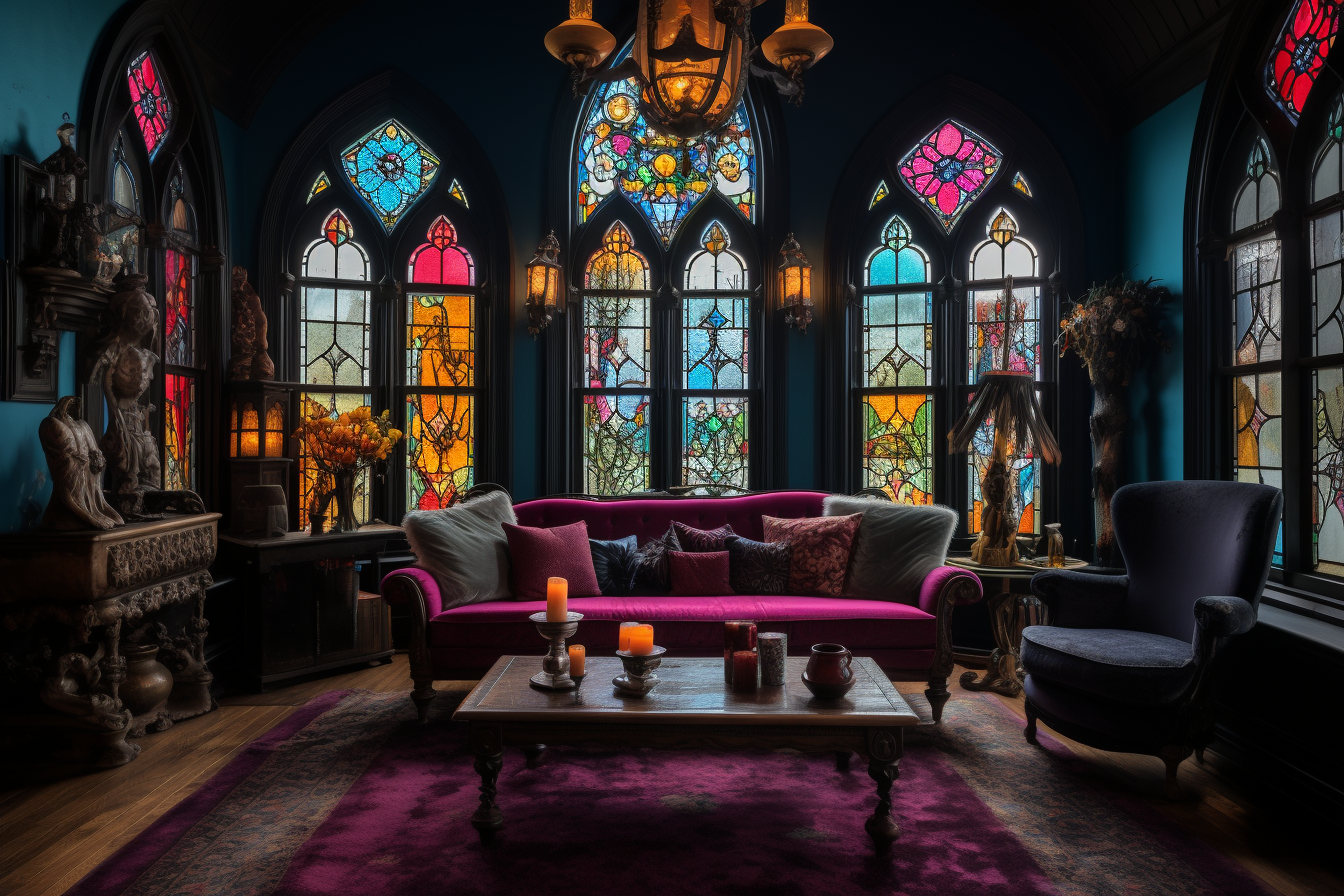
- Deep, saturated color palettes like black, plum, emerald, and navy
- Rich textures such as velvet, lace, and brocade
- Celestial and mystical motifs like moons, stars, and florals
- Vintage or Victorian-inspired furniture with eclectic accents
- Warm, ambient lighting that creates a cozy, moody environment
Rooted in 1980s and 1990s design influences, whimsigoth has recently re-emerged as a popular interior style thanks to its ability to balance contrast—light and dark, romantic and dramatic, structured and free-spirited.
For homeowners, whimsigothic decor offers a way to create a highly personalized space that feels expressive, layered, and full of character without leaning too heavily into traditional gothic intensity.
What Defines Whimsigothic Home Decor?
Whimsigothic – a term that is, in many ways, as intriguing and compelling as the style it represents. It’s a decor style that mashes the ethereal elements of whimsical decor with the timeless charm and character of Gothic aesthetics. But what exactly is Whimsigothic decor? How did it originate, and what sets it apart from other styles? Join us as we take an intricate journey into this unique world, where unexpected combinations form an eccentric, inviting space filled with personality.
Please note: The Cameron Team has not been paid or received any other compensation to include any of the products featured on this post, but the author has included affiliate links and content. If you click on a link, they may earn a commission – a high-five for great content!
The Emergence of Whimsigothic Decor
Whimsigothic decor, although relatively new in the world of interior design, traces its roots to the Victorian Gothic period, which lasted from the mid to late 19th century. However, the influence of whimsical style lends the decor a modern twist, making it a favorite choice for those seeking to blend historical richness with contemporary eclecticism.
The Victorian Gothic era was characterized by lavish, ornate designs, heavy textiles, and a generous use of rich, dark colors. Contrastingly, whimsical style introduced light-hearted, fanciful, and playful elements to design. The fusion of these two distinctive styles gave birth to Whimsigothic decor – an extraordinary combination of the extravagant, mysterious, and fantastical.
If you’ve ever read one of Holly Black’s urban faerie fantasy stories, this is how I imagine the décor in the fae world looks.
Identifying Features of Whimsigothic Home Decor
Eclectic Color Palette
Whimsigothic decor embraces a rich and varied color palette. At its base, you’ll often find deep, dramatic shades like royal purple, midnight blue, and jet black. These hues, reminiscent of the Gothic style, provide a luxurious backdrop to the decor. However, the whimsical influence is unmistakable as bursts of brighter, energetic colors – think fuchsia, lime green, or tangerine – are incorporated, disrupting the somber ambiance with their unexpected presence.
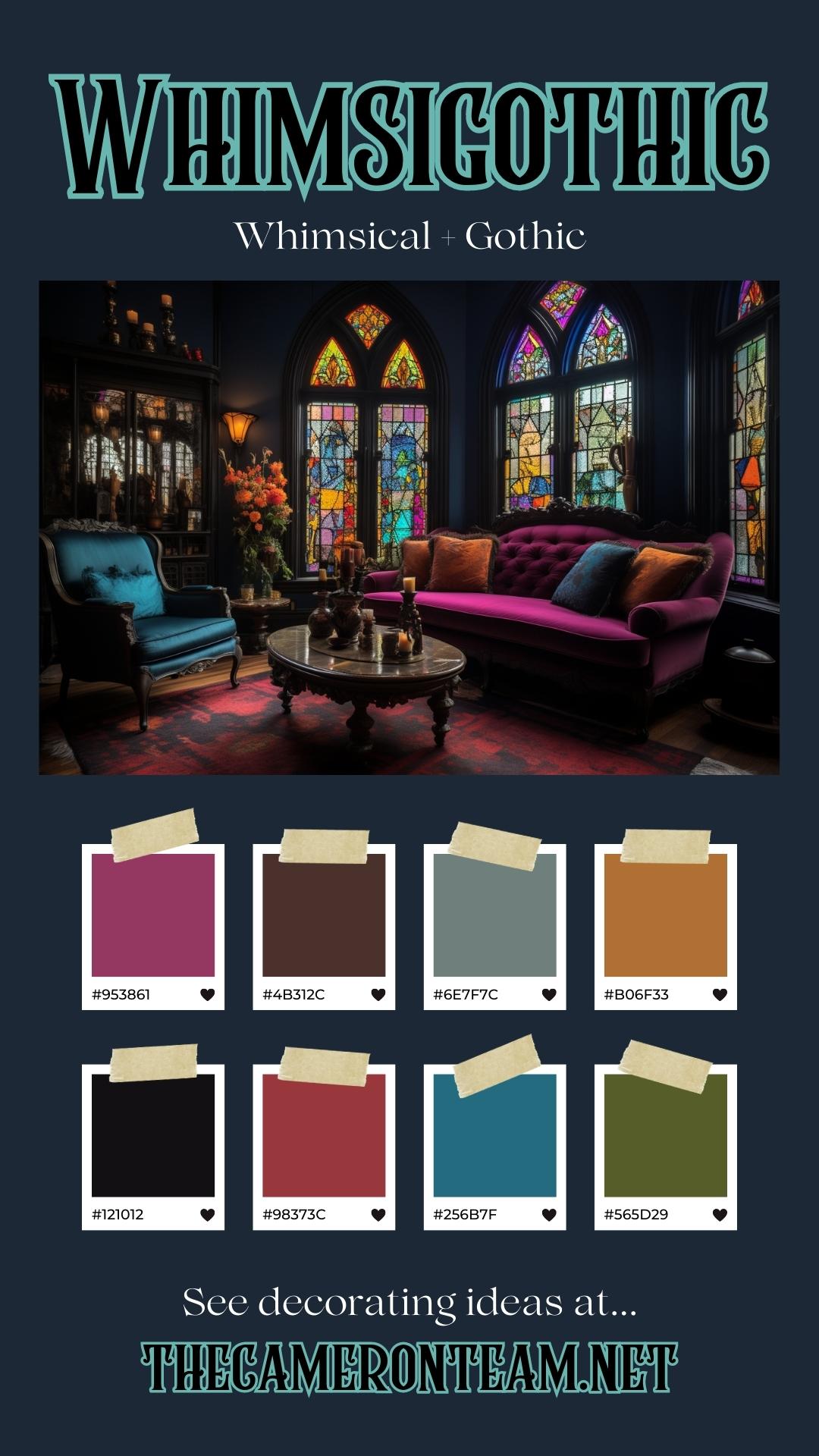
Whimsigothic Color Palette
Mysterious Artwork and Sculptures
Art and accessories play a critical role in Whimsigothic decor, and this is where the style’s eccentricity truly shines. A typical Whimsigothic home may feature everything from Gothic oil paintings of dramatic landscapes to whimsical art pieces, like illustrations from a storybook. Expect to find sculpted gargoyles perched next to a collection of quirky, colored glass bottles, creating an intriguing blend of the arcane and the capricious.
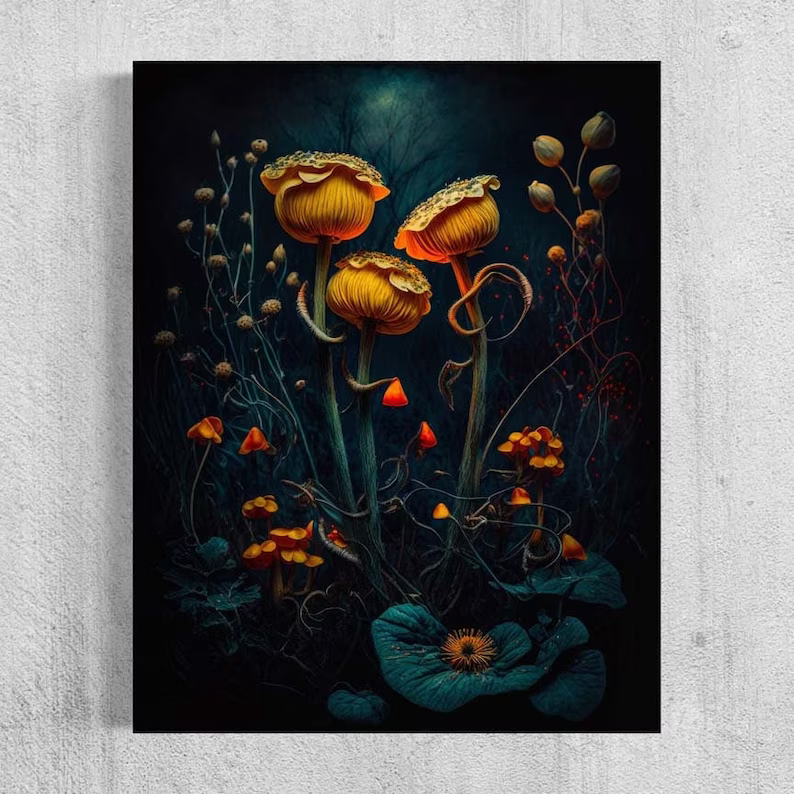
Gothic Floral Still Life – Rebel Decor Design
Victorian and Gothic Furniture
When it comes to furniture, Whimsigothic decor leans heavily on its Gothic roots. Traditional Victorian elements, such as high-backed chairs and chaise lounges, along with ornately carved wood furnishings, bring in the Gothic appeal. These pieces often feature luxurious fabrics like velvet or brocade in rich, deep colors. However, a whimsical touch is added with unexpected elements, like a modern lamp with a fantastical design or a vibrantly colored footstool.
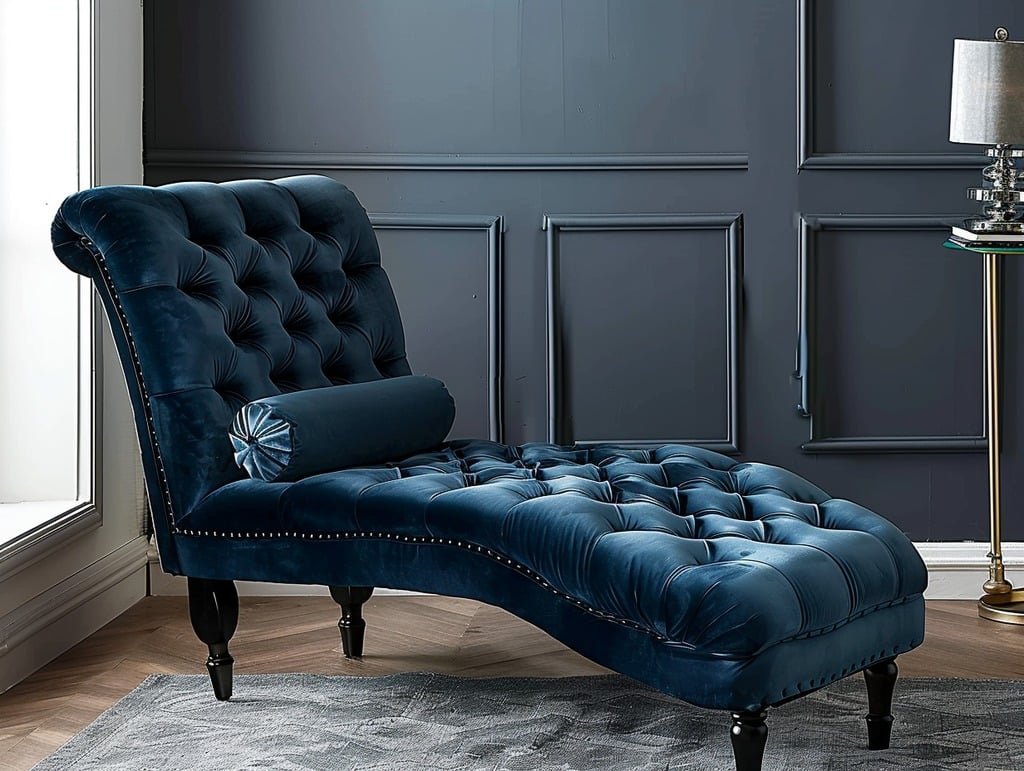
A Living Room with a Teal Chaise Lounge
Fairy Tale Elements and Oddities
Perhaps one of the most defining characteristics of Whimsigothic decor is the inclusion of fairy tale elements and oddities. This can take the form of oversized clocks, a peculiar collection of mirrors with ornate frames, vintage trunks, or even a mannequin dressed in Victorian-era clothing. The inclusion of these items adds a fantastical, dream-like quality to the decor, emphasizing the whimsical aspect of the style.
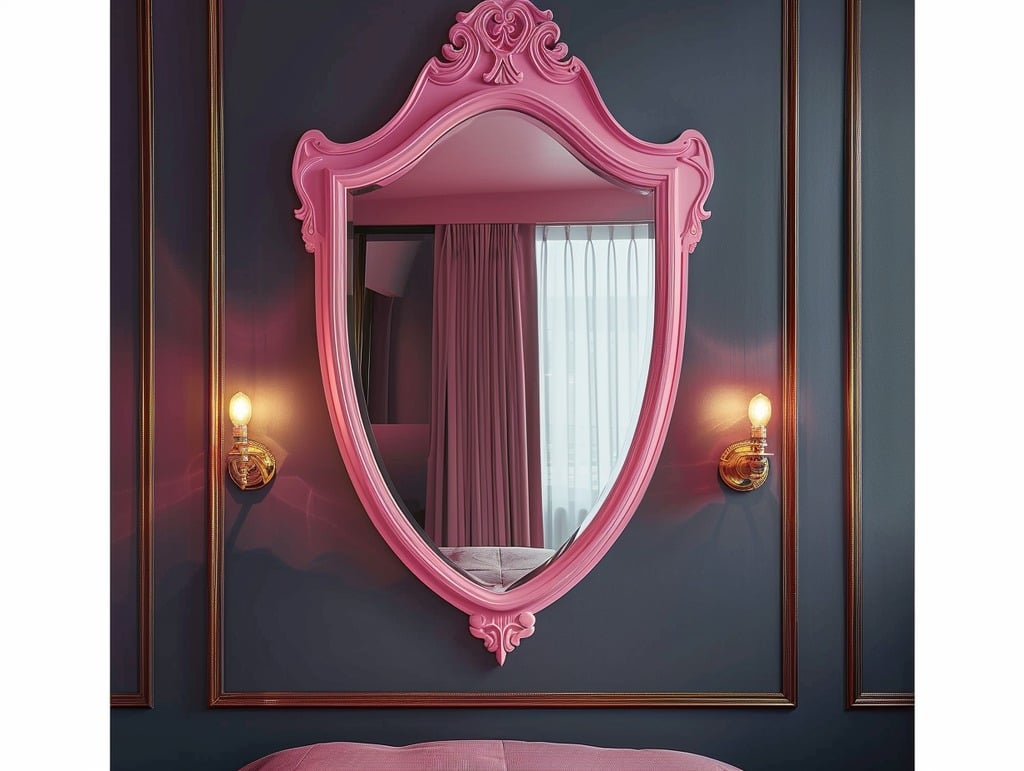
Pink Shield Mirror
Incorporating Whimsigothic Decor in Your Home
Color and Lighting
Incorporating Whimsigothic decor into your home begins with the selection of an eclectic color palette. As mentioned, deep, rich shades paired with unexpected bursts of vibrant hues form the base. When it comes to lighting, chandeliers and wall sconces with ornate designs can help emphasize the Gothic elements. While playful, modern fixtures add the whimsical touch.
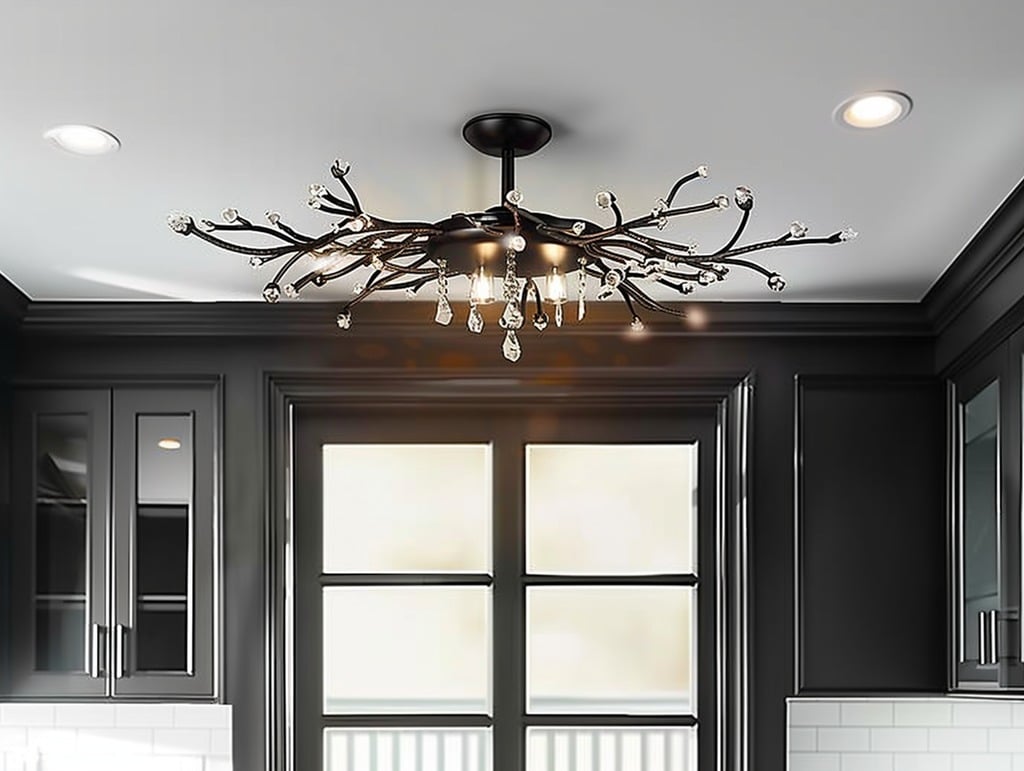
Furniture Selection
Select furniture that echoes the opulence of the Gothic era. Look for pieces with ornate carvings and plush upholstery. However, don’t be afraid to mix in modern or unusual pieces to maintain the whimsical aspect of the style. An antique Victorian desk, for example, can be paired with a contemporary, vibrant-colored chair.
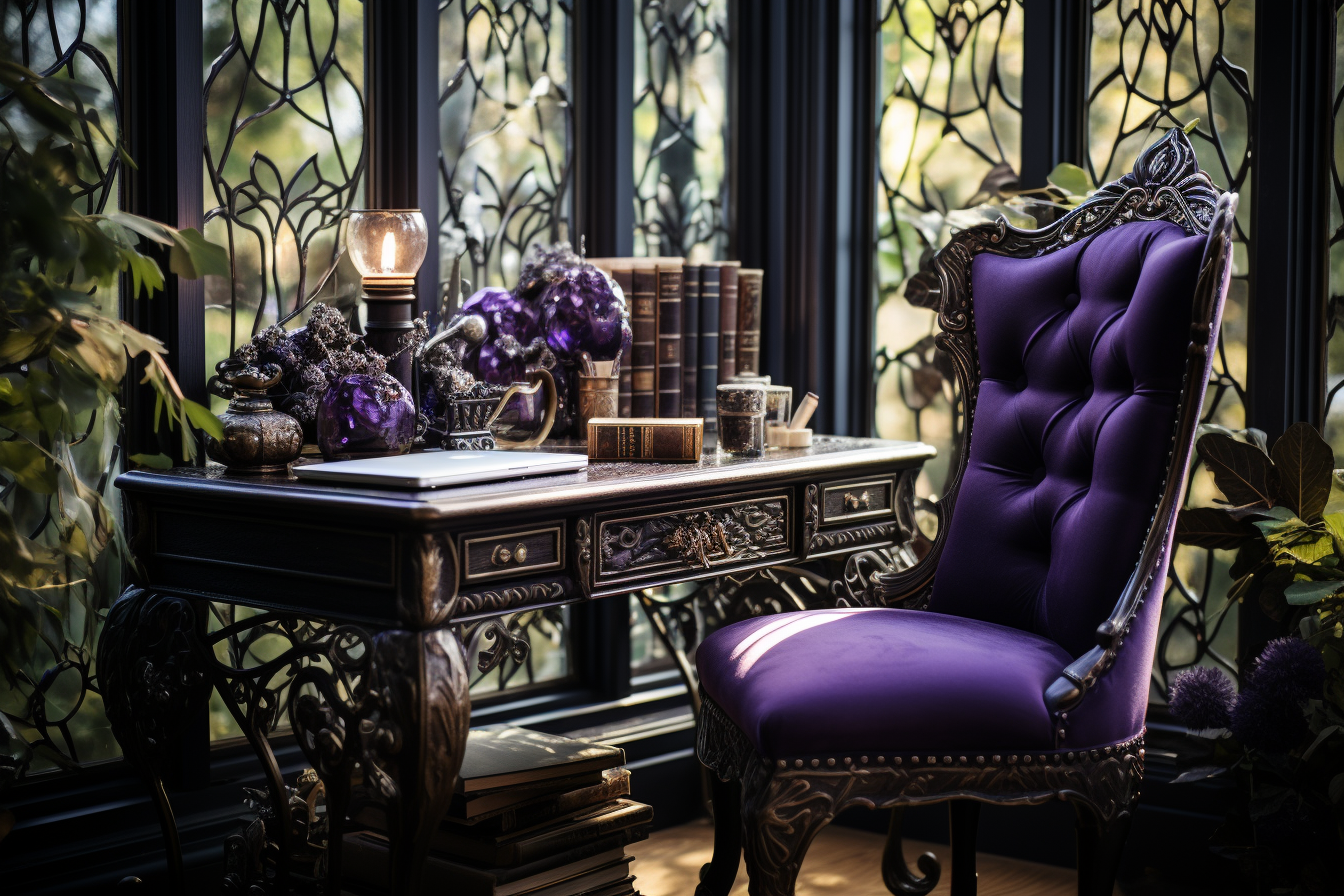
Whimsigothic Home Office
Curating Art and Accessories
When it comes to art and accessories, the more unique, the better. Choose pieces that add a sense of mystery or playfulness to your space. It could be an oversized gothic clock, an array of peculiar trinkets from different eras, or a vibrant piece of modern art.

Victorian Cat Art – Dark Forest Art Prints
Paint and Wallpaper
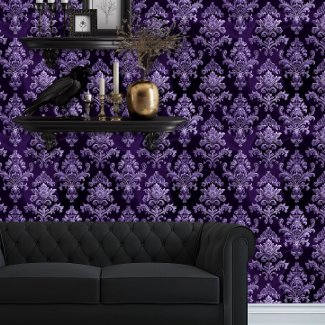
Whimsigoth is a chance to show your dark side. Wall colors are often dark and moody, providing a nice contrast to the whimsical side of the aesthetic. But it’s also a great opportunity to incorporate some bold wallpaper – whether it’s to brighten up a small bathroom, create an accent wall, or line the back of bookshelves.
Outdoor Spaces
Don’t forget your outdoor spaces! Gardens, patios, and balconies can also benefit from the Whimsigothic treatment. Think iron wrought furniture, dramatic outdoor lighting, and plenty of whimsical decorations like fairy lights, wind chimes, or even a garden gnome or two!
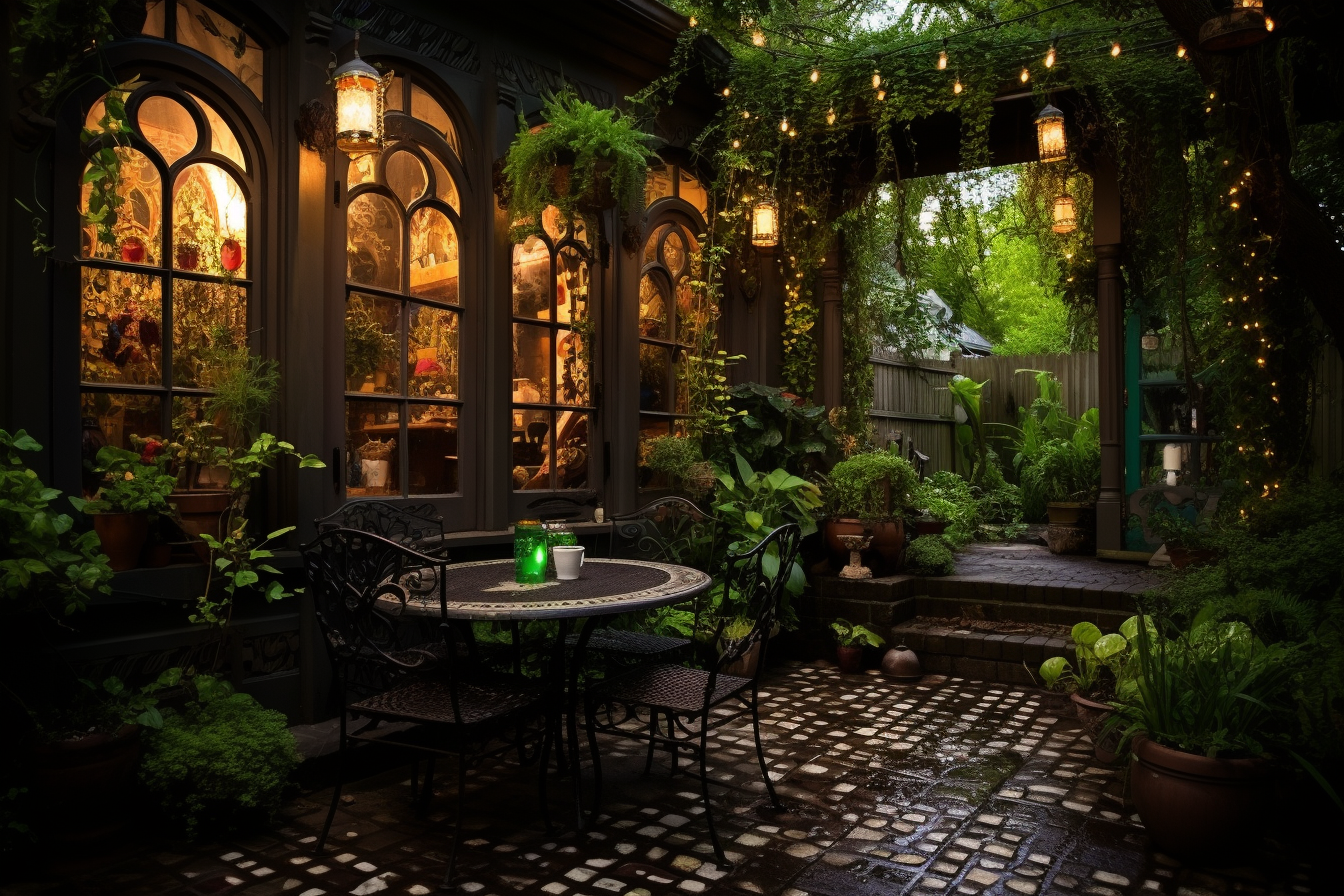
Whimsigothic Garden
Conclusion
Whimsigothic decor is more than just a style; it’s a bold statement, a celebration of individuality, and a testament to the beauty of the unexpected. It weaves together the opulence of the Gothic era with the playful eclecticism of whimsical design, creating spaces that are captivating, intriguing, and uniquely personal. So if you’re tired of the ordinary and craving a style that breaks conventions and invites curiosity, Whimsigothic decor might be the perfect fit for your home.
F.A.Q. About Whimsigothic Home Decor
What is whimsigothic home decor?
Whimsigothic home decor is a style that mixes moody gothic elements with whimsical, romantic, and eclectic details. It often includes dark colors, vintage-inspired furniture, celestial accents, layered textiles, and decorative pieces that feel both dramatic and imaginative. The look is expressive rather than rigid, giving homeowners room to combine elegance, mystery, and personality.
What colors are used in whimsigothic decor?
Whimsigothic interiors often use deep, saturated tones like black, plum, burgundy, emerald, navy, and midnight purple. These darker shades are often balanced with jewel tones, metallic accents, warm candlelight, and softer details to keep the space from feeling too heavy. The goal is usually a rich, layered atmosphere instead of a stark or overly formal look.
Is whimsigothic the same as gothic home decor?
No. While the two styles share some similarities, whimsigothic is usually softer, more playful, and more eclectic than traditional gothic decor. Gothic interiors often lean more formal and architectural, while whimsigothic tends to include celestial motifs, vintage curiosities, romantic details, and a more creative mix of patterns, textures, and personal pieces.
How can I add whimsigothic style to my home without redecorating everything?
You can start small by layering in a few key elements. Try adding velvet pillows, dark floral prints, antique-style mirrors, brass candlesticks, celestial artwork, or moody lampshades. Swapping out decor, lighting, and textiles can help create the look without requiring a full renovation or major furniture purchase.
Does whimsigothic decor work in small spaces?
Yes, whimsigothic decor can work very well in small spaces when used thoughtfully. The key is to focus on texture, lighting, and a few strong statement pieces rather than overcrowding the room. Dark colors can still feel inviting when paired with mirrors, layered lighting, and carefully chosen accents that add depth and interest.
What types of furniture fit a whimsigothic look?
Furniture with vintage, Victorian-inspired, ornate, or antique-style details often works well in whimsigothic spaces. You might see curved wood frames, tufted upholstery, carved accents, dark finishes, and eclectic secondhand finds. The style also works with a mix of old and new pieces, as long as the room feels layered and intentional.
Why is whimsigothic home decor popular right now?
Many people are drawn to whimsigothic decor because it feels personal, expressive, and different from more minimal design trends. It gives homeowners a way to create a space with mood, warmth, and character while still feeling creative and livable. Its mix of nostalgia, drama, and individuality makes it especially appealing for people who want a home that feels curated instead of generic.
What is Whimsigothic Home Decor Pin?