
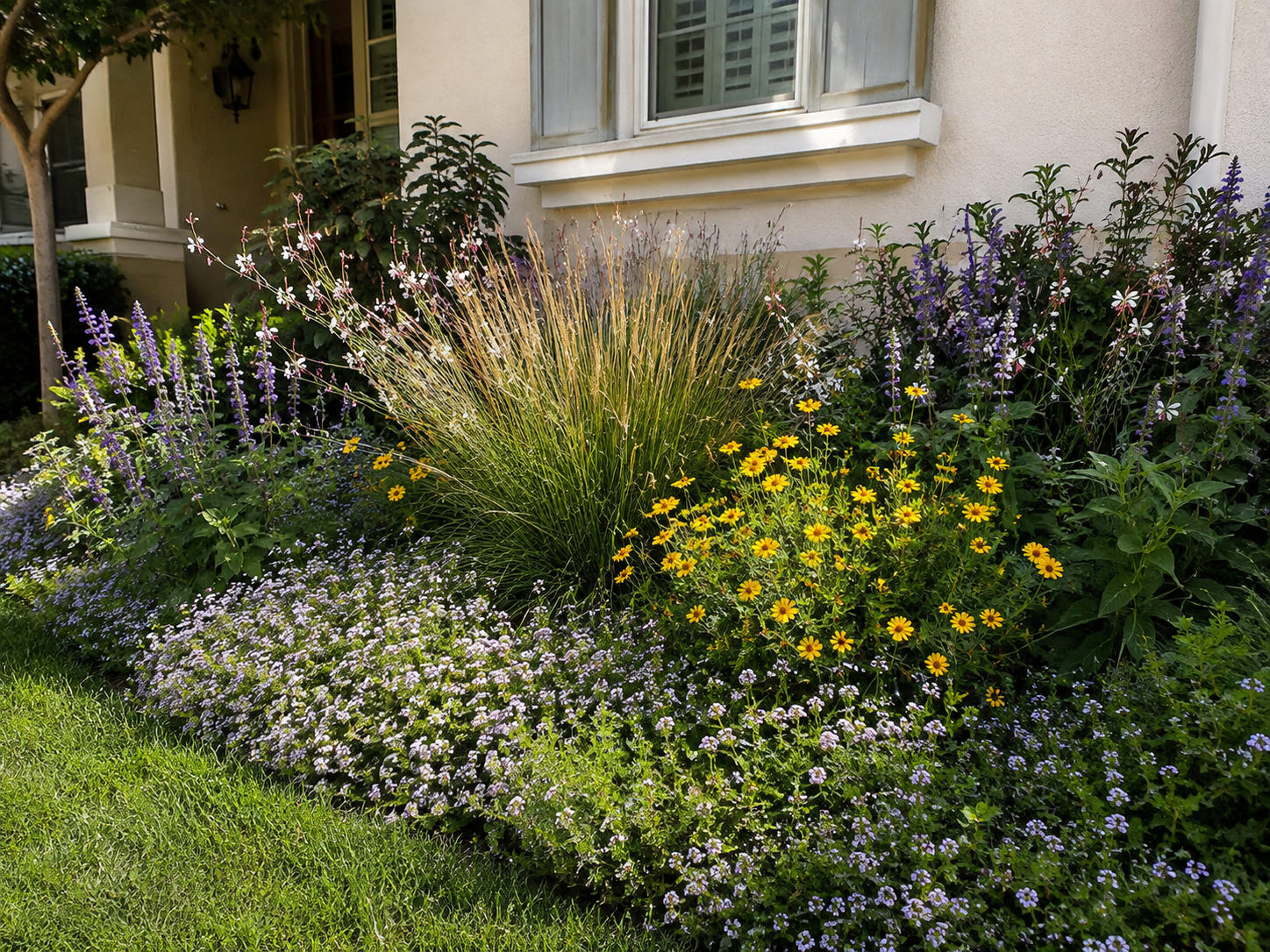
Native groundcovers can turn an exposed garden bed into a living layer of foliage, flowers, roots, and seasonal texture. Once established, they may suppress weeds, shade the soil, reduce erosion, support wildlife, and decrease the amount of mulch homeowners need to purchase and spread each year.
The best choice depends on where you live in North Carolina. A groundcover that thrives in a cool, moist Appalachian woodland may struggle in an exposed Wilmington garden filled with hot, sandy soil.
Summary:
- Native groundcovers are not an instant substitute for mulch, but they can gradually replace much of the mulch used in established planting beds.
- Mountain gardens often favor creeping phlox, foamflower, and Canadian wild ginger.
- Piedmont landscapes can use green-and-gold, golden ragwort, and Pennsylvania sedge.
- Coastal Plain gardens may benefit from partridgeberry, frogfruit, and lyreleaf sage.
- Preparing the bed correctly is essential. Test the soil, remove weeds thoroughly, correct drainage problems, and match each plant to the available light and moisture.
- Not every native plant is safe for pets. Canadian wild ginger and golden ragwort deserve particular caution.
- Wilmington-area homeowners should prioritize plants that tolerate heat, humidity, sandy soil, irregular rainfall, and competition from established tree roots.
Native plants are particularly valuable because they have established ecological relationships with local insects, birds, and other wildlife. Low-growing, spreading perennials can function as practical groundcovers while adding more biological value than a bed covered only with bark or pine straw. Read more in the NC State Extension Gardener Handbook on native plants.
Please note: The Cameron Team has not been paid or received any other compensation to include any of the products featured on this post, but the author has included affiliate links and content. If you click on a link, they may earn a commission – a high-five for great content! The products linked in this article are examples of tools that fit the gardening tasks discussed. Homeowners should compare current availability, dimensions, warranties, and seller information before purchasing.
Can Native Groundcovers Really Work Better Than Mulch?
Native groundcovers can be better than repeatedly applying mulch, but only after the plants have had time to spread. A newly planted bed still needs protection while individual plugs or divisions establish their roots and begin filling the open spaces.
A well-designed groundcover planting can eventually provide several benefits:
- Living roots help hold soil in place.
- Leaves shade the ground and slow moisture loss.
- Dense growth can reduce opportunities for weed seeds to germinate.
- Flowers and foliage create seasonal interest.
- Native species may provide nectar, pollen, seeds, shelter, or host-plant value for local wildlife.
- Established plantings can reduce, but rarely eliminate, the need for supplemental mulch.
Groundcovers should not be treated as a maintenance-free carpet. Some spread slowly, some require consistent moisture, and others may grow beyond their intended boundaries. The goal is not to eliminate gardening work altogether. It is to replace a recurring layer of imported material with a functioning plant community.
Mulch still has an important transitional role. A light layer between newly installed plants can moderate soil temperature, conserve moisture, and reduce weeds while the groundcover fills in. NC State Extension generally recommends keeping organic mulch within an appropriate depth and avoiding excessive buildup around plant crowns, trunks, and stems. See NC State Extension’s planning guidance for more information.
How Should You Prepare a Garden Bed for Native Groundcovers?
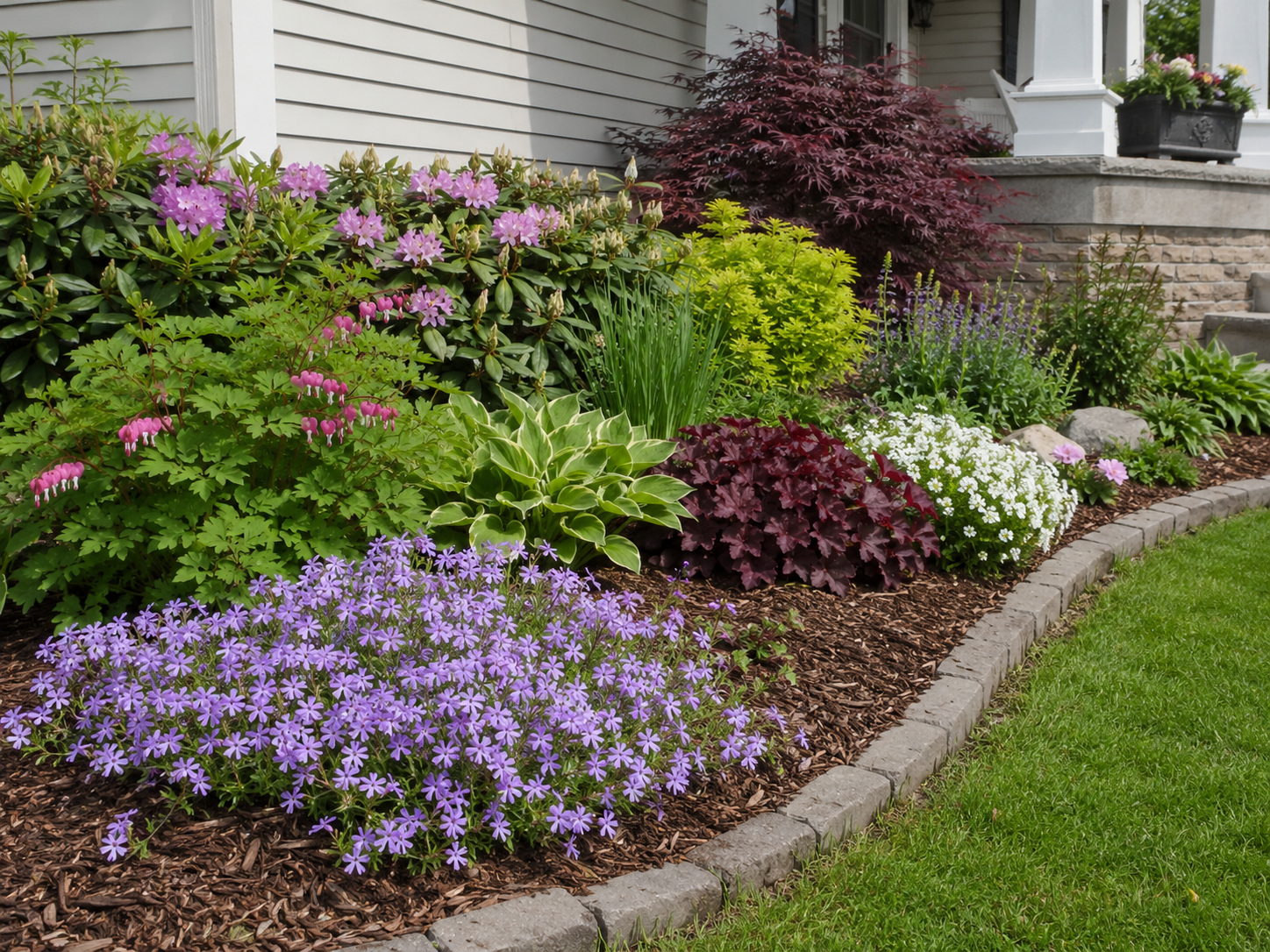
Successful groundcover planting begins below the leaves. Installing healthy plants in compacted soil, unresolved drainage, or a bed filled with perennial weeds usually leads to disappointing coverage and continued maintenance.
1. Evaluate Sunlight, Moisture, and Drainage
Observe the future planting area at several points during the day. Full sun generally means the site receives at least six hours of direct sunlight, while partial shade receives fewer hours or filtered light.
Record the following:
- How many hours of direct sunlight reach the bed?
- Is the sunlight gentle morning light or intense afternoon sun?
- Does water remain after a heavy rain?
- Does the soil dry within a day?
- Are mature tree roots competing for moisture?
- Does water from a roof, downspout, driveway, or neighboring property cross the bed?
- Is the area exposed to salt spray or strong coastal wind?
In Southeastern North Carolina, soil conditions can change significantly within one property. A Wilmington home may have sandy soil in the front yard, compacted construction fill near the foundation, and wetter soil near a drainage swale.
Do not choose a plant merely because the label says it is native to North Carolina. Match its natural preferences to the specific conditions in the bed.
2. Test the Soil Before Adding Amendments
A soil test can provide information about pH and nutrient conditions. Most homeowners do not need to add lime, fertilizer, or large quantities of compost until they know what the existing soil actually needs.
Native plants are sometimes described as plants that thrive in poor soil, but that phrase can be misleading. A plant adapted to lean, sandy soil may not tolerate compacted clay, standing water, or a heavily fertilized bed.
Helpful options include:
- Requesting a soil test through North Carolina’s agricultural testing resources.
- Contacting the local Cooperative Extension office for sampling instructions.
- Using a purchased mail-in product, such as the MySoil Soil Test Kit, when a commercial test is more convenient.
NC State Extension recommends testing soil before planting and using the results rather than making automatic amendments. Soil structure, drainage, aeration, and moisture retention can matter as much as nutrient levels. Read the NC State Extension Gardener Handbook section on native plants for additional guidance.
For additional local context, read How to Improve Soil for Better Plant Growth.
3. Remove Existing Turf and Perennial Weeds
Groundcovers cannot suppress an established infestation of Bermuda grass, nutsedge, English ivy, greenbrier, or other aggressive plants immediately. Remove as much of the existing root and rhizome system as possible before planting.
Depending on the site, preparation may include:
- Hand-pulling weeds after rainfall.
- Digging out taproots, runners, and rhizomes.
- Removing strips of turf with a flat shovel or sod cutter.
- Smothering turf well in advance of planting.
- Repeating weed removal as dormant roots resprout.
A stand-up weeder, such as the Fiskars 4-Claw Stand-Up Weeder, can be useful for isolated taproot weeds. A hand trowel, such as the Edward Tools Bend-Proof Garden Trowel, can help remove smaller rooted weeds and prepare holes for plugs.
Perennial weeds are generally easier to control before the desired groundcover becomes intertwined with them. Digging or pulling the entire root system is preferable to repeatedly clipping the visible foliage. See the NC State Extension guide to organic gardening for related weed-management guidance.
4. Correct Compaction Without Destroying Tree Roots
Construction traffic, stored materials, and heavy equipment can compress soil around newer homes. Compacted soil has fewer air spaces, restricts root growth, and may drain poorly even when the soil appears dry at the surface. Learn more from NC State Extension’s guide to modifying residential soil.
In an open bed, loosen compacted soil carefully with a garden fork. Near established trees, avoid deep tilling or widespread excavation because those activities can cut major roots.
Compost may help certain soils, but more is not always better. Use amendments based on the test results and the plants being installed. Some native species prefer lean soil and become floppy, short-lived, or excessively aggressive in highly enriched beds.
5. Arrange Plants According to Mature Spread
Lay out the plants before digging. A natural-looking bed usually works better when plants are repeated in groups or drifts instead of placing one specimen of every available species in a scattered pattern.
Use these design principles:
- Choose one primary groundcover for most of the bed.
- Add one or two companion species for seasonal flowers or contrasting texture.
- Leave access to utility meters, hose bibs, crawl-space doors, and HVAC equipment.
- Keep spreading plants away from drains and structural joints.
- Maintain a visible edge along sidewalks and driveways.
- Follow mature-width guidance instead of crowding plants for an instant result.
A small plant may look lonely at first, but proper spacing reduces disease pressure and allows each species to develop its natural form.
6. Water Consistently During Establishment
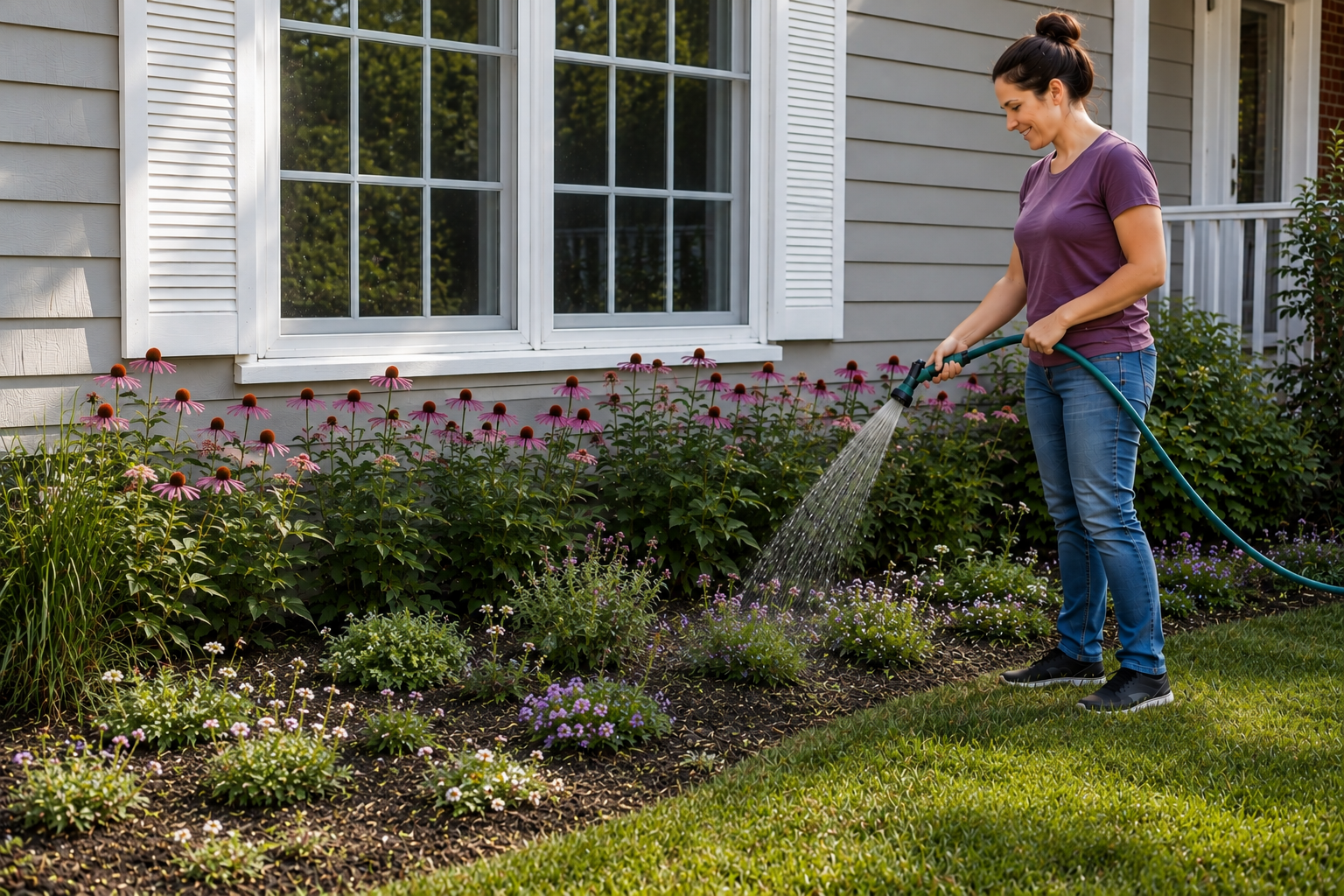
Even drought-tolerant native plants require regular water while developing new roots. Newly installed plugs have a limited root zone and can dry quickly, especially in Wilmington’s sandy soils.
For the first growing season:
- Check moisture below the surface rather than judging by leaf appearance alone.
- Water deeply enough to moisten the root zone.
- Allow the frequency to reflect the species, season, rainfall, and drainage.
- Avoid keeping drought-adapted plants continuously saturated.
- Inspect plants near large trees more frequently because tree roots compete strongly for water.
- Reduce supplemental irrigation gradually as the planting becomes established.
A 50-foot flat soaker hose may help deliver water slowly across a larger bed. Position the hose before plants knit together, and check that water is reaching the entire root zone evenly.
Apply a light layer of shredded leaves, pine straw, or fine bark between new plants. Keep mulch away from crowns and reduce additional applications as the foliage closes over the soil.
Which Native Groundcovers Work Best in North Carolina’s Mountains?
Mountain landscapes include cool slopes, moist coves, rocky outcrops, forest edges, and higher-elevation gardens. Conditions still vary significantly, but many Appalachian groundcovers appreciate cooler soil and protection from intense afternoon sun.
1. Creeping Phlox
Botanical name: Phlox stolonifera
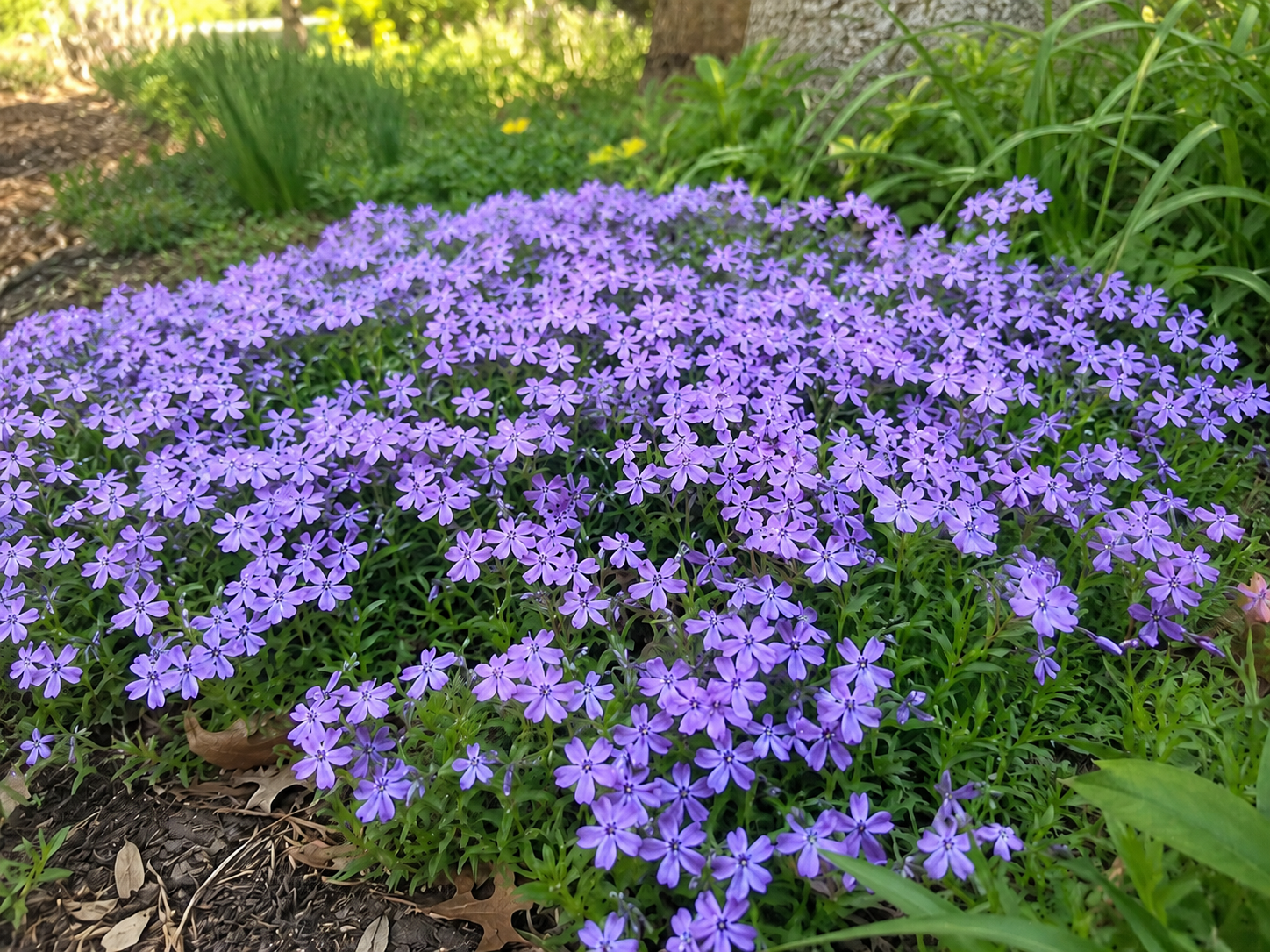
Creeping phlox is an Appalachian native that spreads through aboveground stems called stolons. These stems travel along the soil and can form roots where their nodes touch the ground.
Where it grows best:
- Full sun to partial shade.
- Moist but well-drained soil.
- Slightly acidic soil.
- Woodland edges, slopes, rock gardens, and informal borders.
- Sites with airflow around the foliage.
The plant typically forms a low mat approximately 6 to 12 inches tall. Its spring flowers rise above the foliage, and established plantings can tolerate some drought and light foot traffic. Review the NC State Extension plant profile for creeping phlox for additional details.
How to plant and grow it:
- Plant with the crown level with the surrounding soil.
- Water regularly during the first year.
- Avoid heavy, chronically wet soil.
- Provide afternoon shade in warmer locations.
- Allow enough airflow to reduce the likelihood of powdery mildew.
- Remove spent flowers when a tidier appearance is desired.
Do not confuse Phlox stolonifera with every plant sold under the general name creeping phlox. Confirm the botanical name before purchasing.
How to propagate it:
- Divide a mature clump in spring or early fall.
- Separate rooted sections of stolons and replant them immediately.
- Pin an unrooted section of stem against moist soil and allow it to root before separating it from the parent.
- Take stem cuttings when new growth is active.
- Grow from seed when genetic variation is acceptable.
NC State lists division, layering, seed, and stem cuttings as propagation options.
Pet-toxicity concerns:
No major pet-toxicity warning for Phlox stolonifera was identified in the authoritative sources reviewed for this article. Nevertheless, not known to be toxic should not be interpreted as edible or completely risk-free.
The ASPCA notes that ingestion of any plant material can cause vomiting or gastrointestinal upset in some animals. Discourage pets from chewing the foliage and contact a veterinarian when unusual symptoms follow ingestion. Review the ASPCA’s toxic and non-toxic plant database for additional pet-safety information.
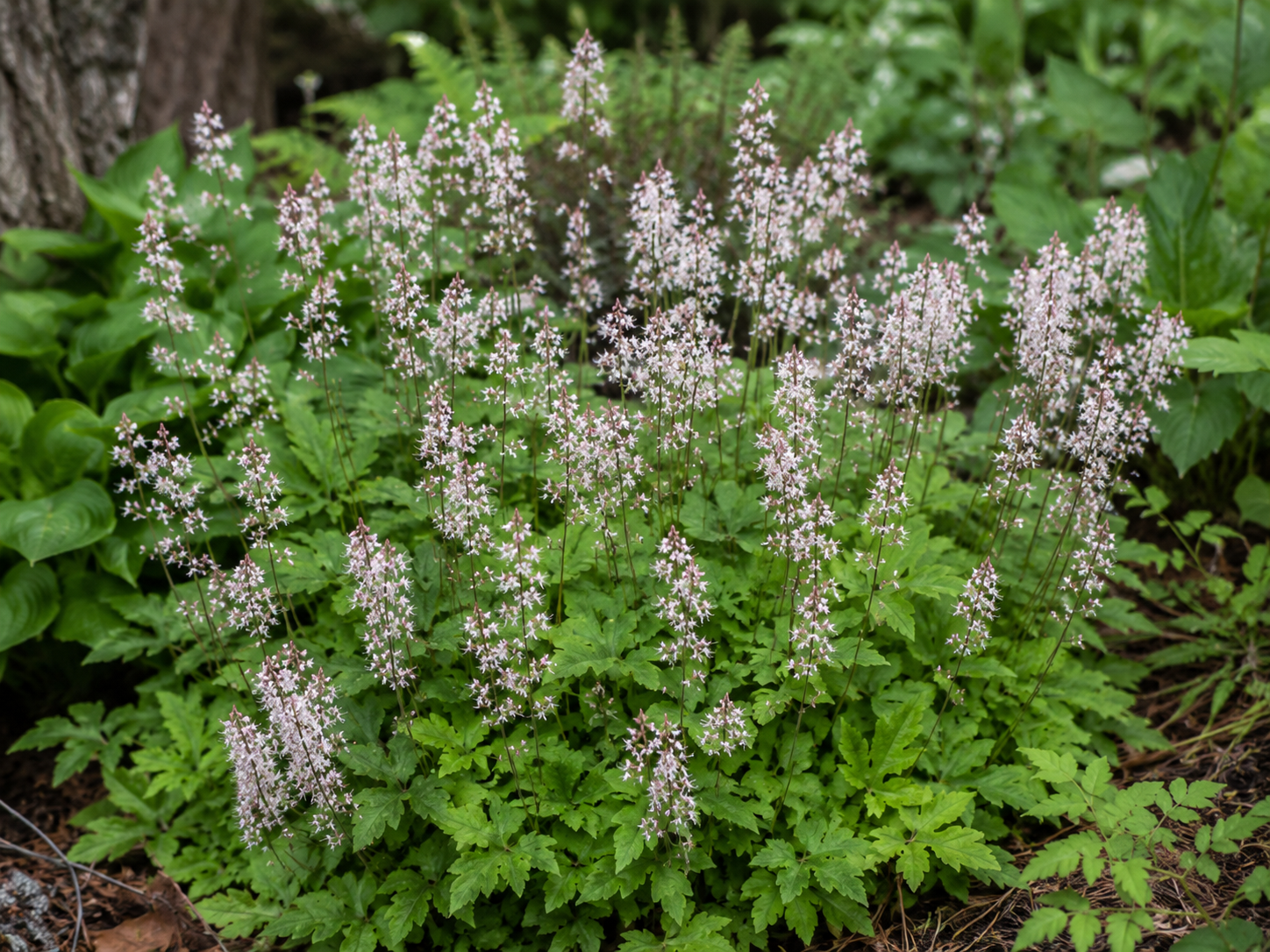
2. Foamflower
Botanical name: Tiarella cordifolia
Foamflower creates a soft woodland layer of heart-shaped leaves topped with airy white or pale pink flower spikes. It is particularly appropriate for shaded Mountain gardens with organic, moisture-retentive soil.
Where it grows best:
- Dappled shade, partial shade, or full shade.
- Moist, humus-rich soil.
- Good drainage.
- Neutral to slightly acidic conditions.
- Woodland gardens, shaded borders, and areas beneath deciduous trees.
Foamflower generally reaches approximately 5 to 12 inches in height and spreads 12 to 18 inches. It is not reliably drought tolerant, so avoid exposed, dry slopes unless irrigation is available. See the NC State Extension plant profile for foamflower.
How to plant and grow it:
- Plant in soil enriched naturally by decomposed leaves or modest compost.
- Keep the crown near soil level.
- Water before the root ball dries during establishment.
- Use leaf litter as a light natural mulch.
- Protect it from hot afternoon sun.
- Avoid sites where water remains around the crown.
In Coastal Plain gardens, foamflower may need more attention than it does in its Appalachian habitat. Wilmington gardeners should reserve it for protected, consistently moist shade rather than an exposed foundation bed.
How to propagate it:
- Divide established clumps during cool weather.
- Separate naturally rooted plantlets from the parent.
- Allow young plantlets enough time to establish their own roots before moving them.
- Collect and sow seed when multiple genetically distinct plants are present.
Foamflower may produce short stolons with new plantlets. NC State notes that young plantlets may need two growing seasons to root sufficiently before separation.
Pet-toxicity concerns:
No widely recognized toxic effect is reported for foamflower, but species-specific veterinary information is limited. It is not appropriate to promise that any landscaping plant is completely safe for every animal.
Treat foamflower as a low-concern ornamental rather than a food plant. Prevent habitual chewing and consult a veterinarian if a pet consumes a substantial amount.
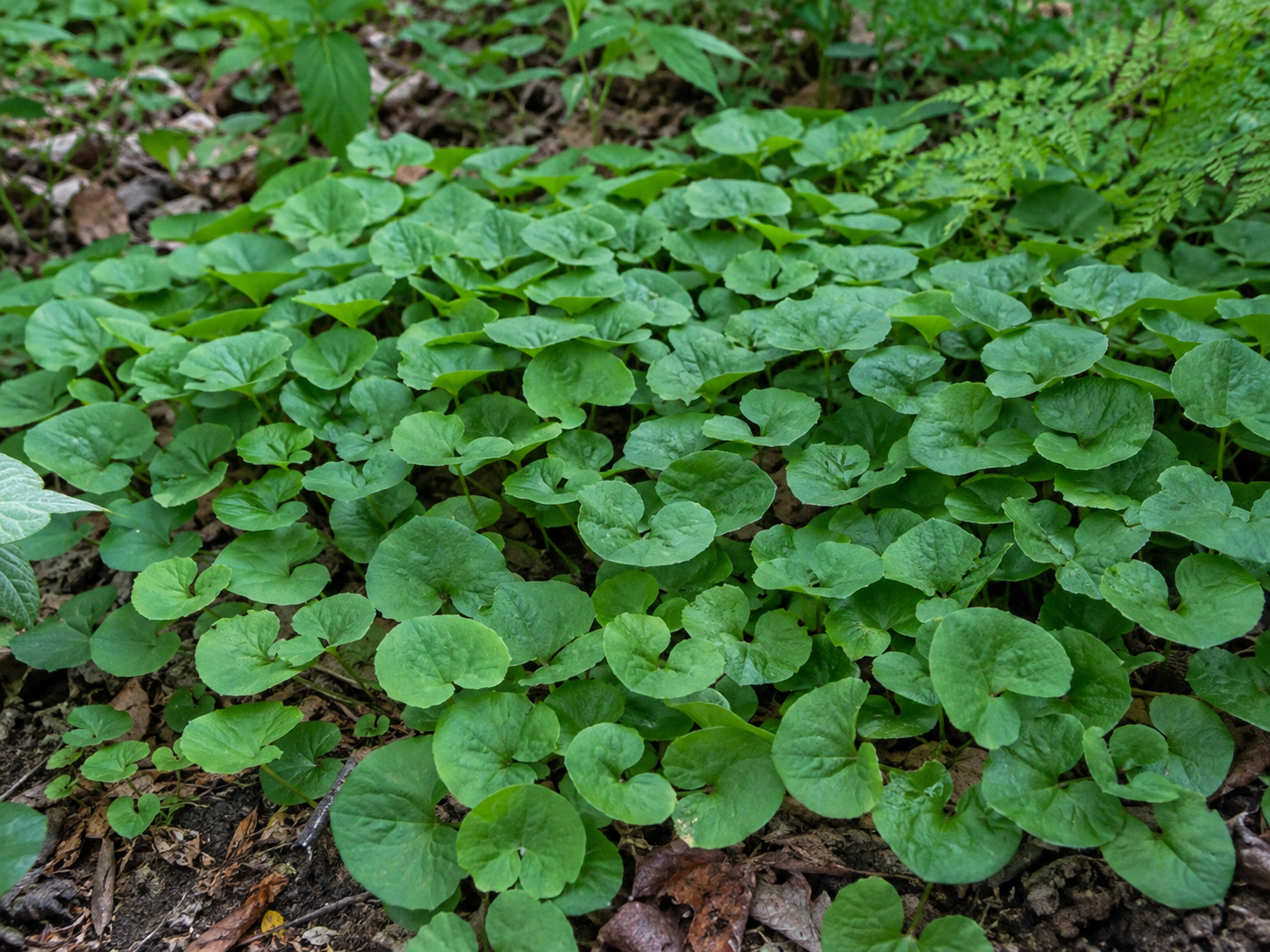
3. Canadian Wild Ginger
Botanical name: Asarum canadense
Canadian wild ginger is a deciduous woodland groundcover with broad, heart-shaped leaves. Despite the common name, it is not the culinary ginger used in cooking.
Where it grows best:
- Dappled, partial, or deep shade.
- Moist soil with high organic matter.
- Good drainage with occasional periods of greater moisture.
- Woodland floors, shaded slopes, and naturalistic garden beds.
- Locations protected from drying wind and intense afternoon sun.
The plant spreads gradually through rhizomes, which are underground stems. It creates a low, broad-leaved colony rather than a lawn-like carpet. See the NC State Extension plant profile for Canadian wild ginger.
How to plant and grow it:
- Place rhizomes horizontally and shallowly beneath the soil.
- Keep the planting evenly moist during establishment.
- Allow fallen leaves to remain as a natural protective layer.
- Avoid repeated disturbance once the colony begins spreading.
- Do not install it in a hot, exposed bed.
- Do not assume that wild ginger is suitable for culinary or medicinal use.
How to propagate it:
- Lift a portion of an established colony during cool weather.
- Cut healthy rhizomes into sections that contain roots and at least one viable bud.
- Replant each section at approximately the same shallow depth.
- Water immediately and maintain consistent moisture.
- Root cuttings may also be used.
NC State identifies root cuttings as a propagation method for Canadian wild ginger.
Pet-toxicity concerns:
Use substantial caution with Canadian wild ginger. NC State identifies aristolochic acid in the plant and describes the substance as nephrotoxic, meaning it can damage the kidneys, and carcinogenic, meaning it may cause cancer. The guidance specifically states that no part of the plant should be consumed.
Because authoritative veterinary exposure data for household pets are limited, the safest practice is to keep this plant out of areas used by animals that chew or dig. Contact a veterinarian or animal poison-control service promptly when ingestion is suspected.
Which Native Groundcovers Work Best in North Carolina’s Piedmont?
The Piedmont includes clay-based soils, rolling terrain, woodland edges, suburban lots, and both dry and moisture-retentive sites. Good plant selection begins with drainage because clay may remain wet after rain yet become hard and dry during extended heat.
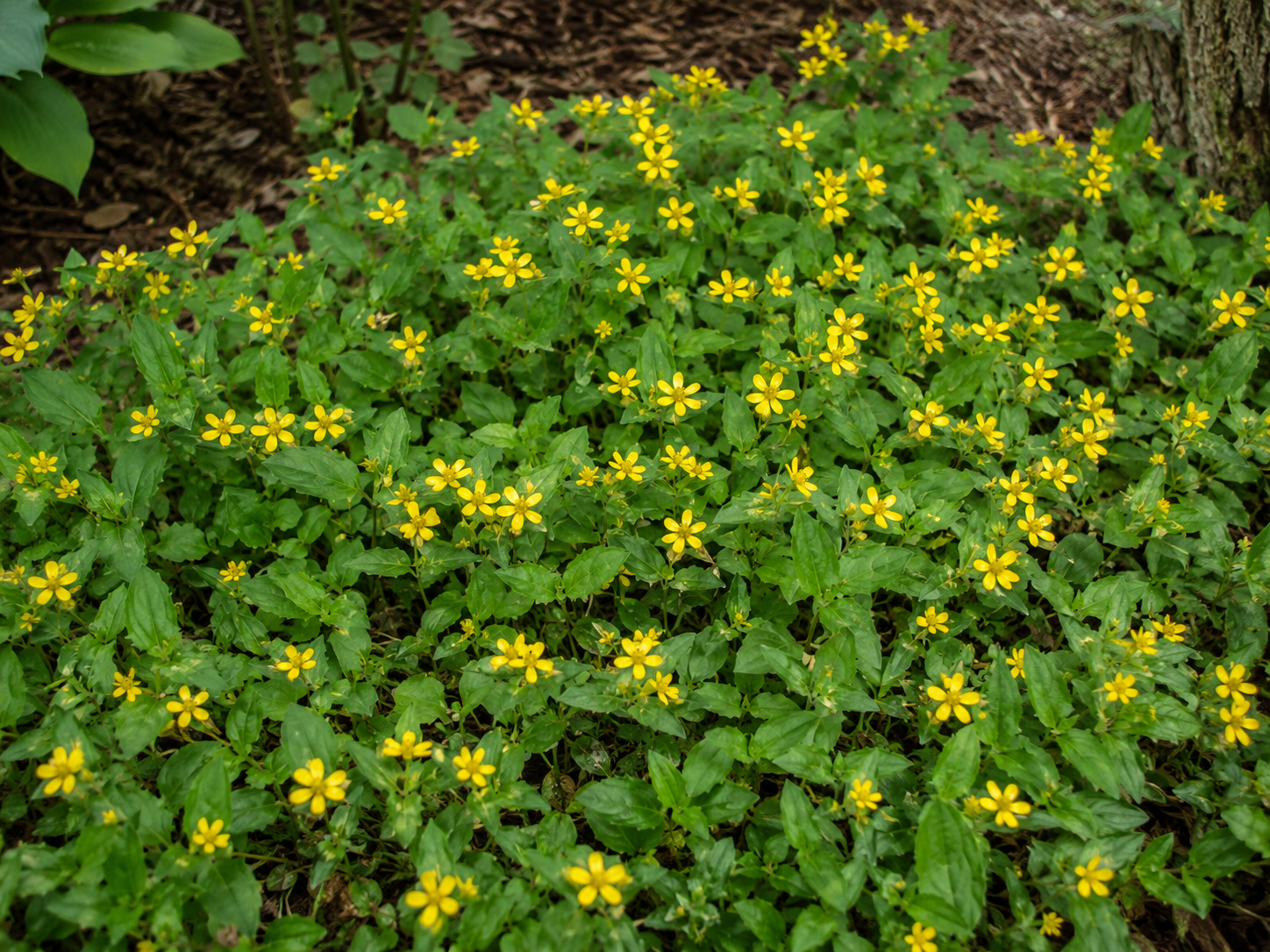
4. Green-and-Gold
Botanical name: Chrysogonum virginianum
Green-and-gold is a low, semi-evergreen native groundcover with yellow, star-shaped flowers. It offers a more colorful alternative to conventional shade-bed mulch without creating a tall or visually heavy planting.
Where it grows best:
- Partial shade to full shade.
- Moist, acidic, humus-rich soil.
- Good drainage.
- Woodland edges, shaded paths, and spaces beneath open-canopy trees.
- Full sun only where the soil remains consistently moist.
Depending on the selection and growing conditions, green-and-gold can form a mat approximately 1 to 2 inches tall, with flowers rising above the foliage. It may spread 12 to 24 inches. See the NC State Extension plant profile for green-and-gold.
How to plant and grow it:
- Install small plants or divisions into weed-free soil.
- Water consistently during establishment.
- Use a thin leaf-based mulch between plants at first.
- Avoid allowing the bed to dry repeatedly during its first season.
- Provide more shade when planting in hot Piedmont or Coastal Plain gardens.
- Watch the margins of the colony and redirect or divide growth when needed.
Green-and-gold can also work in a Wilmington shade garden when irrigation and organic matter compensate for sandy, fast-draining soil.
How to propagate it:
- Divide established clumps.
- Replant rooted sections during spring or fall.
- Grow from seed.
- Allow seedlings to remain when natural spread is desired.
- Remove unwanted seedlings before their roots become established.
NC State lists both division and seed as propagation methods and notes that the plant may self-seed.
Pet-toxicity concerns:
No major toxicity warning was identified for green-and-gold in the authoritative plant references reviewed. As with other low-concern ornamentals, homeowners should still prevent pets from eating large quantities of leaves or flowers.
Plant material can produce gastrointestinal symptoms even when it does not contain a recognized systemic toxin.
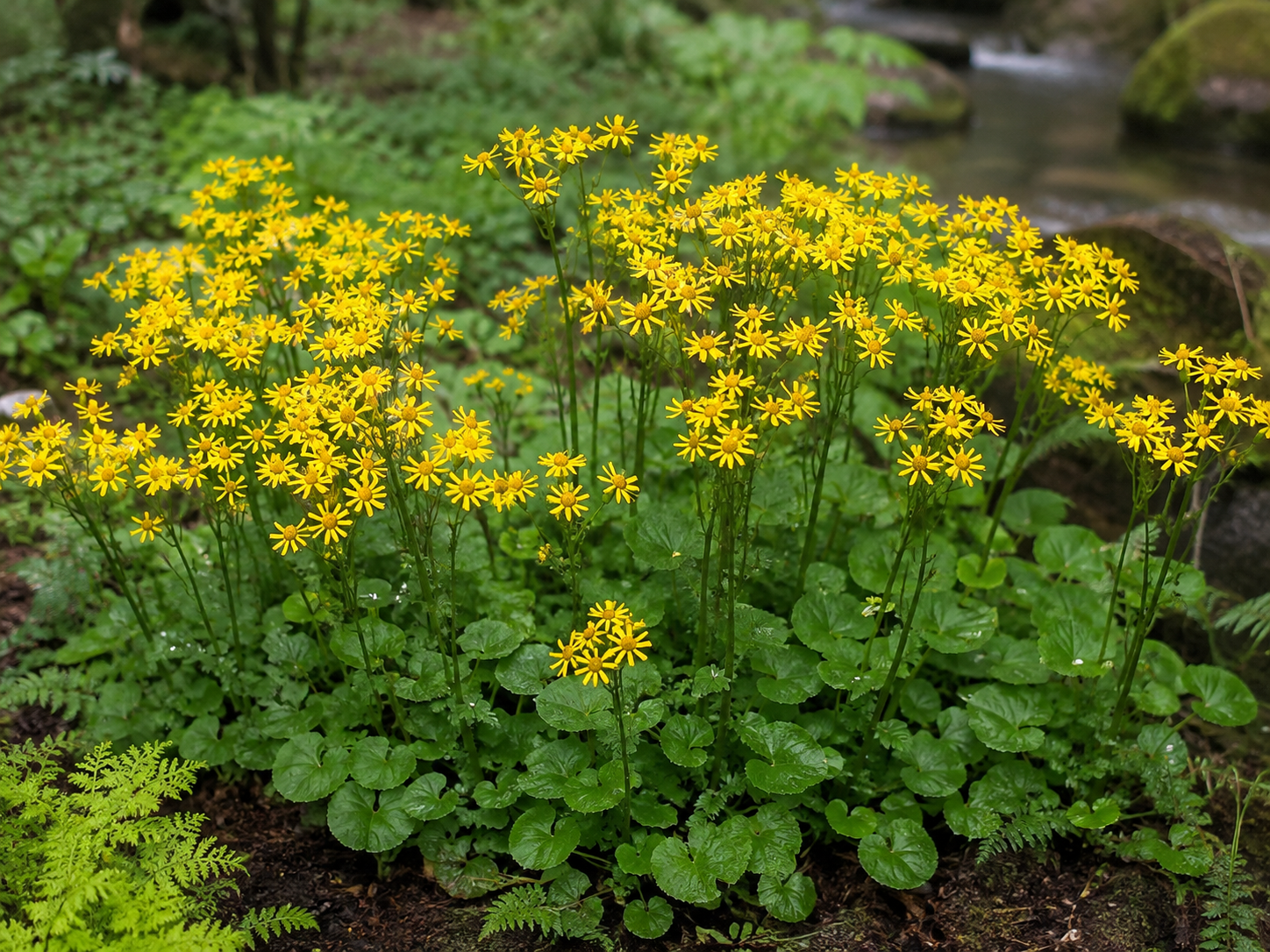
5. Golden Ragwort
Botanical name: Packera aurea
Golden ragwort is a vigorous native perennial that forms a low basal mat and sends up clusters of bright yellow spring flowers. It can be highly effective in moist, partially shaded areas where thinner groundcovers struggle.
Where it grows best:
- Partial shade.
- Full sun where the soil remains moist.
- Medium to wet soil.
- Stream edges, rain-garden margins, low woodland areas, and moist slopes.
- Sites where its spreading habit will not overwhelm smaller plants.
Golden ragwort is common in parts of the Mountains and Piedmont. Its flowering stems may reach approximately 30 inches, although the basal foliage remains much lower. It can colonize by both underground spread and seed. See the NC State Extension plant profile for golden ragwort.
How to plant and grow it:
- Install divisions or young plants in moist, weed-free soil.
- Water during dry weather.
- Give it defined boundaries near formal beds.
- Remove flower heads before seed ripens when self-seeding is not desired.
- Divide or thin colonies that begin crowding neighboring plants.
- Avoid placing it beside plants that require dry soil.
Golden ragwort is sometimes called an aggressive native. That does not make it invasive in the ecological sense, but it does mean homeowners should choose its location deliberately.
How to propagate it:
- Divide established colonies.
- Separate rooted offsets.
- Replant divisions promptly in moist soil.
- Collect mature seed.
- Sow seed where a broader naturalized colony is appropriate.
Division and seed are both recognized propagation methods.
Pet-toxicity concerns:
Golden ragwort should be treated as toxic. NC State’s plant profile identifies the plant as poisonous, and ragworts are associated with pyrrolizidine alkaloids that can cause serious liver injury, particularly after repeated or substantial ingestion.
Do not plant golden ragwort where dogs, cats, horses, or other grazing animals are likely to eat it. Homeowners with pets that routinely chew plants should select another groundcover.
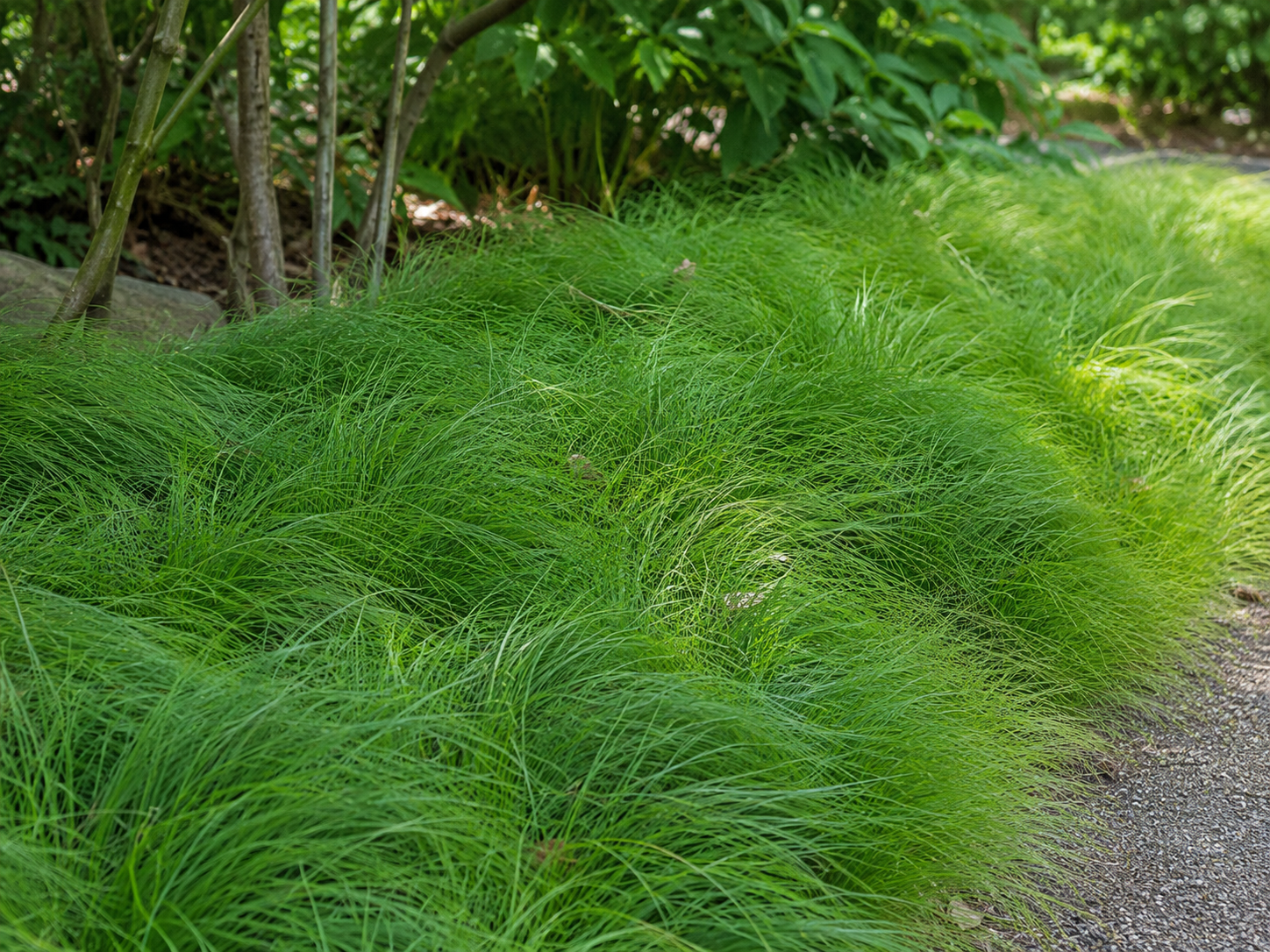
6. Pennsylvania Sedge
Botanical name: Carex pensylvanica
Pennsylvania sedge has narrow, grass-like leaves but belongs to the sedge family. It creates a soft, informal matrix beneath trees and can make a shaded bed look intentional without relying on a continuous layer of bark.
Where it grows best:
- Dappled shade, partial shade, or deeper shade.
- Acidic to neutral soil.
- Well-drained soil.
- Moist to dry woodland conditions after establishment.
- Spaces beneath oaks and other deciduous trees.
- Naturalistic beds and low-traffic transitions between lawn and woodland.
Pennsylvania sedge generally remains under 8 inches tall and spreads gradually through clumps and short underground structures. It is not a direct replacement for a heavily used turf lawn, but it can tolerate some foot traffic and may work between stepping areas. See the NC State Extension plant profile for Pennsylvania sedge.
How to plant and grow it:
- Use plugs or divisions for faster coverage.
- Space plants according to their anticipated spread.
- Water consistently during the first growing season.
- Avoid planting into chronically soggy soil.
- Leave the foliage mostly unmown for a soft, flowing appearance.
- Remove accumulated debris when it begins smothering the crowns.
This sedge works especially well when repeated across a broad area. A few isolated clumps can look accidental, while a connected matrix resembles a deliberate woodland floor.
How to propagate it:
- Divide mature clumps.
- Separate sections with healthy roots and active shoots.
- Replant during cool weather.
- Grow plants from seed when a larger quantity is needed and slower establishment is acceptable.
NC State identifies division and seed as propagation methods.
Pet-toxicity concerns:
No serious systemic toxin is commonly documented for Pennsylvania sedge. However, stiff blades or seed structures may cause mechanical irritation, and swallowed plant material can still produce gastrointestinal discomfort.
Pets that compulsively eat grass-like plants should be supervised. The ASPCA also cautions that plants not identified as toxic can still cause vomiting or digestive upset when eaten.
Which Native Groundcovers Work Best in North Carolina’s Coastal Plain?
The Coastal Plain includes Wilmington and much of Southeastern North Carolina. Gardeners here contend with long periods of heat, high humidity, sandy or disturbed soils, tropical rainfall, occasional drought, and intense competition from mature pines and live oaks.
These three plants represent different Coastal Plain situations rather than interchangeable options. Partridgeberry needs moist shade, frogfruit favors brighter conditions, and lyreleaf sage is adaptable but sends up noticeable flower stalks.
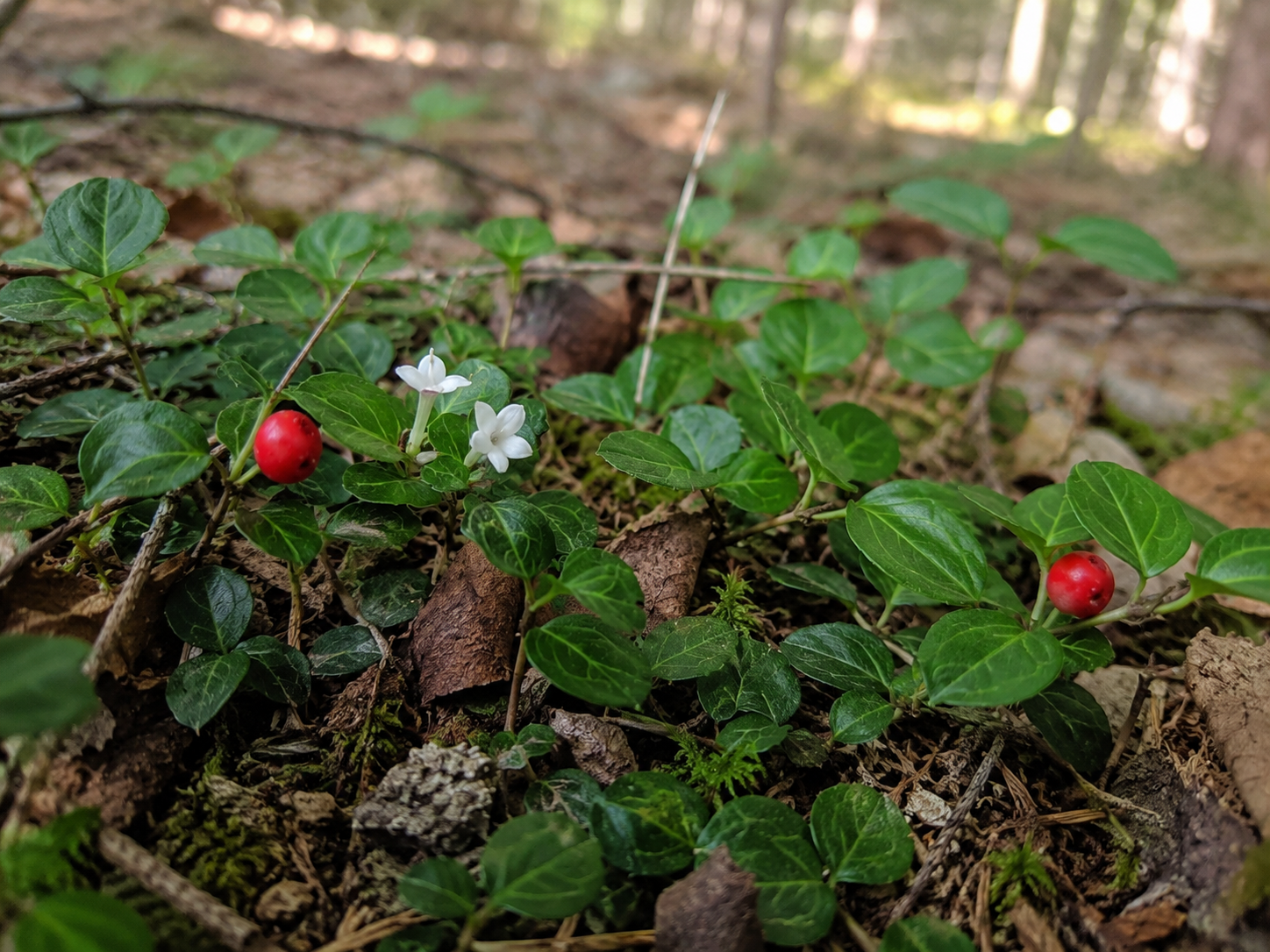
7. Partridgeberry
Botanical name: Mitchella repens
Partridgeberry is a low evergreen woodland groundcover with paired white flowers and red berries. It creates a refined carpet only a few inches high, but it can be slow and somewhat difficult to establish.
Where it grows best:
- Partial to full shade.
- Moist, humus-rich soil.
- Acidic conditions.
- Excellent drainage without repeated drying.
- Woodland gardens and protected spaces beneath trees.
- Sites where leaves can decompose naturally.
Partridgeberry usually grows approximately 2 to 3 inches tall and spreads around 12 to 16 inches. Its natural range includes all three regions of North Carolina. See the NC State Extension plant profile for partridgeberry.
How to plant and grow it:
- Begin with nursery-grown plants or divisions.
- Prepare a bed with loose, moisture-retentive organic matter.
- Plant shallowly and avoid burying the creeping stems.
- Keep the root zone evenly moist during establishment.
- Protect it from hot afternoon sun.
- Minimize foot traffic and soil disturbance.
- Allow leaf litter to remain unless it becomes excessively deep.
For Wilmington homeowners, partridgeberry is best suited to a protected woodland bed rather than a sunny strip beside the driveway. Sandy soil may require more frequent moisture checks.
How to propagate it:
- Divide an established mat into rooted sections.
- Lift sections carefully so the shallow roots remain attached.
- Replant immediately.
- Keep the new divisions shaded and consistently moist.
- Allow naturally rooted stems to develop before moving them.
NC State lists division as the primary propagation method and notes that partridgeberry may be difficult to establish.
Pet-toxicity concerns:
No recognized toxic principle for partridgeberry appeared in the authoritative resources reviewed. The berries are described as edible to people, although they are not considered especially flavorful.
Human edibility does not automatically establish veterinary safety. Supervise pets around the berries, discourage ingestion, and contact a veterinarian if an animal eats a large amount or develops symptoms.
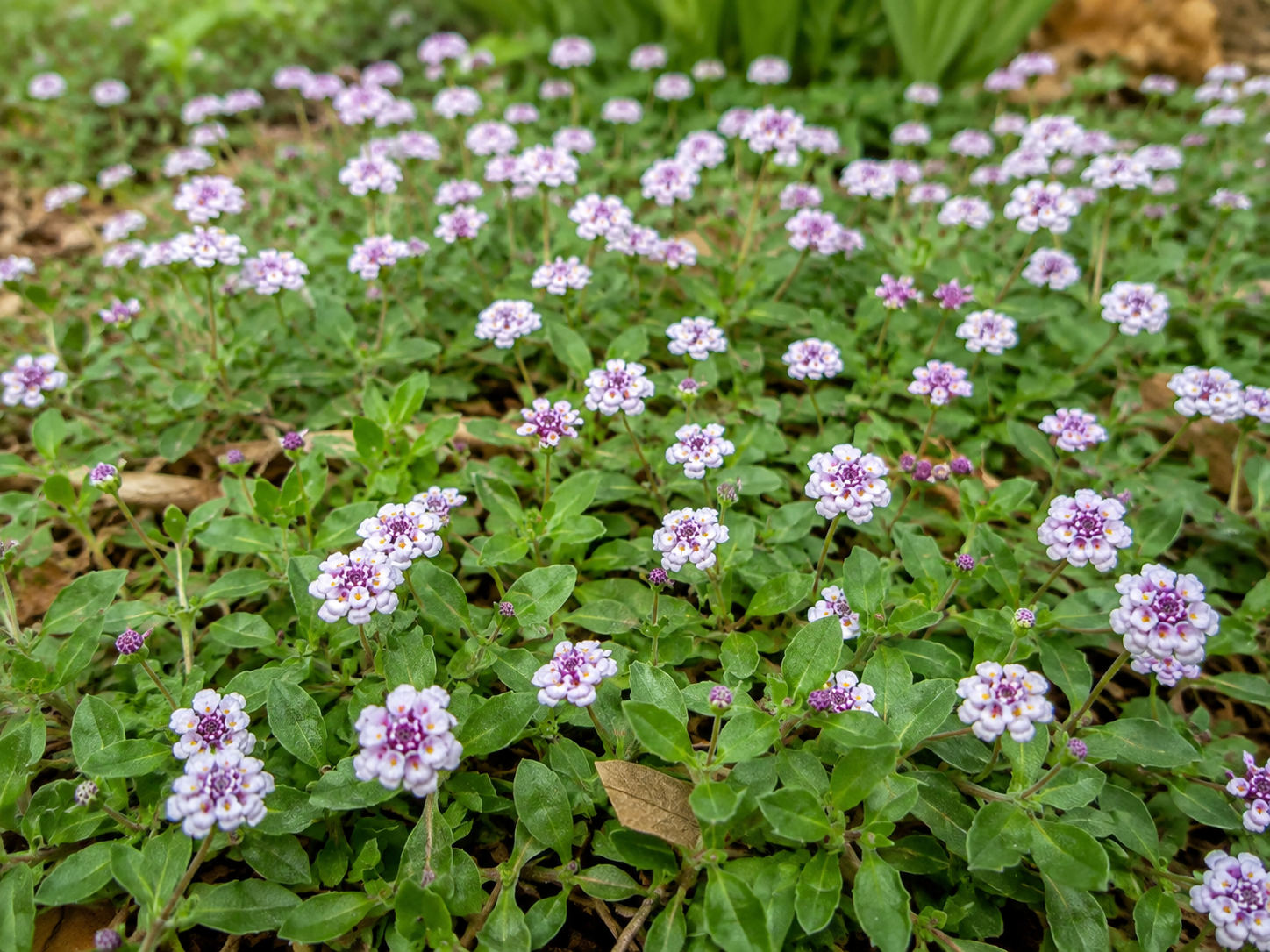
8. Frogfruit
Botanical name: Phyla nodiflora
Frogfruit is a low, spreading native with small flower clusters that attract pollinators. It can fill spaces between stepping areas, soften sunny bed edges, and create a more ecologically active alternative to a bare mulch field.
Where it grows best:
- Full sun to light shade.
- Warm locations.
- Soil that ranges from moderately moist to seasonally dry after establishment.
- Informal pathways and spaces with occasional light foot traffic.
- Areas where spreading stems can be allowed to root.
- Beds that are not expected to maintain a rigid, formal outline.
Frogfruit spreads through stems that root where they contact the soil. Supplemental water during dry periods can help it maintain fuller coverage, particularly during establishment. See the Lady Bird Johnson Wildflower Center plant profile for frogfruit.
How to plant and grow it:
- Install rooted plants after the danger of frost has passed or during another mild planting window.
- Water regularly while roots develop.
- Allow runners to contact bare soil.
- Redirect or trim stems that enter sidewalks or neighboring beds.
- Avoid mowing while the plant is flowering when pollinator activity is a priority.
- Expect reduced density during stressful weather or winter dormancy.
Frogfruit is most useful in a casual, pollinator-oriented landscape. It may not provide the uniform appearance expected from conventional turf, and its seasonal behavior should be considered part of the design.
How to propagate it:
- Divide rooted sections.
- Lift runners after they have formed roots at the nodes.
- Replant rooted pieces in moist soil.
- Take stem cuttings.
- Root cuttings in wet potting media or water before transplanting.
Both root division and cuttings are practical propagation methods.
Pet-toxicity concerns:
No major pet-toxicity warning for frogfruit was identified in the authoritative sources reviewed. Because the plant does not have a clearly established species-specific ASPCA listing, it should still be treated as an ornamental rather than pet forage.
Discourage chewing and monitor any animal that ingests a significant quantity.
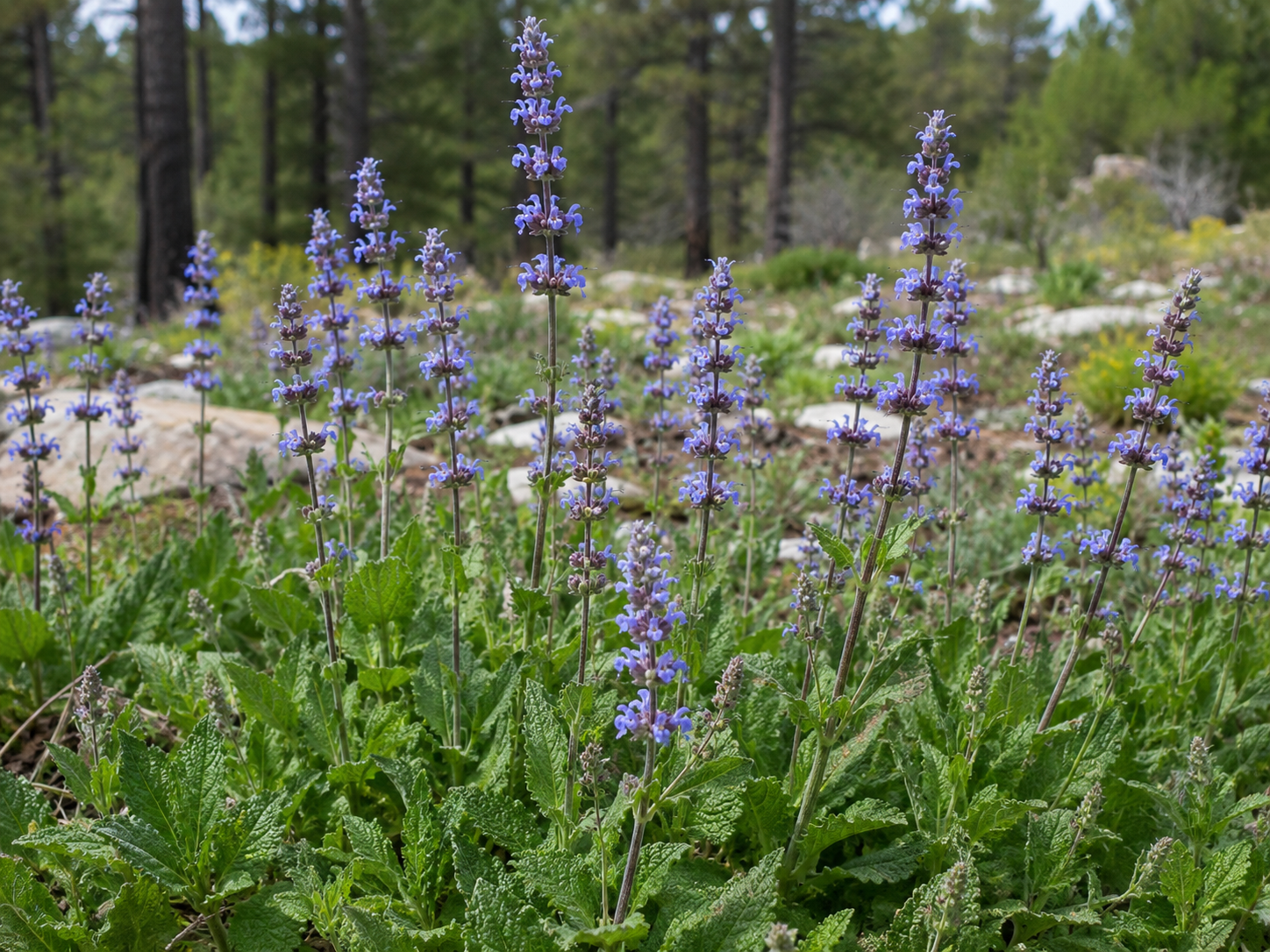
9. Lyreleaf Sage
Botanical name: Salvia lyrata
Lyreleaf sage produces a low basal rosette of leaves and upright blue-purple flower stalks in spring. It tolerates a wider range of conditions than many woodland groundcovers, making it useful in informal Coastal Plain landscapes.
Where it grows best:
- Full sun, partial shade, or open shade.
- Acidic to neutral soil.
- Clay, sand, or rocky soil with drainage.
- Moist to periodically dry conditions.
- Meadow edges, open woodlands, pathways, and informal borders.
- Areas where self-seeding can be managed.
The basal foliage may spread approximately 6 to 12 inches, while the spring flower stalks can reach 1 to 2 feet. NC State lists it for the Mountains, Piedmont, and Coastal Plain and notes tolerance for heat, drought, and some foot traffic. See the NC State Extension plant profile for lyreleaf sage.
How to plant and grow it:
- Install small plants into weed-free soil.
- Water during establishment.
- Use more sun for stronger flowering.
- Remove spent stalks before seed matures when spread must be limited.
- Leave some seed heads when naturalizing is desired.
- Combine it with lower plants so the bed remains visually full after flowering.
Lyreleaf sage can work in Wilmington’s sandy soil, provided newly installed plants receive enough water to establish. It is especially appropriate for homeowners who prefer a looser, pollinator-friendly look.
How to propagate it:
- Divide mature rosettes.
- Replant rooted divisions during cool weather.
- Collect dry seed.
- Sow seed in prepared soil.
- Allow selected volunteer seedlings to remain.
NC State identifies division and seed as propagation methods.
Pet-toxicity concerns:
The ASPCA generally identifies ornamental Salvia species as non-toxic to dogs and cats. That makes lyreleaf sage one of the lower-concern options in this guide, although species-specific ingestion data may still be limited. See the ASPCA plant profile for sage.
Even a non-toxic plant can cause temporary vomiting or digestive upset if an animal consumes enough foliage.
How Do You Make a Groundcover Bed Look Intentional?
Native landscaping does not have to look unplanned. The same design principles used indoors—repetition, rhythm, scale, contrast, and negative space—also apply outside.
Use these strategies to give the planting a composed appearance:
- Repeat one primary texture. A continuous matrix of Pennsylvania sedge or green-and-gold creates visual unity.
- Limit the plant palette. Three well-chosen species often look more polished than 12 unrelated plants.
- Create visible edges. A defined boundary beside a walkway or lawn signals that the planting is deliberate.
- Repeat flower colors. Echo yellow green-and-gold flowers elsewhere in the landscape with compatible native perennials.
- Contrast leaf shapes. Combine fine sedge foliage with broader woodland leaves.
- Consider seasonal height. Golden ragwort and lyreleaf sage remain low at the base but produce taller flower stalks.
- Provide a path. Use steppingstones or a narrow maintenance route instead of walking repeatedly across delicate plants.
- Leave breathing room around focal points. A specimen shrub, sculpture, birdbath, or entry feature should not disappear into an undifferentiated mass.
NC State’s native landscape guidance recommends grouping plants with compatible needs and using repetition to create a cohesive design. Read Design Tips for Working With Native Plants for more information.
Which Groundcover Is Best for a Wilmington-Area Yard?
There is no single best groundcover for every Wilmington property. Choose according to the bed’s moisture, light, design style, and pet access.
For a sunny or lightly shaded informal bed:
- Frogfruit.
- Lyreleaf sage.
- A combination of the two where seasonal variation is acceptable.
For protected, moist shade:
- Partridgeberry.
- Green-and-gold.
- Foamflower in especially protected locations with consistent moisture.
For a grass-like woodland effect:
- Pennsylvania sedge.
For a damp naturalized area:
- Golden ragwort, but only where pets and grazing animals cannot access it.
For a cooler, sheltered woodland garden:
- Creeping phlox.
- Foamflower.
- Canadian wild ginger, with strict attention to toxicity.
Homeowners near the coast should also consider wind, salt exposure, irrigation restrictions, drainage easements, and hurricane-related runoff. A plant may tolerate Wilmington’s USDA growing zone while still failing in a highly exposed or poorly drained microclimate.
Before purchasing plants, verify the botanical name and ask where the nursery’s stock was grown. The North Carolina Native Plant Society’s nursery directory can help shoppers locate regional native-plant sellers.

What Are the Most Common Groundcover Mistakes?
Planting Before Perennial Weeds Are Removed
Weeds are much harder to remove after they grow through a network of desirable stems and roots. Spend more time preparing the bed than installing the plants.
Using One Plant for Every Condition
A dry strip near the street and a damp bed below a downspout should not receive the same groundcover. Divide the property into planting zones based on actual conditions.
Assuming Native Means Aggressive or Maintenance-Free
Some native groundcovers spread vigorously, while others take several years to form a noticeable colony. Native status describes origin, not growth speed or behavior.
Ignoring Winter Appearance
Some plants remain evergreen or semi-evergreen, while others become sparse or dormant. Combine species thoughtfully when year-round coverage is important.
Applying Thick Mulch Over Spreading Stems
A heavy new layer of mulch can bury crowns, block stolons from touching the soil, and smother small plants. Reduce mulch applications as the desired groundcover expands.
Buying by Common Name Alone
Common names may refer to several unrelated species. Confirm the botanical name so you know the plant is native, suited to your site, and accurately represented by the toxicity information.
How Can Native Groundcovers Support Curb Appeal?
Groundcovers can make a property’s landscaping appear more established by connecting isolated shrubs and reducing broad empty spaces. They may also soften retaining walls, define walkways, and create a transition between wooded areas and more formal planting beds.
From a real estate perspective, the most successful landscape is not necessarily the one with the greatest number of plants. Buyers typically benefit from being able to understand the property quickly.
A groundcover bed should therefore:
- Keep walkways and steps visible.
- Avoid covering house numbers or exterior lighting.
- Preserve access to utilities.
- Keep vegetation away from siding and foundation vents.
- Avoid concealing drainage problems.
- Maintain clean borders.
- Include enough repetition to look purposeful.
- Be manageable for the next owner.
Landscaping can support a strong first impression, but maintenance demands should remain realistic. A beautifully planted bed that requires specialized care every week may not appeal to every buyer.
For more regional gardening and landscaping guidance, visit:
- 15 Native Plants for Sustainable Gardening in Southeastern North Carolina
- Drought-Resistant Plants That Are Great for Zones 8a and 8b
- Native Plant Alternatives to Traditional Grass Lawns
- The Best North Carolina Native Plants for Bordering Walkways
- Invasive Plants to Avoid in Southeastern North Carolina
- How Wilmington Homeowners Can Become a Pollinator Pitstop
- Landscaping: A Green Investment With Growing Returns
The Cameron Team has helped Wilmington-area homeowners, buyers, and sellers evaluate properties since 1994. That experience includes understanding how landscaping, drainage, maintenance, lot conditions, and curb appeal contribute to the way a home is presented and experienced.
Check out this article next