
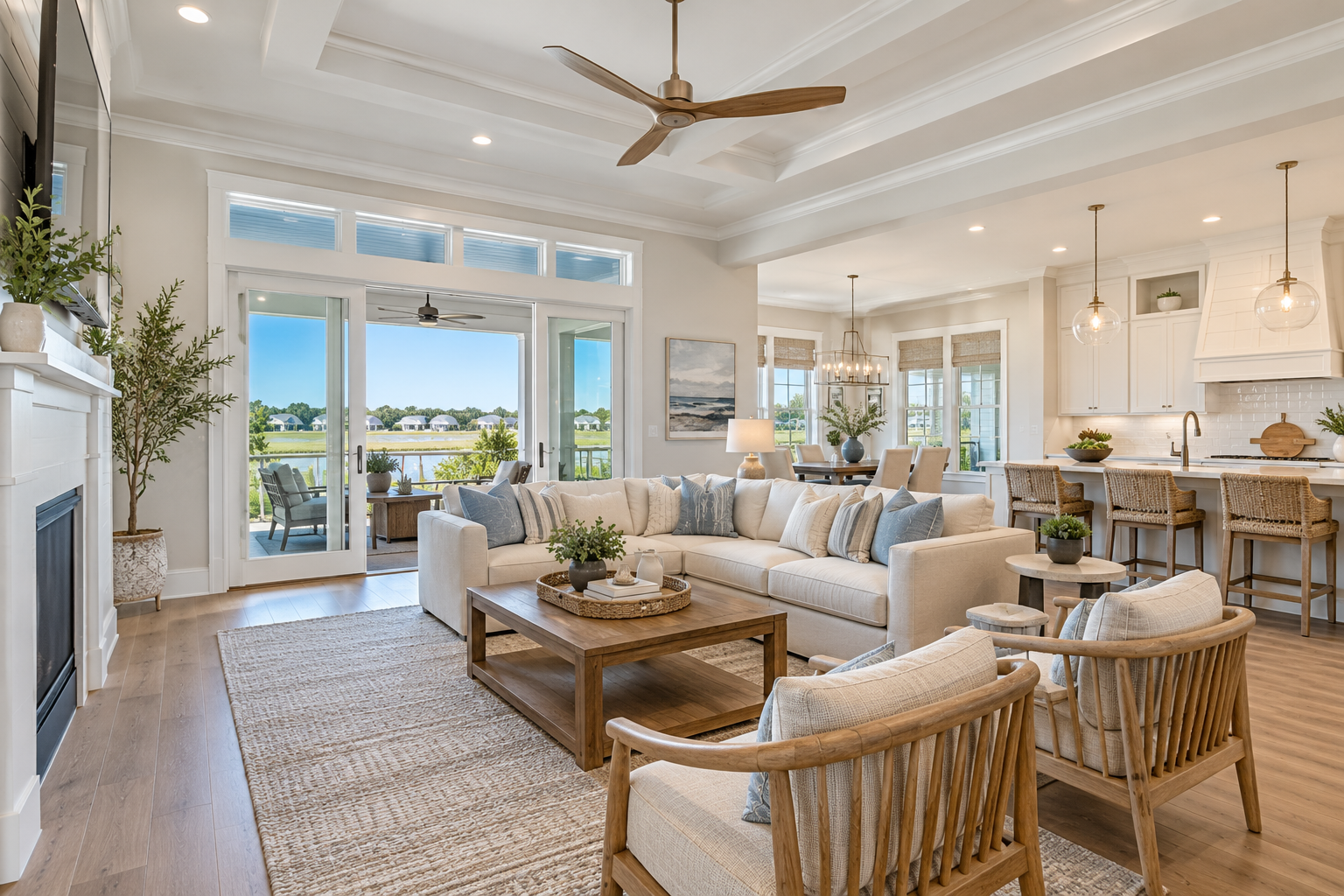
Photos are the first showing. Most buyers have already formed an opinion about your home before they ever schedule a visit, and that opinion was shaped entirely by what they saw on a screen.
That's not new. What is new is how much AI can now do to those photos, and how hard it's becoming for buyers to tell the difference between a real room and a digitally reimagined one. NAR flagged research suggesting roughly one in nine primary U.S. listing photos may be digitally altered. Lawmakers in multiple states are now writing disclosure requirements into law because of it.
I've been selling homes in the Wilmington area since 1994. Professional photography has genuinely transformed how properties are marketed, and I believe in it. But there's a version of photo editing that helps a home shine, and there's a version that sets buyers up for disappointment. The line between them matters more than people realize.
Key Takeaways
NAR research found approximately one in nine primary U.S. listing photos may be digitally altered, prompting new disclosure laws in states like California.
North Carolina doesn't have a virtual staging statute yet, but NC REALTORS® requires that alterations are disclosed and that photos don't misrepresent a property's actual condition.
Standard edits like color correction and exposure adjustments don't require disclosure. Edits that change how the property looks do.
Virtual staging is permitted when it adds illustrative furniture to an empty room. It is not permitted when it hides defects, alters room dimensions, or removes permanent features.
Hive MLS rules require disclosure in the public remarks and on the photo itself or in the photo description.
The clearest approach: label staged photos, show the original empty room alongside them, and include written disclosure in the MLS remarks.
Good photography still sells homes. Preparation and honest presentation consistently outperform digital shortcuts.
Why Do Honest Listing Photos Matter to Wilmington Sellers?
Here's the thing most sellers don't think about until it's too late: a buyer who feels misled by photos doesn't just walk away from the showing. They walk away from the listing entirely, and sometimes they tell other people why.
83% of buyers' agents said staging helps buyers visualize a property as a future home, according to the 2025 NAR Profile of Home Staging. That stat is about staging broadly, not a specific claim about virtual staging ROI, but it points to something real: photos shape how buyers feel about a home before they ever step inside.
When those photos are honest, that's a powerful thing. When they aren't, the showing becomes awkward at best and a deal-breaker at worst.
Picture a vacant home in Porters Neck or Leland that's been virtually staged. The living room looks warm and livable online. A buyer schedules a showing excited about the hardwood floors in the photo. They arrive and find carpet. That gap, however small it seems, creates doubt. And doubt is hard to recover from once a buyer is standing in your kitchen doing the mental math on whether they can trust what they're seeing.
The goal of good listing photography isn't to make your home look like something it isn't. It's to make sure it looks as good as it actually is.
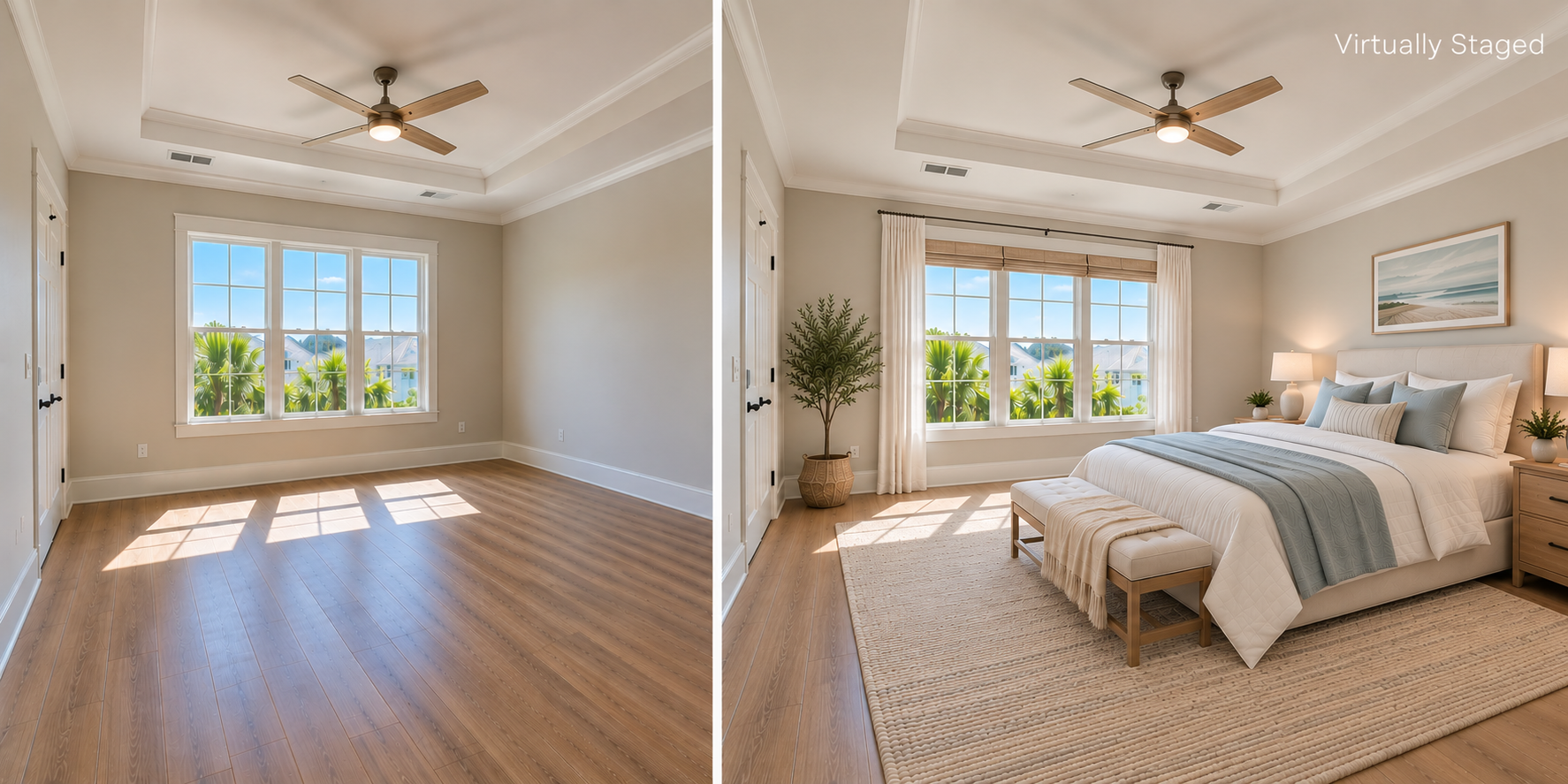
Skewed Virtually Staged Room
What Does North Carolina Say About Virtual Staging?
North Carolina doesn't yet have a law specifically targeting virtual staging the way California does. California's AB 723, which took effect in January 2026, requires a disclosure statement on or next to every altered image, plus a link to the original unaltered photo. We're not there yet in NC.
That said, the guardrails here are real. NC REALTORS® is clear that virtual staging is only permissible if the advertising isn't misleading and the alteration is properly disclosed. The NC Real Estate Commission can discipline an agent for "pursuing a course of misrepresentation through advertising," and Article 12 of the REALTOR® Code of Ethics requires agents to "present a true picture" in all marketing.
For our market specifically, Hive MLS rules require:
Written disclosure in the public remarks of the listing
Disclosure on the photo itself or in the photo description
A standard line like: "Photo is virtually staged. Furniture and decor shown are digital and not included in the sale."
What's not currently a formal local requirement, but is absolutely best practice, is pairing the staged photo with the original empty-room shot. Several major MLSs across the country already require it, and the direction things are heading is pretty clear. Showing both builds buyer trust instead of eroding it.
Which Listing Photo Edits Help and Which Mislead?
This is where it gets practical. Not every edit needs a disclosure, and not every edited photo is a problem. The question is whether the edit improves how the photo looks or changes how the property looks.
Edits that are standard and don't need disclosure:
Color correction and white balance: Fixing the yellow or blue cast from interior lighting so the room reads true to life
Exposure and brightness: Bringing up shadow detail or reducing window glare so buyers can actually see the space
Lens distortion correction: Makes vertical lines straight without altering the room itself
Minor retouching: Removing a lens smudge or a sensor dust spot
Edits that change the property and do require disclosure (or shouldn't be done at all):
Virtual staging: Adding digital furniture to an empty room is fine, but the room's actual floors, walls, windows, and dimensions stay as-is, and the edit gets labeled
Sky replacement: Common and usually harmless, but if the swap removes neighboring structures or suggests a view that doesn't exist from inside the home, it's misleading
Object removal: Clearing a seller's personal items from a photo is tidying. Digitally removing a utility pole, a neighboring roofline, or a weathered deck that shows deferred maintenance is misrepresentation.
Renovation renderings: Showing a proposed kitchen remodel in listing photos is only appropriate when it's clearly labeled "Proposed Renovation, Not Current Condition," with the actual current condition shown separately
For coastal properties, this matters especially. A home near Topsail Beach, Wrightsville Sound, or along the Intracoastal doesn't need a manufactured ocean view. If the view is real, it photographs beautifully on its own. Adding one that isn't there, or digitally erasing a neighboring structure, just sets up a buyer for a moment of confusion that can unravel an otherwise strong showing.
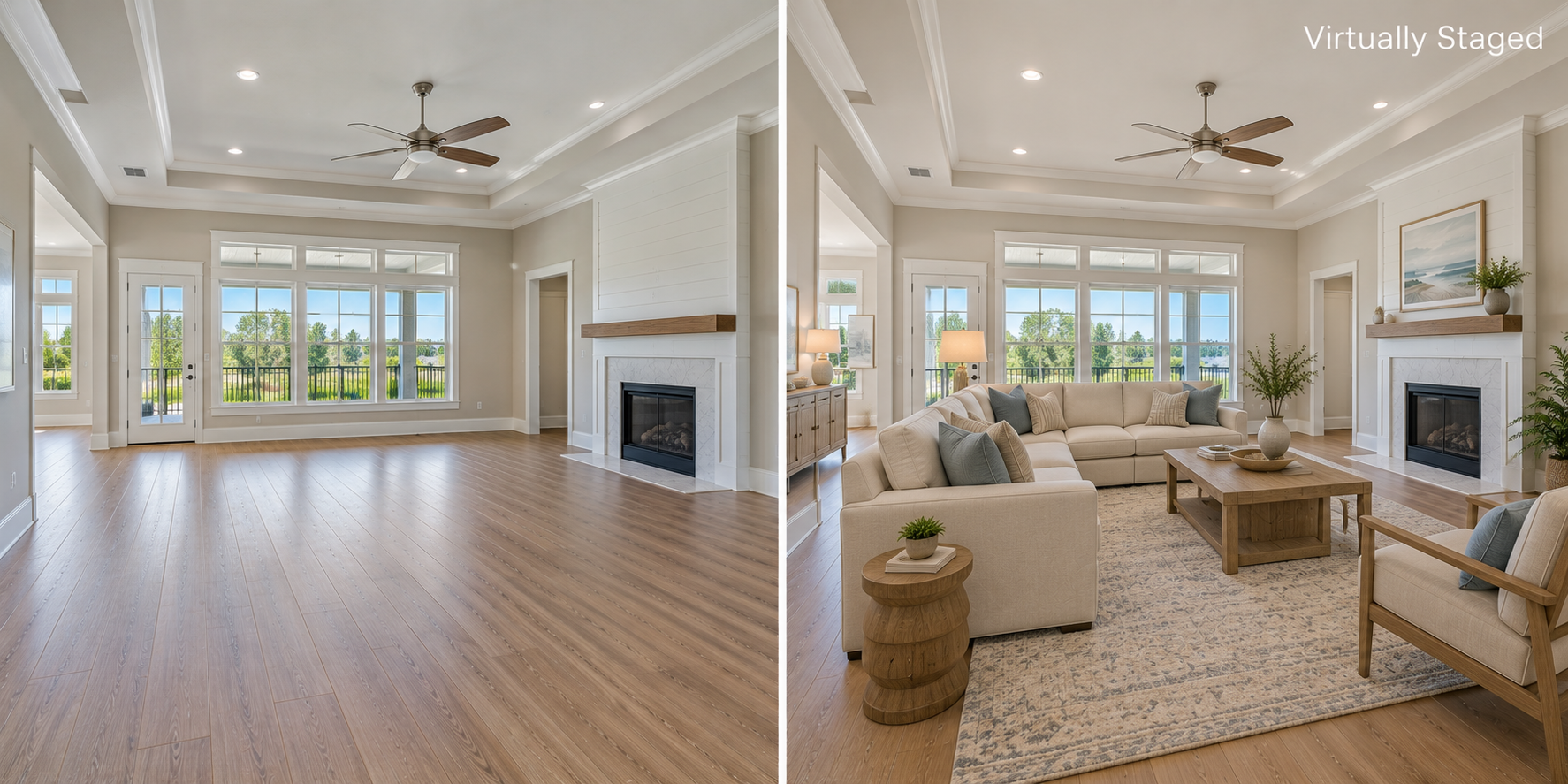
Virtually Staged Living Room
How Should Sellers Review and Disclose Edited Photos?
Before your photos go live, look at them carefully. You know your home better than anyone, and a second set of eyes (yours) is worth something.
When reviewing edited photos, check these things:
What to Look At | What to Check |
|---|---|
Windows and doors | Same size and position as in the actual room? |
Room proportions | Does it feel the same size as it does in person? |
Floors and walls | Are the actual finishes shown, not idealized versions? |
Virtual furniture scale | Does it fit the room realistically? |
Exterior views | Does the photo reflect what's actually visible? |
Condition details | Is anything concealed that a buyer would notice at a showing? |
If virtual staging was used, the disclosure process is simple:
Label the staged photo as "Virtually Staged" in the photo description or directly on the image
Show the original empty-room photo immediately before or after the staged version
Add disclosure language to the public remarks in the MLS listing
Keep the label wherever the photo travels, including social media, flyers, and property websites
Buyers don't mind knowing a room was virtually staged. What they mind is finding out after the fact that what they saw online wasn't real. The label doesn't make the photo less effective. If anything, being upfront about it earns more trust than hiding it.
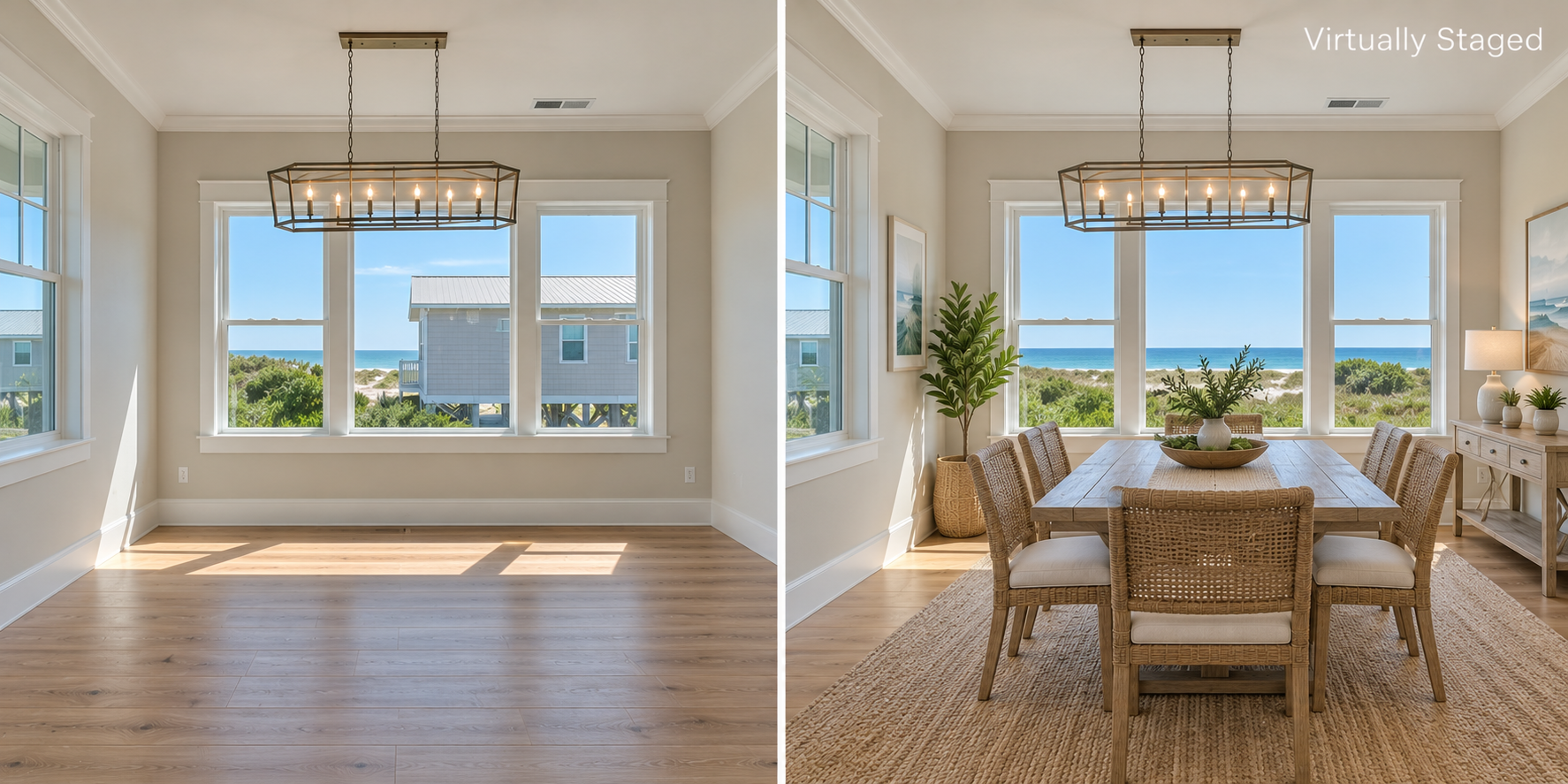
Misleading Virtual Staging
How Can Strong Photos Show a Coastal Home Honestly?
At The Cameron Team, our approach starts before the photographer ever arrives. We walk through the property with sellers ahead of time, talk through what to prepare, and have honest conversations about what's worth addressing before the camera comes in. That prep work is what makes the photos good, not digital corrections after the fact.
From there, we invest in professional photography, video, drone aerials, and virtual staging for vacant properties when it fits. Each of those tools has a real place in a strong listing. And each one is used with the actual property as the foundation.
For a home along the Cape Fear River, ICWW, or near lakes in Brunswick County, drone photography is genuinely valuable. It shows the setting, the lot, and the surrounding context in a way ground-level photos simply can't. We label drone perspectives clearly and make sure buyers understand they're seeing context for the location, not a substitute for a survey.
For a vacant home in Southeastern North Carolina, virtual staging can help a buyer see how a room might actually live. We show the original alongside it and note the staging in the remarks.
That's the standard we hold ourselves to, and it's what we think every seller deserves from the agent representing their home. If you're getting ready to list and want to talk through what a thoughtful, honest marketing plan looks like for your property, we'd be glad to have that conversation. You can reach us at thecameronteam.net.
Check out this article next