
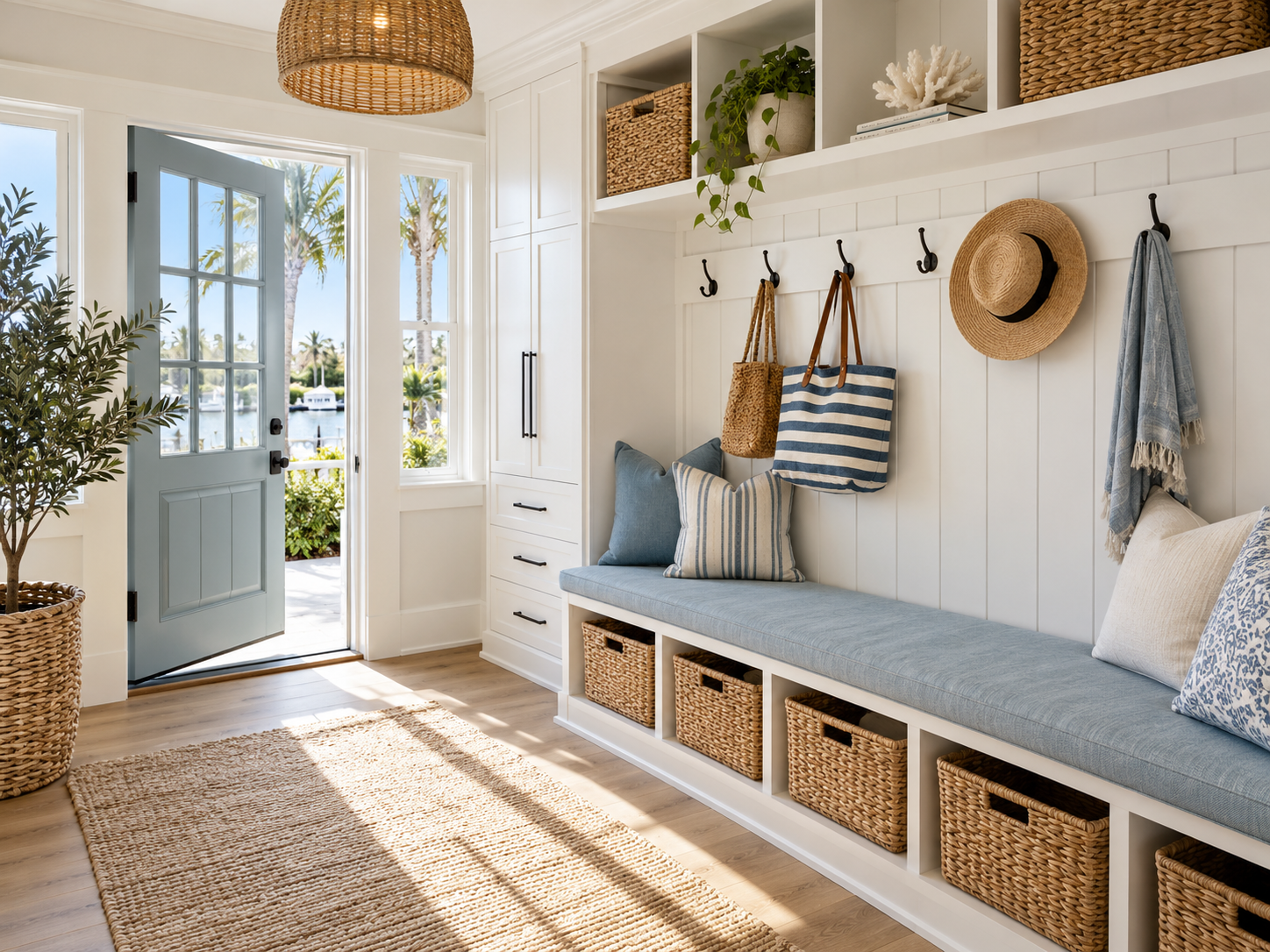
Most of us who live near the coast know exactly how the afternoon comes home with you. Sandy flip-flops by the door, a damp towel draped over whatever is closest, a dog leash on the floor, and three bags that somehow never made it to the right room. If that sounds familiar, you are not alone, and your house is not the problem. The entry point is.
Here in Wilmington and the surrounding communities, the daily shuffle through the garage or laundry room is real life. And when you are getting ready to sell, that same spot that has absorbed years of coming-and-going suddenly needs to look like it has it all together.
The good news is that it does not take a renovation to get there.
Note: Architecture trend data in this article reflects the AIA's Q3 2026 Home Design Trends Survey. Rainfall figures come from the National Weather Service 1991-2020 climate normals for Wilmington, NC.
Key Takeaways
- Buyer interest in entry function is growing: 30% of architecture firms reported rising mudroom demand in 2026, up from 21% in 2025.
- Design around your actual arrival path, not the front door, because that is where the pile-up actually starts.
- A full renovation is rarely necessary. A bench, a hook rail, a boot tray, and one landing surface cover most of what a built-in does.
- Wilmington's climate makes this practical. With roughly 60 inches of rain per year and sand as a daily companion, durable and easy-to-clean entry zones are not just a trend here.
- Sellers especially benefit from a tidy, organized entry zone before photos and showings.
- Per-person storage beats shared hooks every single time.
- Match materials to coastal conditions: corrosion-resistant hardware, washable textiles, and surfaces that can take wet feet without showing every mark.
Please note: The Cameron Team has not been paid or received any other compensation to include any of the products featured on this post, but the author has included affiliate links and content. If you click on a link, they may earn a commission – a high-five for great content! The products linked in this article are examples of products that fit the topic discussed. Homeowners should compare current availability, dimensions, warranties, and seller information before purchasing.
Why Does a Drop Zone Matter to Wilmington-Area Sellers?
Buyers notice things they cannot always name. A well-kept entry area tells them the rest of the house has been cared for. A pile of shoes, hooks drowning in coats, and a counter buried under mail tells a different story, even if the kitchen and bathrooms are immaculate.
The AIA's Q3 2026 Home Design Trends Survey found that 30% of architecture firms reported growing client demand for mudroom and drop zone features, up from 21% the year before. That is architects tracking what their clients are asking for, which means buyers are walking into homes with this on their minds.
Locally, it goes a step further. Wilmington averages about 60 inches of rain per year, and if you have spent any time at Carolina Beach or Surf City, you know that sand does not stay at the beach. Buyers who are moving here understand that. A home that shows it has a real system for handling coastal daily life, even a simple one, just feels more livable.
After more than 30 years working with sellers across New Hanover, Brunswick, and Pender counties, I can tell you that entry zones are one of those details that either quietly support a showing or quietly undermine it. Most sellers do not realize how much weight that first impression carries until we are standing at the door together before photos.
Where Should a Drop Zone Go in a Wilmington-Area Home?
Before you buy a single hook, walk the path you actually use most days. For a lot of homes in Leland, Hampstead, RiverLights, or St. James, that path runs from the garage through the laundry room and into the kitchen. Not the front foyer. The front foyer is for guests. Your drop zone belongs wherever the real coming-and-going happens.
A few setups that work well in our market:
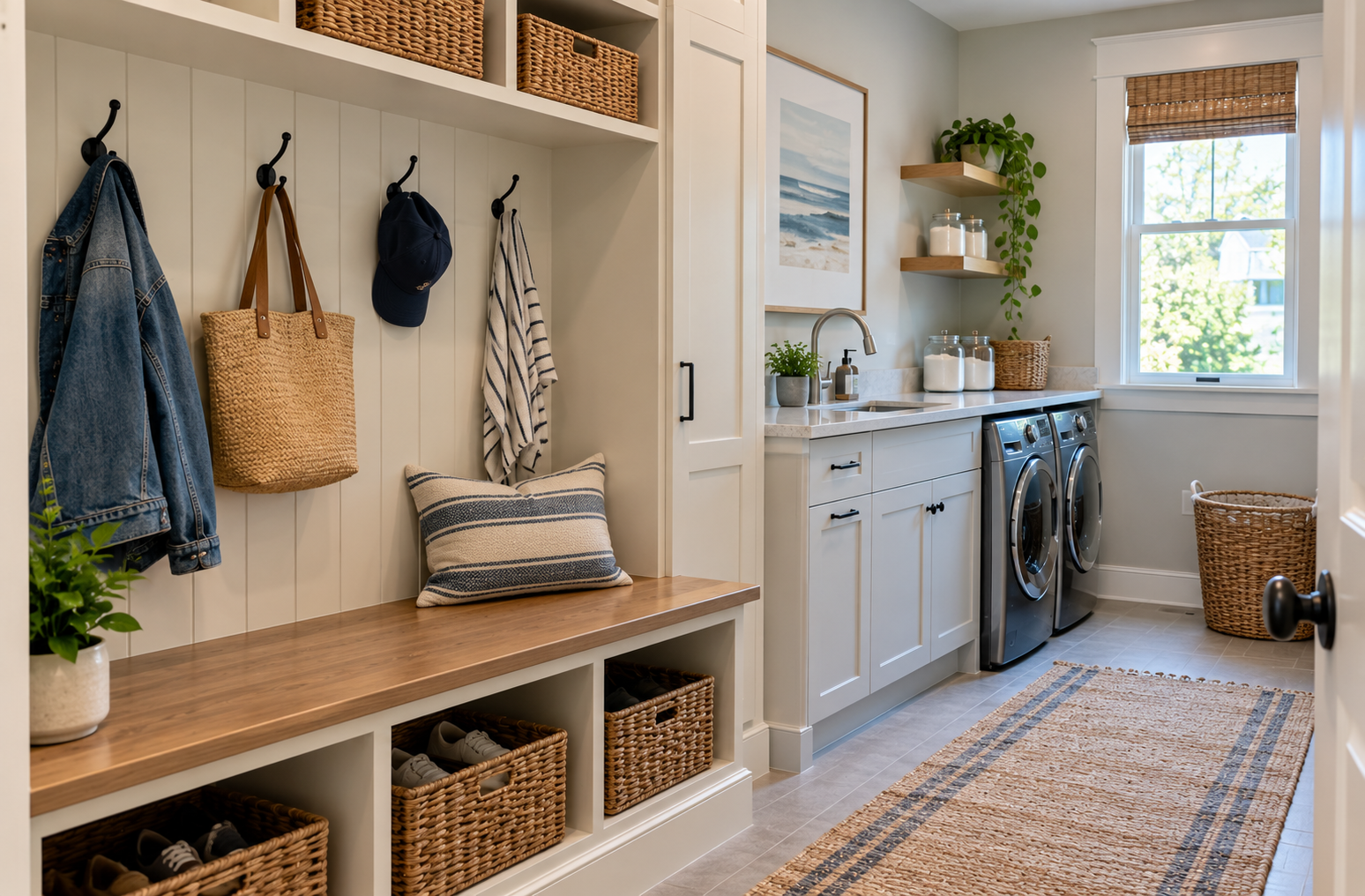
- Garage entry wall: Boot tray just inside the door, a bench for sitting down to pull off shoes, a peg rail at adult height with a lower row for kids, and a ventilated bin for beach bags or sports gear.
- Laundry room connection: Many ranch plans already put laundry on the garage path. Add hooks for drying towels and raincoats, and a small shelf for keys. Suddenly that room is doing two jobs without any construction.
- Narrow hallway or side entry: A shallow console or locker run, no deeper than 12 to 14 inches, keeps the walkway clear. Baskets on a shelf look more intentional than open shelving piled with random items.
- Beach-home entry: If you are in Kure Beach, North Topsail, or Surf City, a sand-catching mat or tray right at the threshold before the interior flooring does a lot of work. Towel hooks nearby keep wet gear off the floor and out of the living space.
Every drop zone needs to cover four things: somewhere to sit, somewhere for shoes, somewhere to hang, and a landing spot for keys and small essentials. If a piece of furniture does not serve at least one of those purposes, it is decoration, and decoration does not stand a chance against a wet beach bag.
Which Drop Zone Updates Are Worth the Cost Before Listing?
This is where I want to be straightforward with you, because I have watched sellers spend money here that did not need to be spent.
Start free. Clear out the duplicates, move seasonal gear to the garage or a closet, and give every person in the household a designated spot. A labeled bin per person costs almost nothing and immediately makes the area look like a system rather than a pile.
From there, a modest investment goes a long way:
- A mounted hook rail: Sturdy, clean, and around $30 to $80 at most hardware stores. It takes an afternoon and a level.
- A washable runner or boot tray: Defines the zone visually and catches sand before it travels into the rest of the house.
- A simple bench: A 48-inch bench with open cubbies underneath is enough for most families. You want it to look organized, not like a showroom.
What is not worth doing before a sale: cabinetry runs, plumbing changes, or anything that needs permits and weeks of contractor time. Those investments make sense when you are staying. For a listing, you are working on presentation, not a permanent solution.
If you are considering anything structural, get local quotes. Costs across New Hanover and Brunswick counties vary enough that any number I gave you here would probably not apply to your home anyway.
Which Materials Can Handle Sand and Damp Gear?
Coastal living puts real wear on entry zones. Wet swimsuits, sandy shoes, rain-soaked jackets, and muddy paws all land in the same small area, sometimes multiple times a day. The materials you choose either make that manageable or they make it worse.
| Material | Best Use | Why It Works |
|---|---|---|
| Porcelain tile | Floors | Handles water, grit, and heavy use without showing damage |
| Luxury vinyl plank | Floors near finished spaces | Easier to match existing rooms, no tile transition needed |
| Corrosion-resistant hooks | Wall hardware | Coastal humidity will rust standard steel hooks faster than you'd expect |
| Washable canvas or cotton bins | Storage | Easy to pull out and toss in the wash |
| Slatted wood or coated wire shelves | Shoe storage | Air circulation keeps wet shoes from sitting in a sealed box |
Keep wet towels hung open on spaced hooks rather than bunched up. The EPA recommends keeping indoor humidity between 30% and 50% and drying damp surfaces within 48 hours. A well-ventilated hook wall is not just organized; it actually helps the home breathe.
A simple daily reset, five minutes at the end of the evening, keeps the whole thing working: shake out sand, empty the boot tray, hang wet gear properly, and put keys back where they belong.
How Should a Drop Zone Look in Photos and Showings?
For sellers, staging an entry zone is really about showing restraint. Buyers need to see that the space works, not how much it can hold.
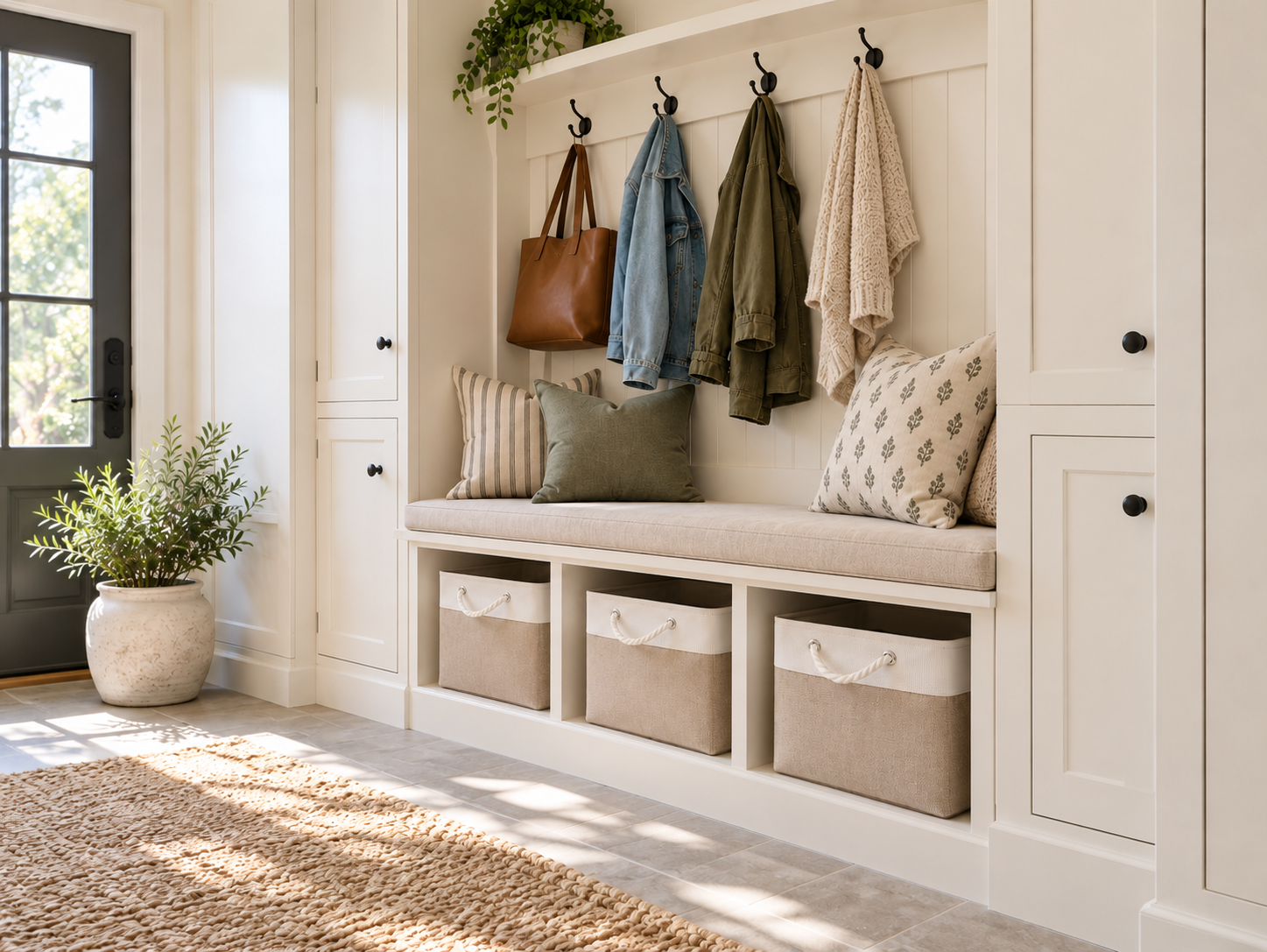
For photos and showings, aim for:
- One bag on a hook, not a row of them
- One clean pair of shoes visible per person, nothing piled underneath
- Matching or similar-looking bins, even if the contents are different
- A clear surface with one small tray or dish, nothing else sitting out
Before a showing, remove anything personal: school names on backpacks, pet medications, personal mail, anything that pulls a buyer out of imagining their own life in the space.
NAR's 2025 staging research found that 83% of buyers' agents said staging helped buyers picture themselves in a home. That is not drop-zone specific, but the idea applies perfectly here. A calm, functional entry tells buyers this home has been lived in thoughtfully.
When we work with sellers on The Cameron Team, we walk through moments like this before photography. It is a small thing that tends to make a real difference in how a home reads online, which is where most buyers are forming their first impression long before they ever walk through the door.
Check out this article next