
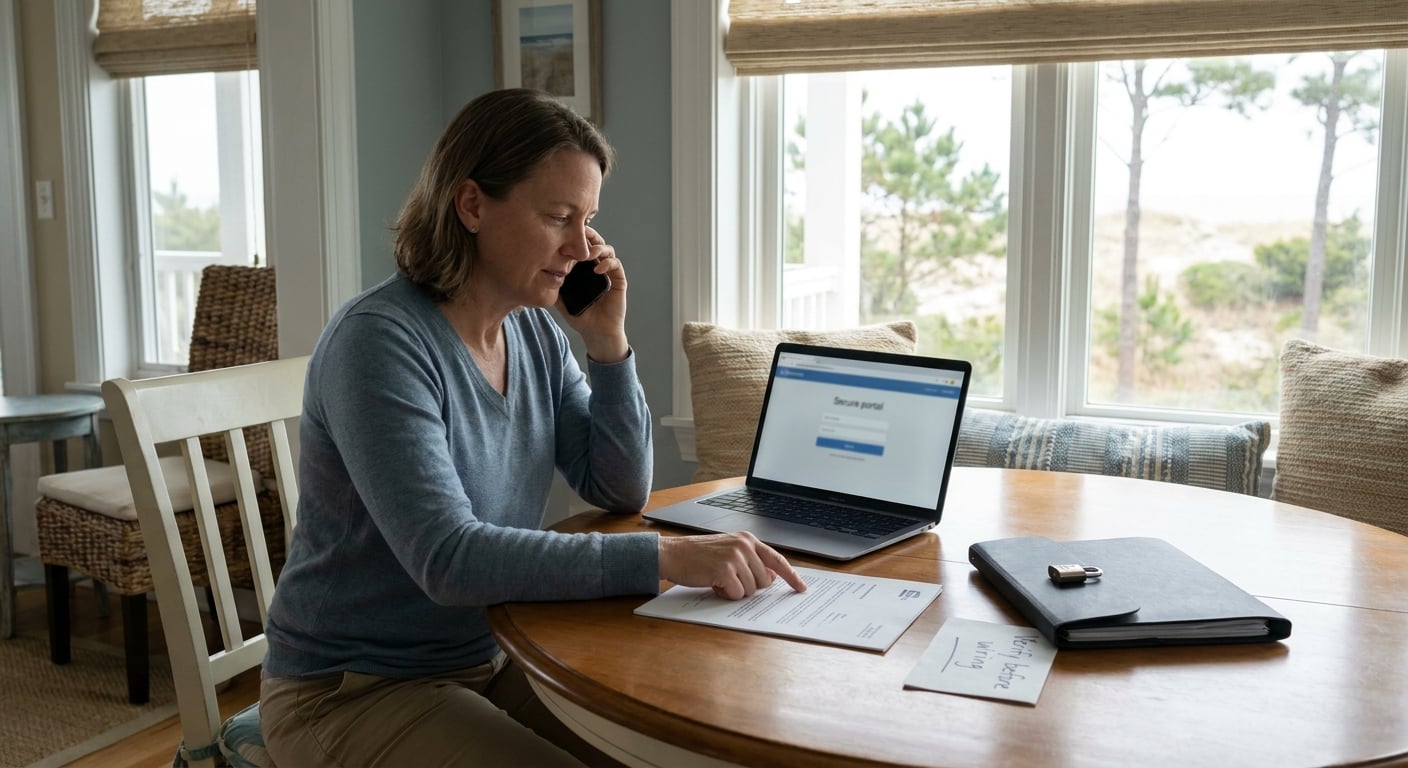
Real estate closings involve a lot of moving pieces, and criminals know it. Whether you're buying your first home near Wilmington, selling a beach cottage in Carolina Beach, or closing on a vacant lot you inherited in Pender County, the closing process creates a window of vulnerability that fraudsters have figured out how to exploit.
What's changed recently is how convincing the attacks have become. AI-generated voices, spoofed emails, and fake identity documents have made it genuinely hard to tell a legitimate request from a scam. I've been in this business since 1994, and I can tell you: this is the kind of thing that keeps real estate professionals up at night, because by the time most people realize something is wrong, the money is already gone.
Note: The most recent industry-wide data on seller impersonation fraud comes from a 2025 ALTA study. Local county recording alert details reflect availability as of mid-2025.
Key Takeaways
Seller impersonation attempts more than doubled since 2024, with 59% of title firms reporting at least one attempt in the prior year, often using AI-cloned voices and spoofed contact information.
Vacant land, inherited property, second homes, and absentee-owned coastal properties are the most frequently targeted. Vacant land alone represented 82% of frequent targets in ALTA's findings.
Once a wire transfer clears to a fraudulent account, recovery is not guaranteed. Speed matters enormously if something goes wrong.
Confirming payment instructions by calling a number you already have saved, not the one in the email, is one of the simplest and most effective protections available.
New Hanover, Brunswick, and Pender County residents can set up free property recording alerts through their county registrar to catch unauthorized deed activity early.
Title insurance may cover certain fraud scenarios like forged deeds, but it does not automatically protect against diverted wire payments.
Any last-minute change to wiring instructions deserves a full stop and an independent verification call, regardless of how official it looks or sounds.
What Does Seller Impersonation Fraud Look Like?
Seller impersonation fraud happens when someone pretends to be a property owner to sell or refinance a home they don't own, pocket the proceeds, and disappear before anyone catches on. It used to look like a poorly written email with obvious spelling mistakes. Those days are largely over.
Today, criminals are using AI to clone voices, generate convincing fake identification, and craft messages that look like they're coming from people already involved in your transaction. The FBI has specifically warned that generative AI is now being used to produce false identity images and imitate voices in financial fraud cases. This isn't a future concern. It's happening now.
Here's what a typical attempt might look like in practice:
Spoofed contact information: An email arrives appearing to be from your title company or closing attorney, but the reply address is slightly off.
AI-generated voice calls: Someone calls sounding authoritative and familiar, using a cloned voice to impersonate a real person in the transaction.
Fake last-minute instructions: A message arrives days before closing with "updated" wire instructions, designed to create urgency so you act before you think.
False identity documents: Forged driver's licenses or fake notarized documents are submitted to title companies to pass as a legitimate owner.
Redirected seller proceeds: A seller receives instructions to update their bank account, but the new account belongs to the fraudster.
Why Do Coastal North Carolina Properties Face Added Risk?
If you own a beach property in Kure Beach, a vacant parcel in Hampstead, or an inherited lot somewhere in Brunswick County that you don't visit often, you may be more exposed than you realize. Fraud tends to target situations where the owner is less likely to notice something is wrong quickly, and absentee ownership fits that description perfectly.
Pender County data shows that more than half of vacant units in the county are seasonal or occasional-use housing. That's a meaningful share of properties where the owner isn't checking their mail regularly, isn't monitoring their title, and may not realize something unusual has happened until well after the fact.

Recognize Vacant-Land Risk
Vacant land is the most frequently targeted property type by a wide margin. ALTA's research found it represented 82% of frequent targets in seller impersonation cases. There's no tenant to notice unusual activity, and the ownership history can be harder to verify quickly.
If you're buying vacant land anywhere in the Wilmington area, watch for these red flags:
Pricing that feels noticeably below market, combined with pressure to move fast
Cash-only demands with resistance to standard closing procedures
A seller who can't answer basic parcel-specific questions about access, prior use, or survey details
An unfamiliar notary or signing agent with no verifiable credentials
No physical signage or any evidence the seller has ever actually visited the property
Verify Absentee Ownership
A deed in the public record shows a name. It doesn't confirm the person on the phone is actually that person. This matters especially when you're dealing with out-of-state sellers, inherited property, or estates with multiple parties involved.
For any absentee-owner transaction, a legitimate closing will involve verified government-issued identification, documentation of any trust, estate authority, LLC ownership, or power of attorney, and contact details traced to an independent source rather than the existing email thread.
Protect Remote Closings
Remote closings are common in our coastal market, particularly for buyers relocating from out of state or sellers who've already moved on. That convenience is real, but it requires tighter verification on both sides of the table.
North Carolina requires a licensed attorney to oversee closings, which adds accountability that many states don't have. Still, an attorney can only work with what's presented. A few practical steps worth taking:
Use the title company's secure portal for document submission, not personal email
Confirm identity through a live video session rather than uploaded photos alone
Verify your closing attorney's contact information through the North Carolina State Bar directory independently, not through a link you received in an email
Set up free property fraud recording alerts available through New Hanover County, Brunswick County, and Pender County
What Should Buyers Verify Before Sending Funds?
For buyers, the biggest financial risk at closing is wiring your down payment or closing funds to an account a fraudster controls. Once that wire clears, recovering the money is genuinely difficult. Banks can attempt a recall, but there are no guarantees, and every hour counts.
The verification steps aren't complicated. The hard part is making sure you do them before closing week, not in the middle of it.
Save Verified Closing Contacts
Before you're juggling inspection repairs, utility transfers, and moving logistics, save your closing attorney's direct phone number somewhere that doesn't require opening email. A phone contact, a sticky note, anything that doesn't depend on clicking a link to find it.
This matters because the most common fraud scenario involves an email that looks completely legitimate but redirects you to a fraudulent contact. If you're verifying wire instructions using a number inside the suspicious email, you've already bypassed your own protection.
Confirm Wire Instructions Independently
When wire instructions arrive, call the number you already have on file for your closing attorney or title company. Read back every detail out loud: the receiving bank name, routing number, account number, and account name.
Don't use any phone number that appears in the wire instruction email itself. And if someone calls you to confirm instructions, that inbound call doesn't count as verification. North Carolina State Bar guidance supports verifying account information through previously established contact methods. Your closing team should expect this call.
Pause Unexpected Account Changes
Any change to wiring instructions that arrives close to closing, especially with language like "urgent" or "updated banking information," deserves a full stop. Legitimate title companies and attorneys do occasionally change accounts, but they expect you to verify independently. A real professional won't pressure you to skip that step.
If someone pushes back when you say you want to call and confirm, pay attention to that reaction.
Confirm Receipt of Closing Funds
After wiring, confirm receipt through your closing attorney's verified contact, not by replying to the instruction email. A quick call asking whether the funds arrived takes two minutes and gives you confirmation that the right party received the payment.
What Should Sellers Verify Before Closing?
Sellers face a different kind of exposure. The concern isn't just losing money you're sending. It's someone collecting the proceeds meant for you, or in the most serious cases, someone selling your property without your knowledge entirely.
Confirm Seller Identity Early
Your identity will be verified as part of the closing process, and that's a protection for you, not a hassle. If you're selling on behalf of an estate, trust, LLC, or through a power of attorney, gather that documentation well ahead of closing. Last-minute gaps around authorization are one of the most common sources of delays and one of the things fraudsters specifically try to exploit.
Protect Seller Contact Information
Your email is the gateway to your entire transaction. Use a strong, unique password for any account connected to the sale and turn on two-factor authentication. If your closing team ever tells you your contact information was changed in their system and you didn't make that change, treat it as urgent and call your agent and attorney directly.
Verify Proceeds Account Changes
If you need to update the bank account where your sale proceeds will be deposited, expect your closing attorney to require a verification call. That's standard practice, and a sign you're working with a well-run operation. Any title company that allows a proceeds account change through email alone, without a phone verification step, isn't following current best practices.
Question Unfamiliar Property Activity
If you own vacant land, a second home, or inherited property and you receive an unexpected communication about a listing, showing, deed transfer, or closing you didn't initiate, contact your title company and attorney right away. Don't assume it's an administrative mistake. Treat it as a potential fraud attempt until someone confirms otherwise.
What Should You Do When a Closing Request Feels Wrong?
Stop responding. That's the first move. Don't reply to the email, don't click any links, and don't call any number provided in the suspicious message.
Then work through this:
Call your agent, closing attorney, and lender using phone numbers you already have saved independently.
Preserve everything: the email with full headers, any texts or voicemails, account numbers provided, and screenshots of the communication.
If funds were already wired, contact your bank immediately and ask about a wire recall. Time is the deciding factor here. The FBI recommends reporting through IC3, and acting within 72 hours improves the chances of any recovery.
File a report with the FBI's Internet Crime Complaint Center regardless of whether money was lost. Reports help investigators connect patterns and protect other people.
The best outcome is catching the problem before the wire goes out. Everything in this article is designed to help you get there.
Check out this article next