
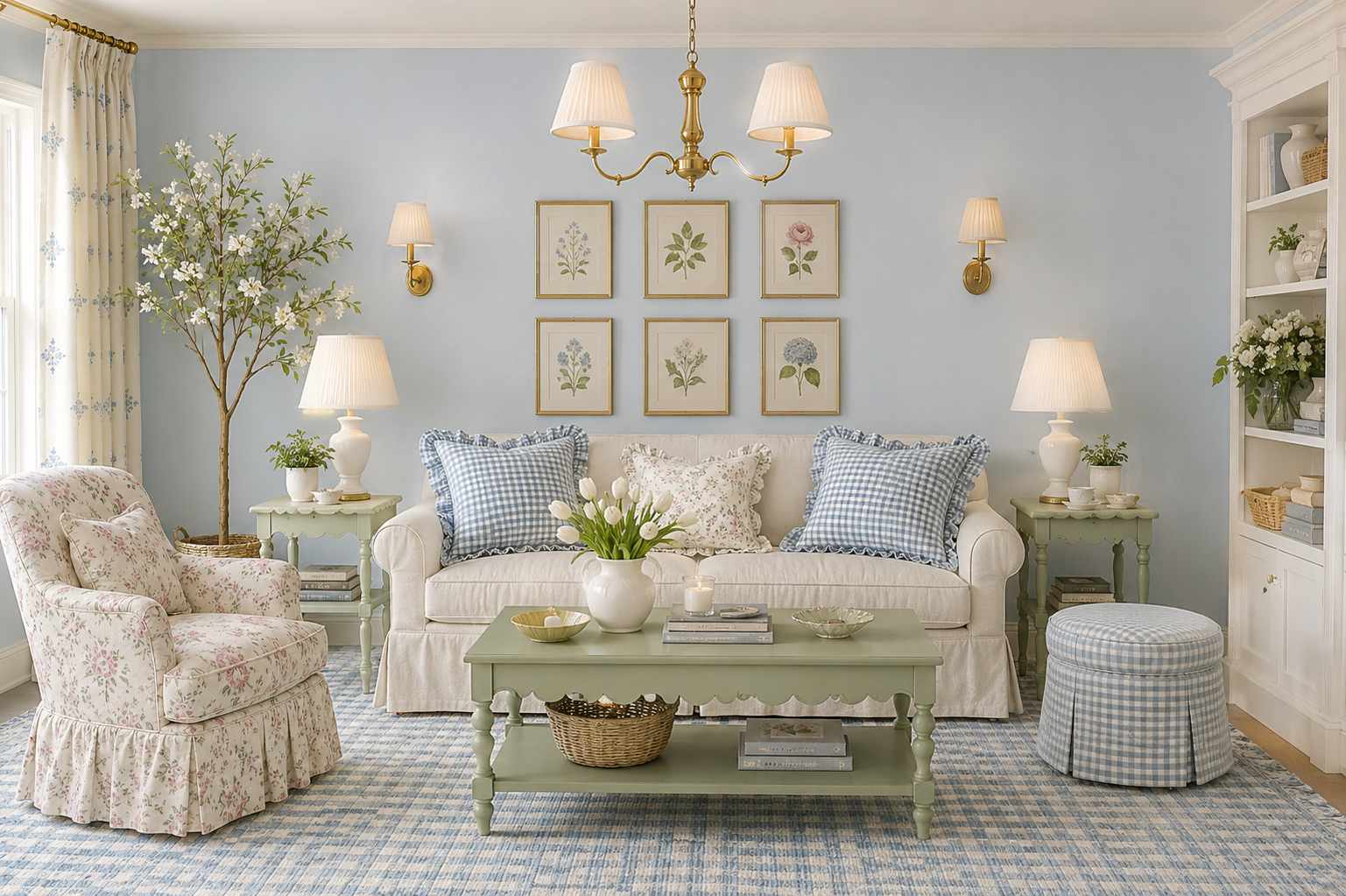
Summary: Dollhouse Chic is a playful interior decorating style that takes the charm of a beautifully furnished dollhouse and translates it into a full-size home. The look combines nostalgic colors, decorative furniture silhouettes, wallpaper, checks, florals, scalloped edges, vintage-inspired pieces, layered textiles, and small decorative objects that make a room feel carefully collected.
In this guide, we’ll cover:
- What Dollhouse Chic interior decor actually means
- Where the aesthetic gets its historical and modern inspiration
- The best Dollhouse Chic color palettes
- Furniture shapes and materials that work with the style
- Wallpaper, textiles, lighting, and accent décor to look for
- How to make Dollhouse Chic work in a Wilmington or coastal North Carolina home
- How to experiment with the trend without making a room feel childish or overly themed
- What homeowners should consider if they expect to sell in the near future
Please note: The Cameron Team has not been paid or received any other compensation to include any of the products featured on this post, but the author has included affiliate links and content. If you click on a link, they may earn a commission – a high-five for great content! The products linked in this article are examples of products that fit the home style discussed. Homeowners should compare current availability, dimensions, warranties, and seller information before purchasing.
What Is Dollhouse Chic Interior Decor?
Dollhouse Chic is a contemporary decorating aesthetic built around the idea of making a real room feel as charming, detailed, and intentionally arranged as a beautifully decorated miniature house.
It is not about filling your home with dolls or literally making your rooms look like children’s playhouses. Instead, the style borrows the visual language we associate with especially detailed dollhouses: miniature floral wallpaper, tiny chandeliers, upholstered chairs, decorative trim, patterned rugs, dainty lamps, curved furniture, little framed pictures, cabinets full of collected objects, and rooms that appear finished down to the smallest detail.
Common features include:
- Floral, striped, gingham, or small-scale patterned wallpaper
- Pastels mixed with richer accent colors
- Scalloped and wavy furniture edges
- Skirted tables and upholstered pieces
- Curved or rounded furniture
- Vintage and antique-inspired furniture
- Decorative lamps rather than purely utilitarian lighting
- Ruffles, piping, fringe, bows, pleats, and contrast trim
- Small framed artwork
- Decorative dishes, books, boxes, candlesticks, and collectibles
- Layered rugs and textiles
- Painted furniture in colors other than white, black, or wood tones
- A slightly nostalgic, storybook quality
The result is whimsical, but an adult interpretation can still look polished.
A recent discussion of the trend described Dollhouse Chic as an evolution of the colorful, nostalgic decorating movement that followed dopamine decor and Barbiecore, with pastels, checks, stripes, soft textures, scallops, and vintage-inspired furnishings among its defining elements.
It also fits within a broader shift toward more personalized interiors. Architectural Digest’s 2026 design forecast highlighted increased interest in self-expression, ornament, craftsmanship, and maximalist details rather than exclusively stripped-down neutral interiors.
Where Did the Dollhouse Chic Aesthetic Come From?
Dollhouse Chic is a modern decorating label rather than a historical interior design movement, but the idea of treating miniature houses as serious interiors has a surprisingly long history.
Some of Europe’s elaborate early dollhouses weren’t children’s toys at all.
In the Netherlands during the 17th century, wealthy collectors commissioned extraordinarily detailed “cabinet houses” containing miniature versions of furniture, textiles, household goods, artwork, porcelain, and other objects. They were displays of craftsmanship, wealth, taste, and domestic ideals.
One of the best-known examples is the Doll’s House of Petronella Oortman at Amsterdam’s Rijksmuseum, created around 1686–1710.
The rooms contain objects made from authentic materials and rendered at accurate proportions. Craftspeople including silversmiths, glassblowers, woodcarvers, basket makers, and textile workers contributed miniature objects to the house. According to the Rijksmuseum, the project was so elaborate that its value was comparable to that of a real Amsterdam canal house.
That history doesn’t mean today’s Dollhouse Chic trend directly descended from 17th-century Dutch cabinet houses. It does, however, highlight something fundamental to the aesthetic:
Details are what make the room.
Modern interest in miniatures is also experiencing a revival. Adult collectors and creators are again designing highly detailed miniature interiors, while social media has introduced the hobby to new audiences.
Meanwhile, full-size interiors are borrowing the same sense of nostalgia and theatricality. Decorative moldings, antiques, colorful marble, upholstered furniture, collected objects, and intentionally whimsical details are appearing in homes that feel playful without looking juvenile.
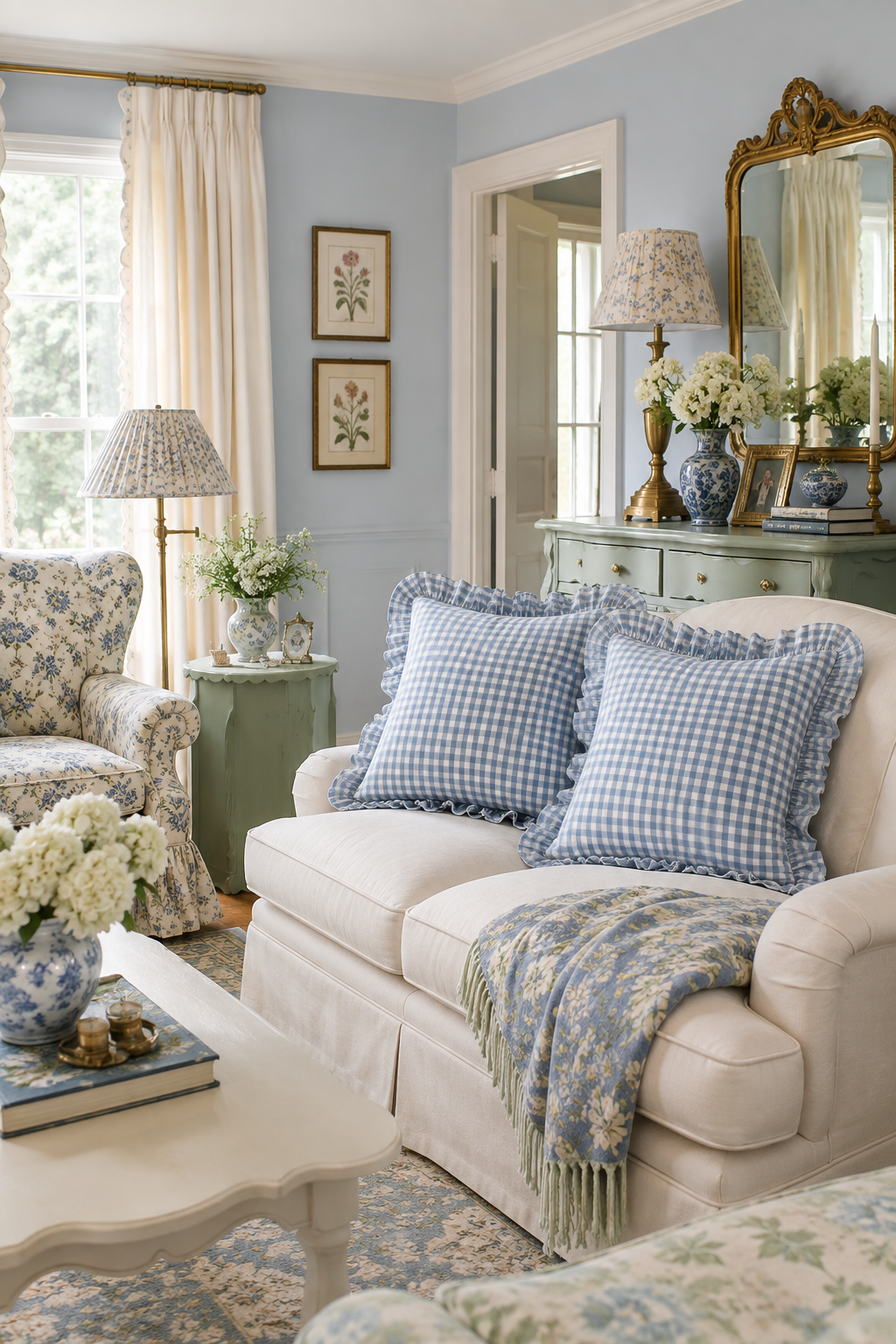
Mywinlle Blue Plaid Ruffle Gingham Throw Pillow Covers - Dollhouse Chic Home Decor
What Colors Work Best for Dollhouse Chic Interiors?
Dollhouse Chic doesn’t have one required color palette. The most recognizable versions, however, tend to use colors that feel cheerful, nostalgic, or slightly confectionary rather than stark.
Good foundation colors include:
- Powder blue
- Blush pink
- Butter yellow
- Pale lavender
- Mint green
- Soft sage
- Peach
- Cream
- Warm ivory
- Pale aqua
For contrast, consider adding smaller doses of:
- Raspberry
- Plum
- Burgundy
- Forest green
- Cobalt blue
- Chocolate brown
- Cherry red
The key is avoiding a palette made entirely from pale colors. Without contrast, Dollhouse Chic can quickly become visually flat.
For example, try:
- Powder-blue walls + cream sofa + cherry-red accent pillow
- Blush wallpaper + dark wood furniture + sage accessories
- Butter-yellow walls + blue gingham + warm walnut
- Cream walls + pink upholstery + burgundy lampshade
- Pale green cabinetry + floral wallpaper + antique brass
Wilmington homeowners may also enjoy combining Dollhouse Chic with a subtle coastal palette.
Sea-glass green, pale blue, shell pink, sandy cream, and warm white fit naturally with the bright light and coastal influences common in Southeastern North Carolina homes. A darker wood finish or stronger accent color can keep the room from drifting too far into beach-house territory.
Does Dollhouse Chic Have to Be Pink?
Absolutely not.
Pink appears frequently because the trend overlaps with feminine nostalgic aesthetics, but the shapes, details, and patterns are much more important than any one color.
A blue-and-green Dollhouse Chic room could include:
- Powder-blue walls
- Sage scalloped side tables
- Blue gingham pillows
- A floral chair
- Cream curtains
- Brass lighting
- Small botanical prints
You could also build the look around butter yellow, lavender, peach, mint, or even brown and burgundy.
This is one of the biggest differences between Dollhouse Chic and Barbiecore: pink is optional.
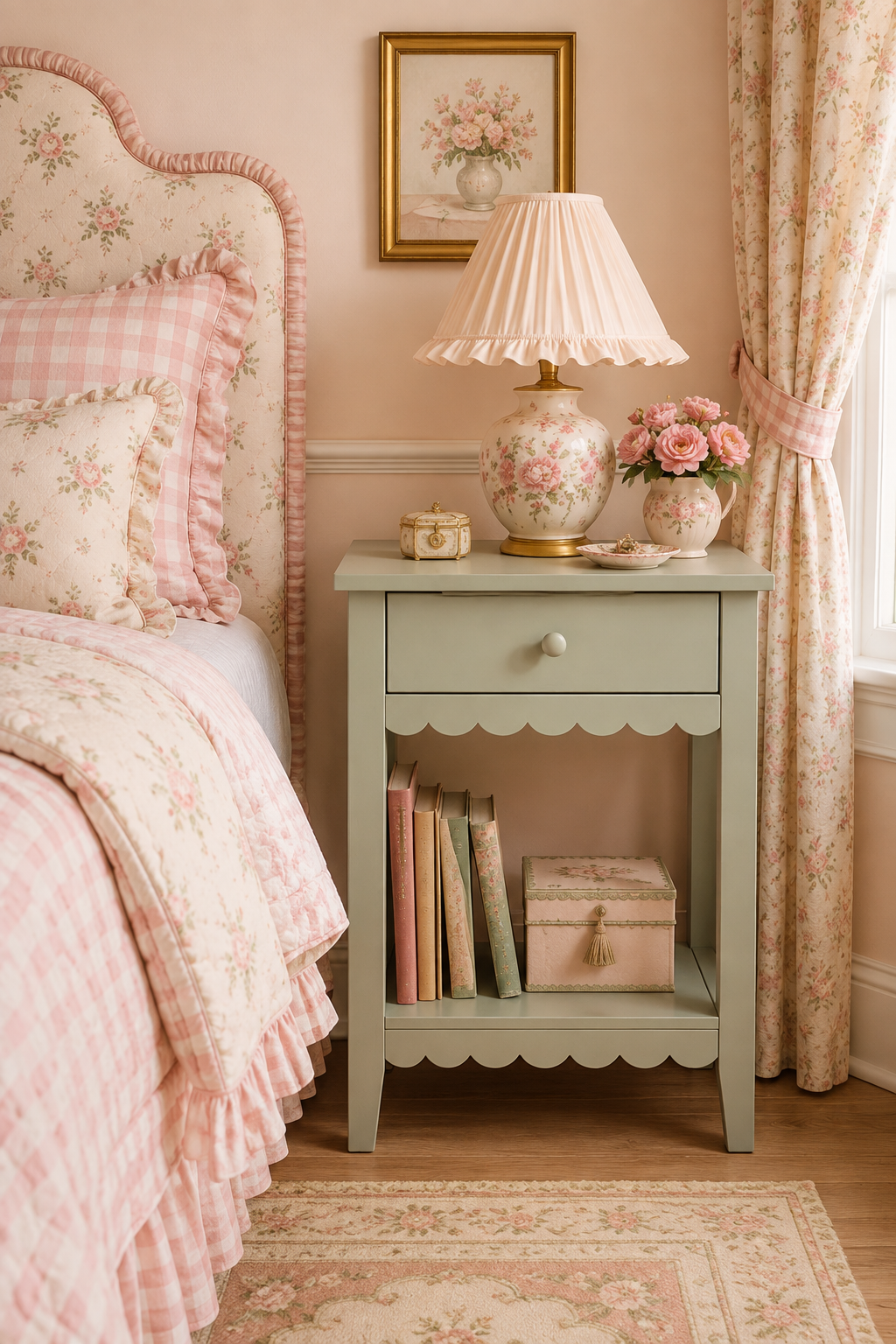
Scalloped Side Table - Dollhouse Chic Home Decor
What Furniture Fits the Dollhouse Chic Look?
Furniture is where Dollhouse Chic becomes especially fun.
Instead of relying exclusively on simple rectangular silhouettes, look for pieces with decorative edges, curves, upholstery, carving, turned legs, or other features that would look interesting even if you shrank them down to miniature scale.
Good options include:
- Scalloped side tables
- Bobbin-leg furniture
- Painted nightstands
- Curved sofas
- Tufted chairs
- Floral armchairs
- Skirted tables
- Vanity tables
- Café-style dining chairs
- Petite writing desks
- Glass-front cabinets
- Vintage dressers
- Cane or rattan accent pieces
- Upholstered headboards
- Furniture with bun feet or turned legs
A scalloped accent table is one easy way to introduce the look. The curved edge gives a simple piece of furniture more personality without making it impractical.
For seating, a floral armchair can become the visual equivalent of one of those wonderfully detailed upholstered chairs inside an elaborate miniature house. A vintage-inspired floral upholstered chair can introduce pattern, traditional detailing, and a more decorative silhouette.
Should Dollhouse Chic Furniture Be Antique?
No. Mixing old and new usually produces a more interesting room.
Try combining:
- An antique dresser with a modern lamp
- A contemporary sofa with a vintage floral chair
- A new scalloped table with an inherited mirror
- A modern bed with antique nightstands
- Vintage artwork over newer upholstered furniture
This prevents the space from looking like a period reproduction.
It also makes the aesthetic easier to incorporate gradually because you’re not attempting to source an entire room of matching furniture.
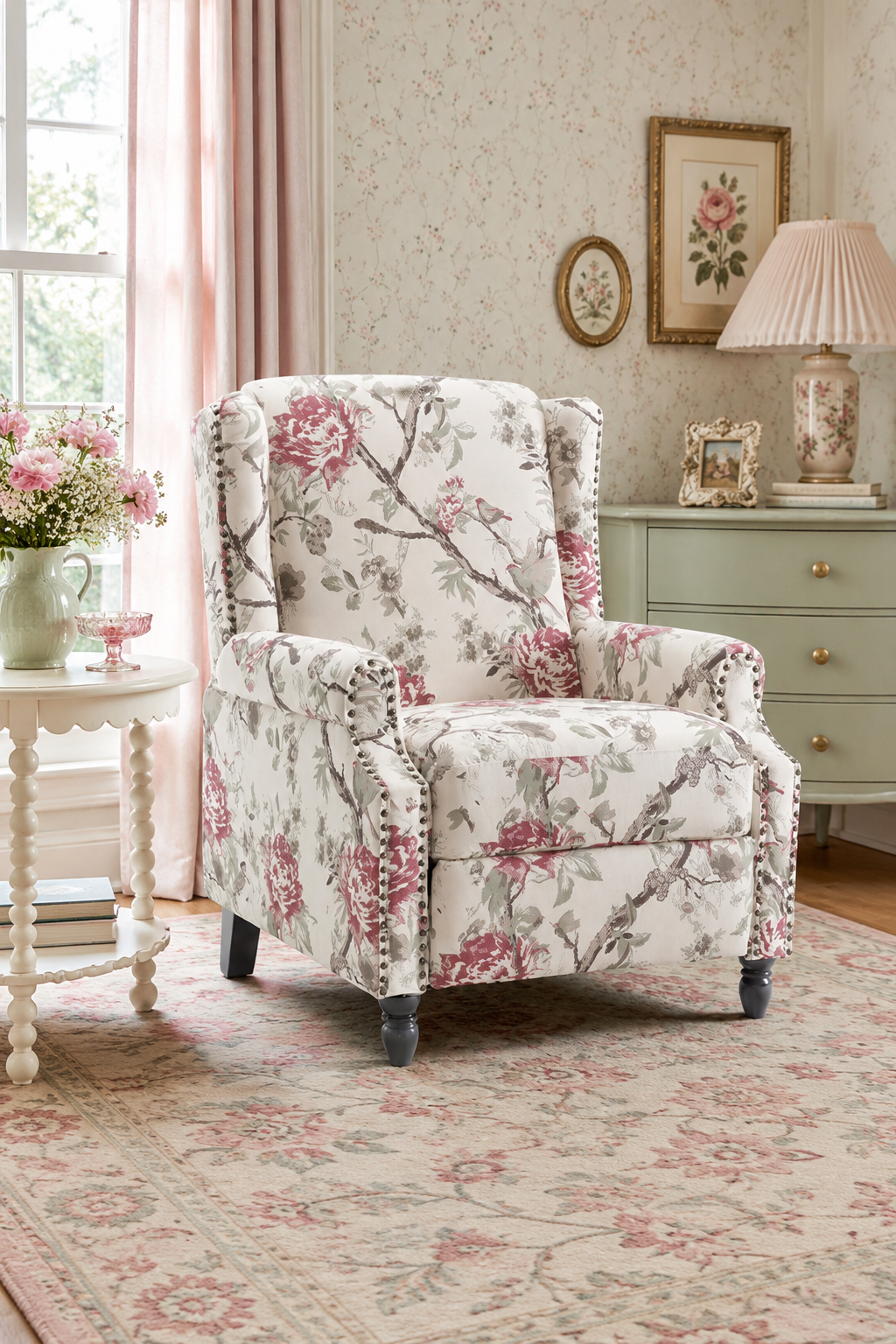
Vintage-Inspired Chair - Dollhouse Chic Home Decor
How Can Wallpaper Create a Dollhouse Chic Room?
Wallpaper may be one of the easiest ways to establish the aesthetic because decorated dollhouses have historically used wall coverings and patterned surfaces to make tiny rooms feel complete.
Consider:
- Petite florals
- Botanical vines
- Gingham
- Vertical stripes
- Tiny geometrics
- Block prints
- Chinoiserie-inspired motifs
- Small repeating motifs
Scale matters.
A smaller floral or repeating pattern often feels more distinctly “dollhouse” than an enormous mural because the pattern creates visual detail across the whole room.
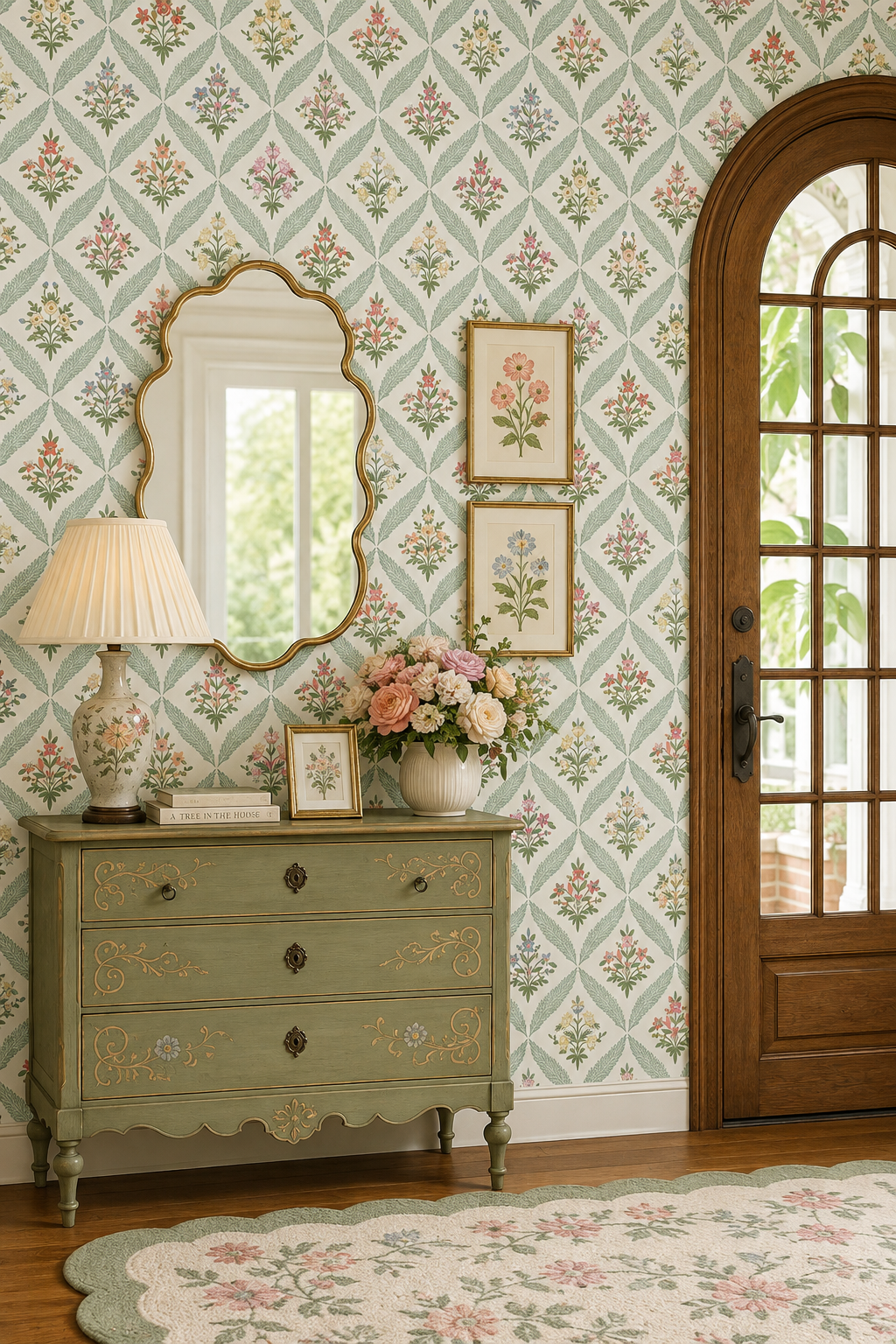
Estee Garden Wallpaper by Rifle Paper Co. - Dollhouse Chic Home Decor
Rifle Paper Co. wallpaper is a good place to look for botanical and vintage-inspired patterns that complement the Dollhouse Chic aesthetic.
For homeowners hesitant to wallpaper an entire bedroom or living room, try it in:
- A powder room
- The back of built-in shelving
- A reading nook
- An entry
- A laundry room
- Above wainscoting
- Inside a glass-front cabinet
Wallpaper can also work especially well in smaller rooms because you can create a memorable space without committing to the pattern throughout the main living areas.
Which Fabrics and Patterns Make a Room Feel Like Dollhouse Chic?
Dollhouse Chic thrives on pattern mixing, but the patterns should feel related rather than random.
Some of the best combinations are:
- Floral + gingham
- Floral + stripe
- Gingham + tiny botanical
- Stripe + scallop
- Plaid + floral
- Solid velvet + patterned cotton
A gingham pillow with a scalloped border combines two hallmark details in one small accessory.
Other useful textile details include:
- Contrast piping
- Pleated lampshades
- Ruffled pillow edges
- Café curtains
- Gathered bed skirts
- Quilted bedding
- Embroidery
- Floral upholstery
- Trimmed Roman shades
You don’t need every pattern in the same room.
A useful approach is to choose one dominant pattern, one supporting pattern, and several solids. That gives the room depth without making every surface compete for attention.
What Accent Décor Works Best With Dollhouse Chic?
Accent décor is where this aesthetic earns its name.
Think about what makes a beautifully designed miniature room captivating. You don’t simply notice the sofa. You notice the lamp sitting beside it, the book on the table, the framed picture above the mantel, the vase on the shelf, and the little decorative details that suggest someone has thoughtfully furnished the space.
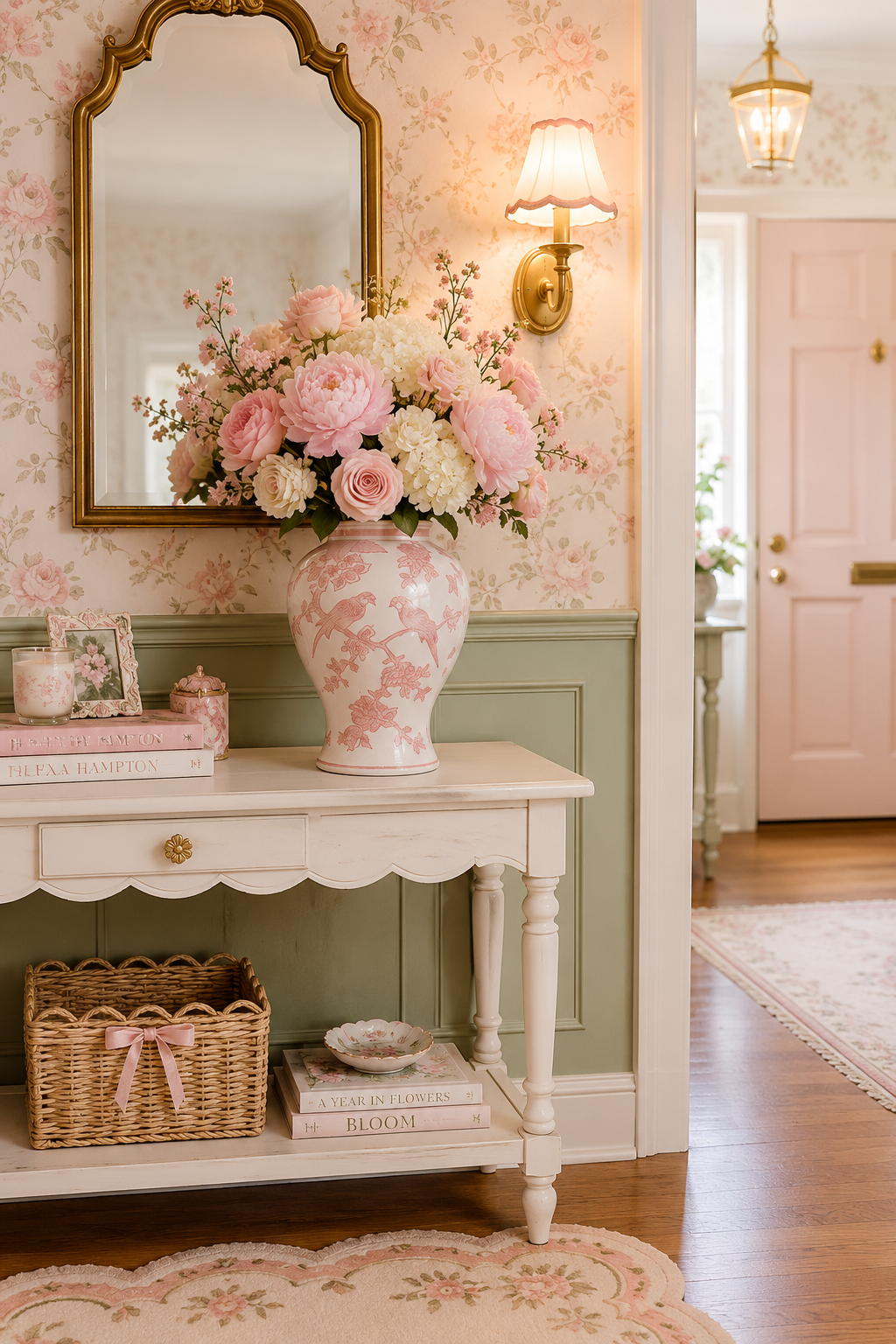
Pink Ginger Jar Filled with Flowers - Dollhouse Chic Home Decor
Full-size rooms benefit from the same attention.
Look for:
- Decorative trays
- Small framed botanical prints
- Antique-style mirrors
- Ceramic figurines
- Ginger jars
- Bud vases
- Candlesticks
- Decorative plates
- Trinket dishes
- Small clocks
- Vintage books
- Jewelry boxes
- Decorative boxes
- Flower-shaped objects
- Bows and ribbons used sparingly
- Miniature framed art arranged gallery-style
The goal is curated detail, not random clutter.
Give objects breathing room and group related pieces together instead of covering every available surface.
For example, three small framed botanical prints hung together will usually look more deliberate than scattering unrelated artwork throughout the room.
The same is true for tabletop décor. A decorative box, small vase, and candlestick grouped on a tray can look intentional, while six unrelated objects lined along the same surface may simply feel crowded.
What Lighting Works With Dollhouse Chic?
Lighting should function as décor.
Instead of relying only on recessed lights or basic table lamps, incorporate fixtures that contribute shape, color, or ornament.
Good choices include:
- Pleated fabric lampshades
- Small chandeliers
- Milk-glass fixtures
- Floral ceramic lamps
- Murano-inspired glass
- Mushroom lamps
- Scalloped shades
- Decorative sconces
- Antique brass lamps
- Painted lamp bases
A small glass mushroom lamp is especially useful because its rounded silhouette feels playful without looking like children’s décor.
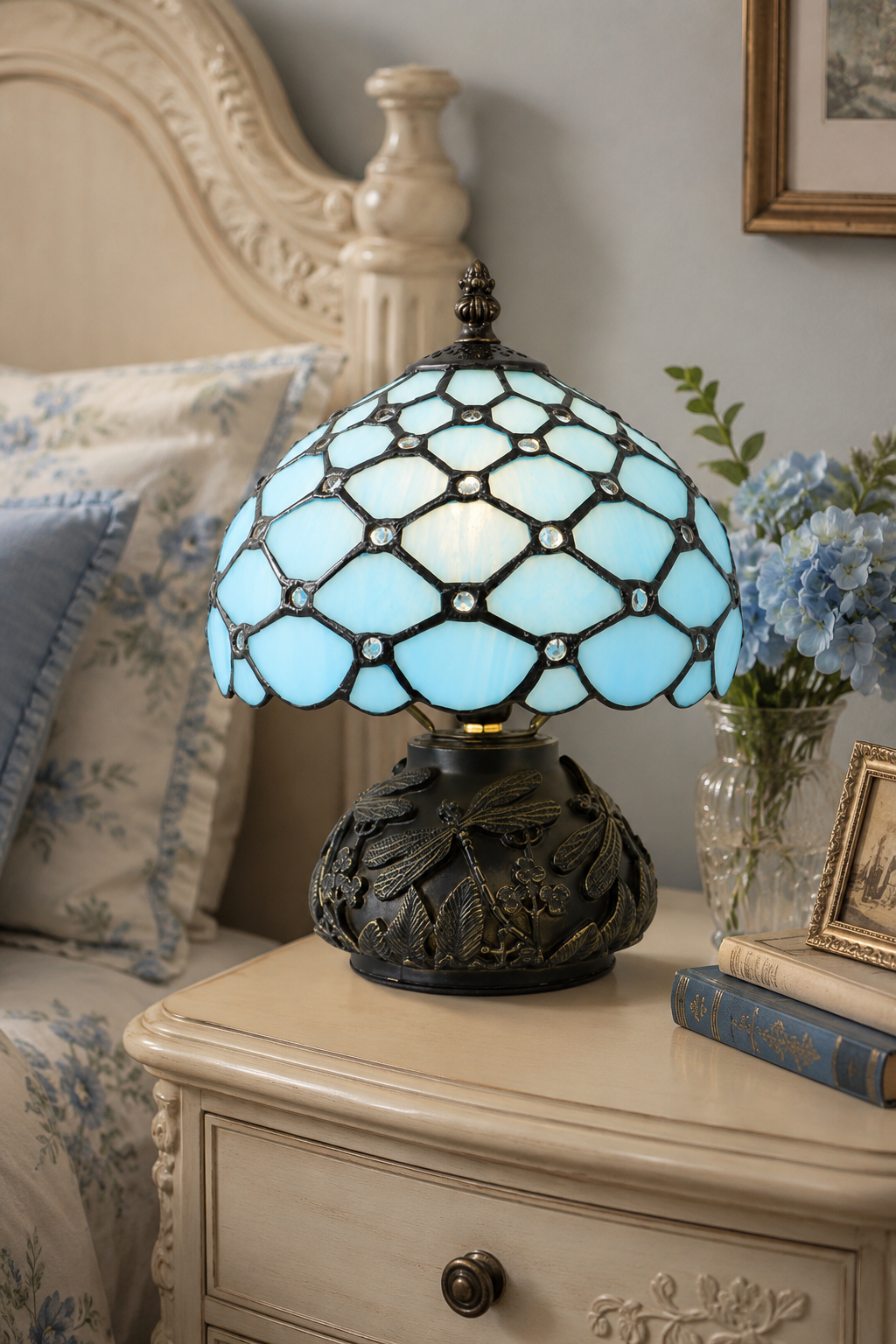
Blue Tiffany Mushroom Lamp - Dollhouse Chic Home Decor
Layer your lighting rather than depending on one ceiling fixture.
Use a combination of:
- Overhead lighting
- Table lamps
- Floor lamps
- Sconces
- Task lighting
That layered approach helps elaborate colors and patterns look warm and dimensional after sunset.
It also makes a room feel more like the carefully illuminated interior of a dollhouse, where every little seating area, table, and corner appears to have been considered.
How Do You Use Dollhouse Chic Without Making a Room Look Childish?
The difference is editing.
Dollhouse Chic celebrates whimsy, but an adult room should still have visual hierarchy, practical furniture, and enough restraint for the interesting pieces to stand out.
Try these strategies:
- Choose real furniture with playful details rather than novelty furniture.
- Mix pastel colors with dark wood, brass, or deeper accent colors.
- Pair one cute object with more sophisticated accessories.
- Use natural materials such as wood, cotton, linen, wool, glass, and ceramic.
- Incorporate genuine vintage or antique pieces.
- Leave some surfaces relatively simple.
- Repeat colors throughout the room to make the design feel intentional.
- Avoid making every object correspond to a literal dollhouse theme.
For example, a floral wallpaper, scalloped nightstand, gingham pillow, and decorative lamp can establish the aesthetic without adding dolls, miniature houses, or novelty signage.
The goal should be a room that feels inspired by a beautifully decorated dollhouse, not a room pretending to be one.
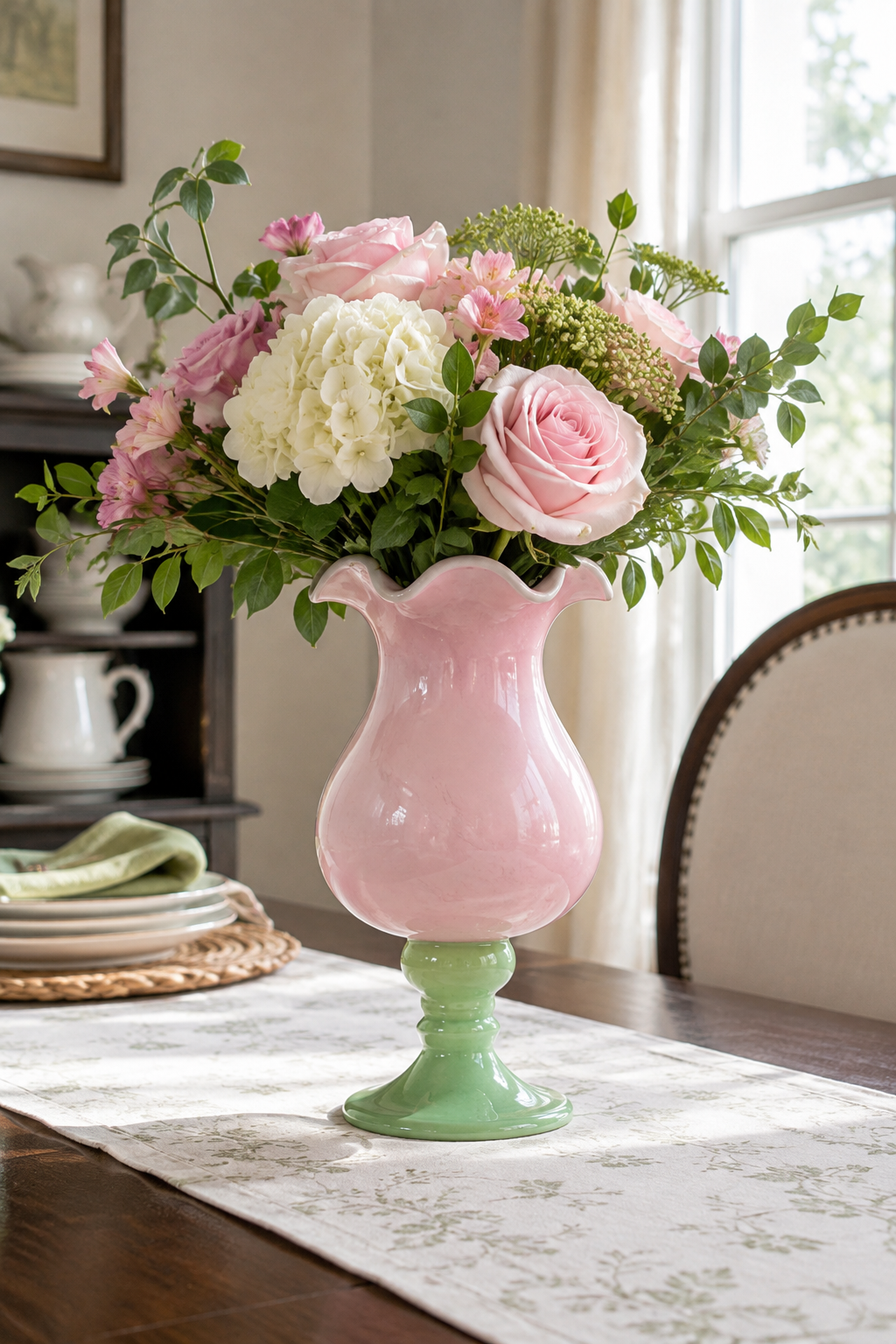
Sunrise Blush Murano Style Ruffled Glass Vase - Dollhouse Chic Home Decor
How Is Dollhouse Chic Different From Cottagecore, Princesscore, and Barbiecore?
These aesthetics overlap, but they are not interchangeable.
Dollhouse Chic vs. Cottagecore
Cottagecore focuses more heavily on romanticized rural living, nature, handmade objects, gardens, vintage kitchens, and pastoral simplicity.
Dollhouse Chic is generally more decorative and polished.
Think:
- Cottagecore = romantic country cottage
- Dollhouse Chic = meticulously decorated miniature townhouse or cottage
That doesn’t mean they can’t be combined. Floral fabrics, vintage furniture, baskets, painted cabinetry, and botanical artwork can easily belong to both aesthetics.
Dollhouse Chic vs. Princesscore
Princesscore emphasizes fairytale romance, royalty, ornate elegance, bows, gilding, ruffles, and soft feminine details.
Dollhouse Chic can contain those features, but it doesn’t require the royal or fairytale element.
A Dollhouse Chic room may be:
- Victorian
- Midcentury
- Cottage-inspired
- Retro
- Traditional
- Eclectic
- Coastal
The unifying idea is the carefully composed, miniature-house feeling.
Dollhouse Chic vs. Barbiecore
Barbiecore is louder and more directly tied to Barbie’s visual world, particularly saturated pink, glamorous materials, and bold retro forms.
Dollhouse Chic can use pink, but usually incorporates more pattern, vintage influence, traditional details, and collected objects.
Dollhouse Chic also works beautifully in:
- Blue
- Green
- Yellow
- Cream
- Lavender
- Burgundy
Dollhouse Chic vs. FunHaus
Both trends embrace whimsy.
FunHaus leans more toward circus-inspired stripes, bold graphics, exaggerated forms, and theatrical colors. Dollhouse Chic tends to be smaller-scale, more nostalgic, and more delicate.
How Can Wilmington Homeowners Combine Dollhouse Chic With Coastal Decor?
You don’t need to choose between coastal style and Dollhouse Chic.
In fact, a Wilmington home can incorporate both quite naturally if you borrow the colors and textures of coastal design while using Dollhouse Chic shapes and patterns.
Try combinations such as:
- Sea-glass green + scalloped furniture
- Powder blue + floral upholstery
- Warm white + blue gingham
- Shell pink + natural rattan
- Pale aqua + vintage brass
- Butter yellow + light wood
- Botanical wallpaper + woven textures
Rattan can be particularly useful because it introduces texture without adding another strong color or pattern.
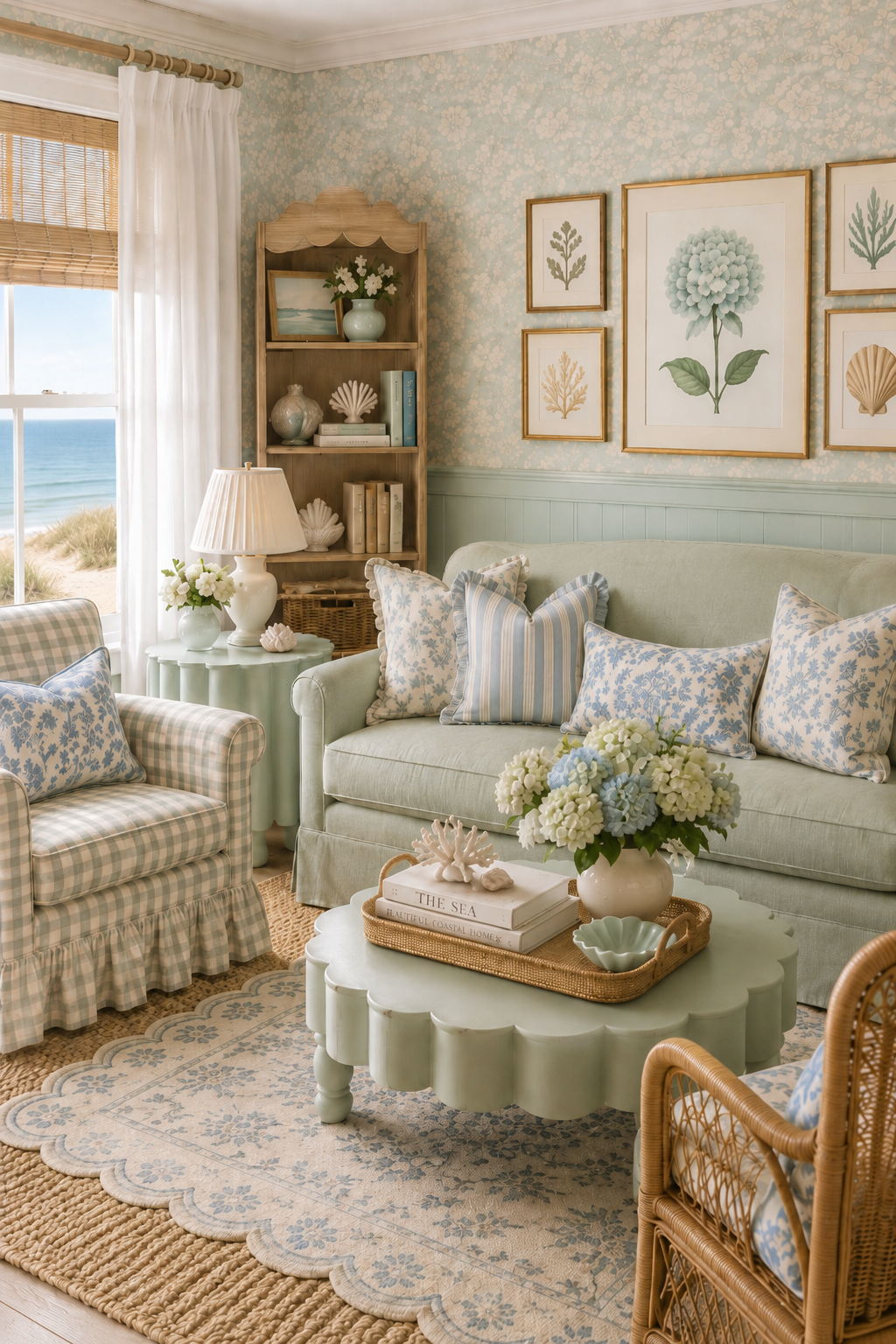
Coastal Dollhouse Chic
Avoid turning the combination into literal beach décor. Seashell signs, anchors, and nautical slogans aren’t necessary.
Instead, let color and natural texture create the coastal connection.
A living room, for example, could use warm white walls, a pale blue sofa, a small floral chair, woven Roman shades, a scalloped side table, and a few vintage brass accents. The room would still feel appropriate for coastal North Carolina while picking up the whimsical details associated with Dollhouse Chic.
What Should Coastal North Carolina Homeowners Consider When Choosing Materials?
Wilmington and Southeastern North Carolina homeowners should think about the practical side of decorating, especially where sunlight and humidity are concerned.
Consider:
- Checking wallpaper manufacturers’ instructions before using removable products in humid rooms
- Using bathroom-rated wall coverings where appropriate
- Keeping delicate vintage textiles away from prolonged direct sunlight
- Choosing washable fabrics for frequently used seating
- Using indoor-rated natural-fiber furniture inside conditioned spaces
- Selecting window treatments that can help protect upholstered pieces and artwork from strong sunlight
A beautiful room still needs to work for daily life.
Humidity can also affect certain natural materials, adhesives, papers, and vintage items, so manufacturer recommendations matter. A wallpaper that performs beautifully in a conditioned bedroom may not necessarily be appropriate beside a shower in a bathroom.
Strong coastal sunlight is another consideration. Fabrics, artwork, rugs, and wood finishes can fade over time when exposed to direct UV light for long periods.
Can Dollhouse Chic Work in a Small Home?
Yes, and small rooms may actually be some of the best places to experiment with the look.
Dollhouse Chic depends more on detail than square footage.
In a small room, consider:
- Wallpaper above wainscoting
- One patterned chair
- A painted scalloped side table
- A small gallery wall
- A decorative lamp
- Gingham or floral pillows
- One beautiful vintage cabinet
- A patterned Roman shade
Powder rooms are especially well suited to the aesthetic because they allow homeowners to use stronger wallpaper or color without committing an entire main living area to it.
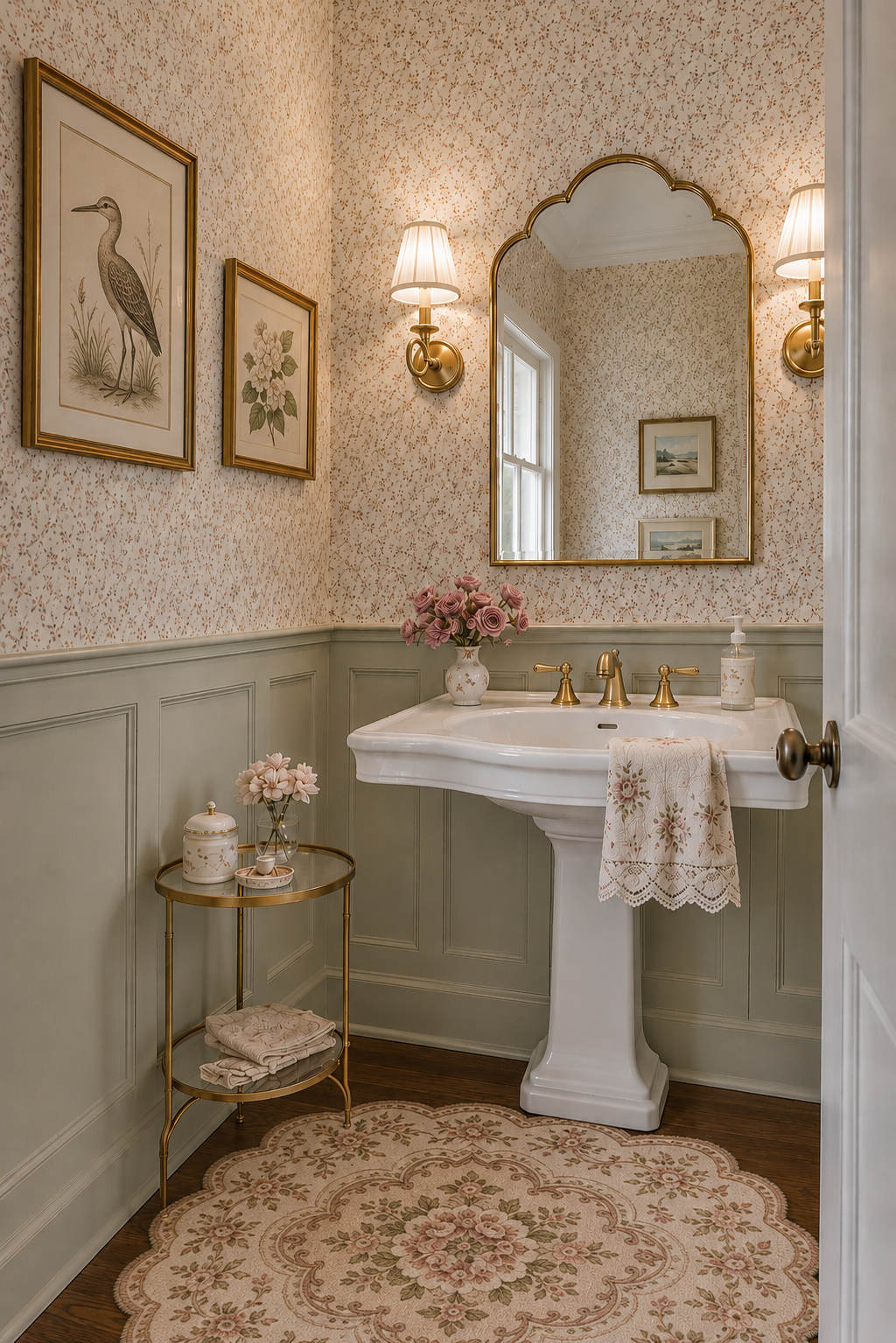
Dollhouse Chic Powder Room
The same principle works in:
- Laundry rooms
- Home offices
- Guest bedrooms
- Reading nooks
- Entries
- Breakfast areas
Smaller spaces also naturally encourage the type of detailed composition that makes Dollhouse Chic appealing.
Instead of filling a room with many large pieces, you can concentrate on one or two special furniture items and then use lighting, artwork, textiles, and smaller accessories to complete the look.
How Can Renters or Trend-Cautious Homeowners Try Dollhouse Chic?
Start with pieces that can leave with you.
Low-commitment options include:
- Throw pillows
- Bedding
- Lamps
- Tablecloths
- Small rugs
- Framed prints
- Mirrors
- Decorative trays
- Portable side tables
- Removable wallpaper when appropriate for the surface
- Vintage accessories
This approach is also smart for homeowners who love the aesthetic but aren’t certain they’ll still want an entire pastel floral room several years from now.
Create a relatively neutral foundation and let the removable layers carry most of the personality.
For example, you could start with cream walls and neutral upholstered furniture, then add:
- A pink-and-green floral chair
- Gingham pillows
- A scalloped side table
- A decorative glass lamp
- Botanical artwork
- A patterned throw
If your preferences change, those pieces can be moved, replaced, or restyled without renovating the entire room.
Should You Use Dollhouse Chic If You Plan to Sell Your Home?
Personal style and resale preparation are two different decorating goals.
There is nothing inherently wrong with a colorful or whimsical home, and distinctive interiors can photograph beautifully when they are cohesive and well maintained. But no decorating trend guarantees a higher resale value, and highly personalized permanent finishes may appeal differently to different buyers.
If a move could be on the horizon, consider putting the strongest Dollhouse Chic elements into things that can be changed easily:
- Artwork
- Lamps
- Rugs
- Pillows
- Bedding
- Curtains
- Occasional furniture
- Accessories
Be more deliberate with:
- Expensive permanent wallpaper
- Highly unusual tile
- Custom-colored countertops
- Major built-ins
- Very specialized cabinetry
- Whole-house paint schemes
From a real estate perspective, the question isn’t whether a room has personality. It’s whether the home’s major features remain easy for prospective buyers to understand and whether the décor allows the architecture, size, condition, and functionality of the property to come through clearly.
If you’re preparing a Wilmington-area home for sale and aren’t sure which updates are worth doing before listing, The Cameron Team can help you look at those choices through a local real estate lens.
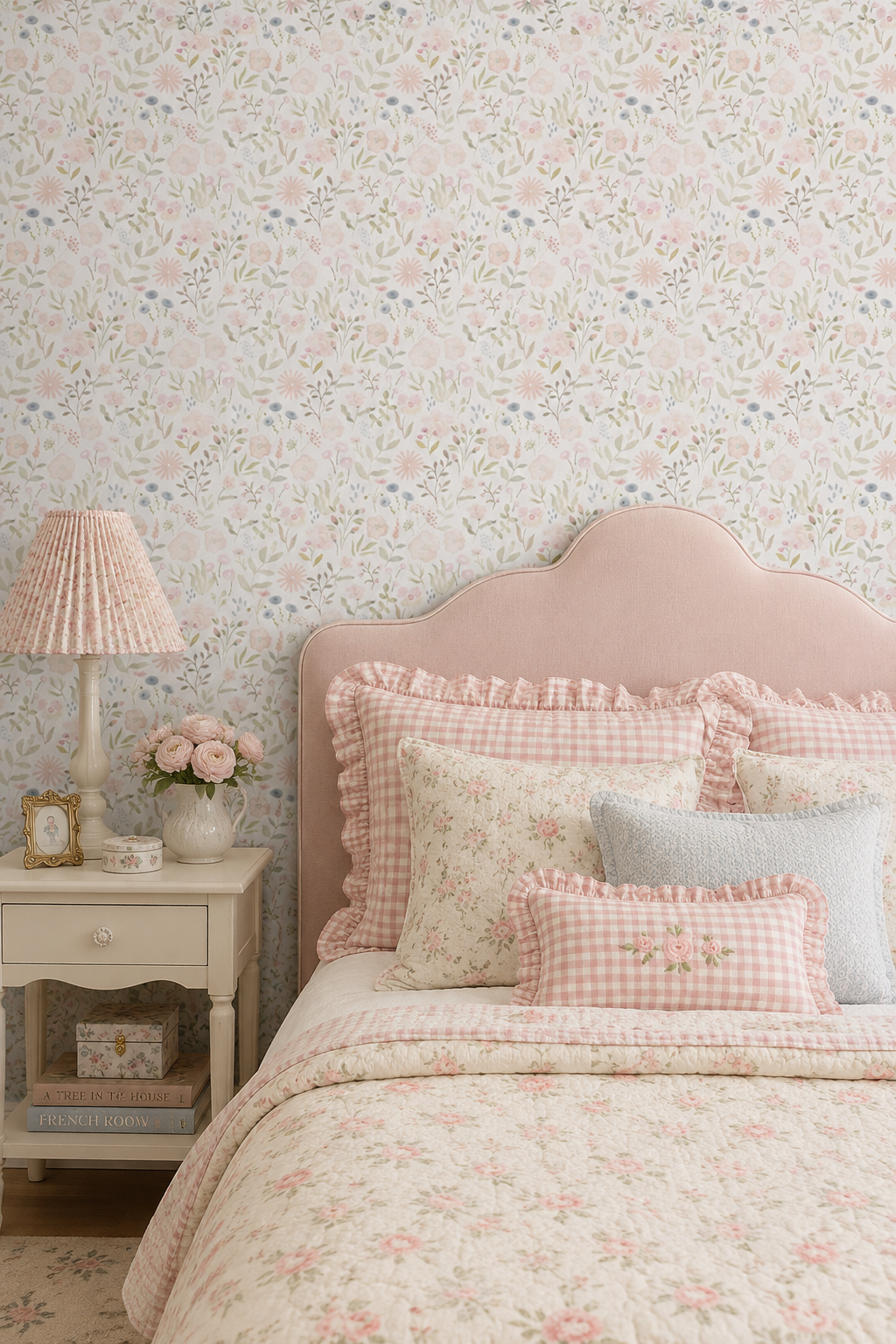
Soft Dreamy Flowers Peel-N-Stick Wallpaper - Dollhouse Chic Home Decor
What Is the Easiest Way to Start Decorating With Dollhouse Chic?
Don’t redesign the entire house at once.
Choose one room and build it around one element you genuinely love.
That might be:
- Floral wallpaper
- A vintage armchair
- A scalloped table
- A painted dresser
- A dramatic lampshade
- A patterned rug
Then pull two or three colors from that piece and repeat them elsewhere.
For example:
- Start with blue floral wallpaper.
- Add a cream sofa or bed.
- Bring in a pale-green table.
- Repeat the blue with gingham pillows.
- Add warm brass or dark wood for contrast.
- Finish with artwork, books, and a decorative lamp.
That process creates a layered room rather than a collection of unrelated trend pieces.
Most importantly, don’t chase perfection.
The most compelling Dollhouse Chic spaces feel as though they’ve accumulated interesting furniture and objects gradually. The furniture doesn’t need to match. The fabrics don’t need to come from the same collection.
The room simply needs enough repetition in color, shape, and pattern to make everything feel connected.
That’s ultimately what separates Dollhouse Chic from a theme: the goal isn’t to recreate a dollhouse. It’s to borrow the sense of delight you get from looking inside one
Check out this article next