
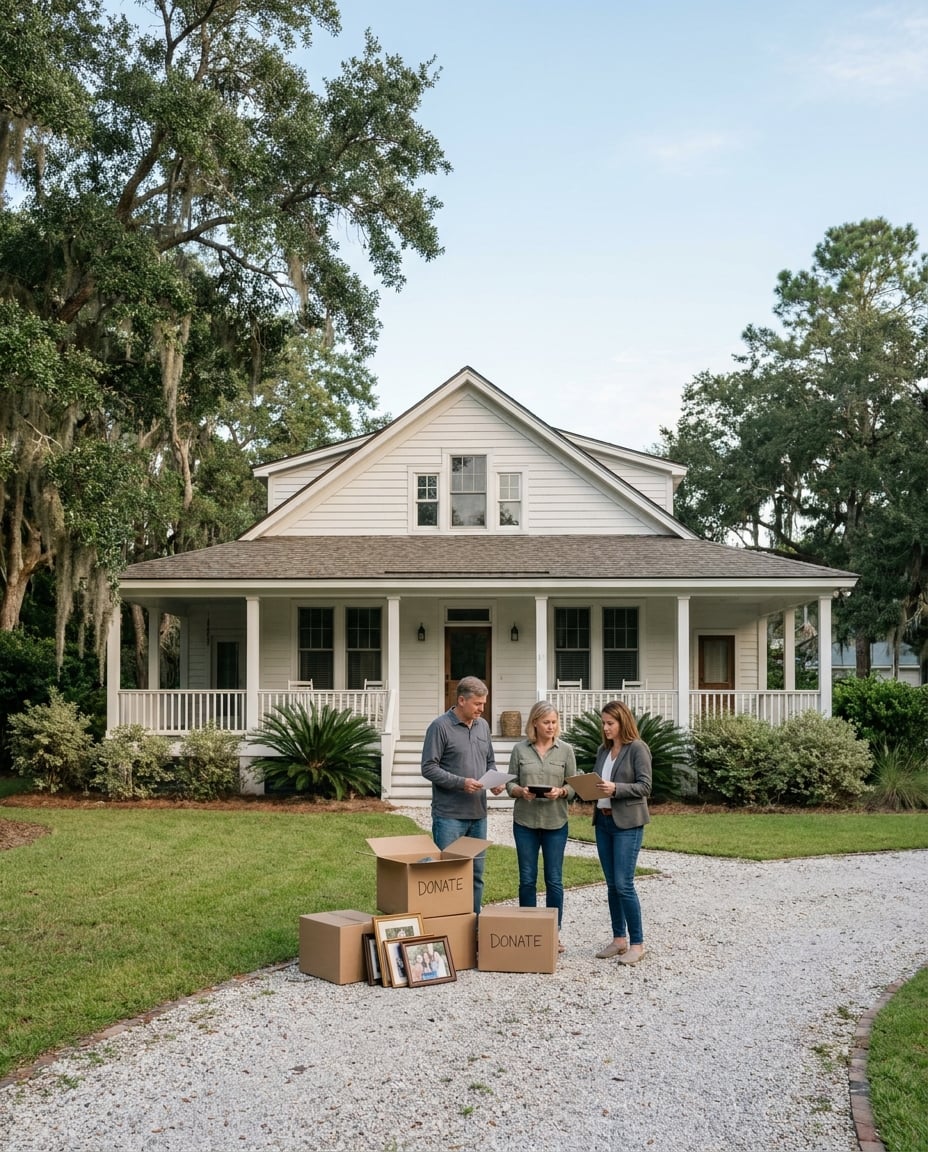
When a loved one passes and leaves behind a home, the to-do list arrives before you're ready for it. A recent survey found that 84% of people who inherited a home needed to clean it out before listing, and 36% said the cleanout was one of the hardest parts of the whole experience. That doesn't surprise me at all. I've worked with families in this situation more times than I can count, and the grief and the logistics don't wait for each other.
If you're managing an inherited property in Wilmington, Leland, Hampstead, Carolina Beach, or anywhere else in the surrounding counties, this is meant to give you a clear starting point, not overwhelm you with more decisions.
Pricing data referenced below reflects mid-2026 market conditions. North Carolina estate law references reflect 2025 and 2026 legislative updates.
Key Takeaways
84% of inheritors needed to clean out a property before listing, and 36% called it one of the hardest parts of the process.
Confirm legal authority before removing or donating anything. In North Carolina, this usually means opening an estate file and having a personal representative appointed by the court.
Photograph every room and every belonging before the cleanout begins. It protects the estate and helps heirs make decisions from a distance.
Coastal properties need extra attention: humidity, storm exposure, and deferred maintenance all affect condition and value.
Not every repair is worth doing. Compare preparation costs against the likely change in net proceeds before authorizing work.
Out-of-state heirs can manage most of this remotely with the right local support in place.
Pricing varies widely across this market. Mid-2026 median list prices ranged from $489,950 in Wilmington to $962,450 in Porters Neck, so neighborhood context matters.
What Should Happen Before Belongings Are Removed?
The urge to start clearing things out makes sense. It feels like doing something when everything else feels uncertain. But moving too fast, before authority is confirmed and the home is documented, can create problems that are hard to undo.
Confirm Authority to Act
This is the step families most often skip, and it's the one that matters most. In North Carolina, someone needs to have the legal standing to make decisions about the property before anything is removed, donated, or discarded. That typically means opening an estate file with the Clerk of Superior Court in the county where the deceased lived and having a personal representative appointed.
Legal title can pass to heirs at the moment of death under North Carolina law, but that doesn't mean anyone has authority to act on behalf of the estate yet. An estate attorney familiar with New Hanover, Brunswick, or Pender County can help you move through this without unnecessary delay.
Secure and Insure the Property
Once authority is established, the property needs to be stabilized, especially if it's going to sit vacant for a while. A few things to handle right away:
Change the locks and access codes so only authorized people can enter
Notify the homeowner's insurance carrier that the home is now vacant, since many policies have specific conditions for unoccupied properties
Keep utilities running, including the HVAC, to manage humidity and prevent moisture damage
Arrange lawn care and basic exterior upkeep so the home doesn't signal vacancy to the neighborhood
Forward the mail and cancel active subscriptions
One thing worth mentioning for coastal properties specifically: Atlantic hurricane season runs June 1 through November 30, with peak activity around September 10. If the home is near the water or in a flood zone, check storm shutters, drainage, and any sump systems before the season picks up. A vacant home with no one watching it during a storm is a real problem.

Document Belongings and Home Condition
Before anything leaves the house, photograph everything. Every room, every closet, every outbuilding. This protects the estate, helps heirs who aren't local make informed decisions, and creates a record of condition before any work begins.
Pay attention to visible water stains, signs of moisture, the age of major systems, and anything stored in attics or crawl spaces. This isn't about being overly cautious. It's about making sure no one regrets a decision that felt fine in the moment.
Coordinate the Heirs' Decisions
When multiple people are involved, the cleanout can stall fast, especially when everyone has different schedules, different emotional attachments, and different opinions about what to do with the dining room set. A shared inventory document, written deadlines, and an agreed process for disputed items can prevent a lot of friction before it starts.
A neutral third party, whether that's an estate attorney, a trusted advisor, or a professional organizer who specializes in estate work, can be worth every penny when emotions are running high.
Why Is an Inherited-Home Cleanout So Difficult?
The survey numbers make sense to anyone who's been through it. It's not just the physical work. It's standing in a parent's kitchen deciding what to do with forty years of accumulated life while also fielding calls from siblings, attorneys, and utility companies.
For families managing a Wilmington-area property from out of state, the distance adds another layer. You can't just pop by to check on things. Every trip requires planning, and every decision feels more consequential when you're making it from a thousand miles away. Coastal properties also tend to carry deferred maintenance that isn't obvious until you're inside the home, and belongings stored in humid conditions can deteriorate in ways that require professional help to sort through.
How Can Families Create a Manageable Cleanout Plan?
A four-zone approach works well for most inherited homes: retain, professional review, donate or sell, and dispose. The goal isn't speed. It's avoiding decisions you can't take back.
Set Aside Personal Records
Before sorting anything else, pull together documents that need to be protected or transferred. Deeds, wills, insurance policies, tax records, vehicle titles, financial account records, military papers, and digital device credentials all fall into this category. These items tend to end up in unexpected places, so a full sweep before the broader cleanout begins is time well spent.
Separate Sentimental Belongings
This is where family disagreements tend to start. A practical approach: photograph and number requested items, allow each heir to make private selections, then use alternating turns or a neutral drawing for anything more than one person wants. Written records of who took what, even informal ones, can prevent misunderstandings later.

Identify Valuables for Review
Don't discard anything before getting a second opinion on items that could have real value. Jewelry, coins, art, antiques, firearms, signed pieces, tools, and collections all fall into this category. An estate sale company or appraiser can often do a walk-through assessment before the cleanout begins. That one step has saved families from accidentally donating something worth real money.
Assign Donations and Disposal
Once valuables are identified and personal items are claimed, the rest can be sorted for estate sale, donation, hauling, or disposal. Keep these categories physically separated to avoid mix-ups. New Hanover County accepts paint, fuels, chemicals, batteries, and electronics at designated drop-off facilities, which is worth knowing before you start finding old cans of paint in the garage.
Which Repairs Help an Inherited Home Sell?
Not every repair is worth doing. The right question isn't what needs to be fixed. It's what a given repair will actually do to the net proceeds. Some repairs prevent a deal from falling apart. Others just cost money and time.
Address Moisture and Water Intrusion
In Southeastern North Carolina, moisture is the issue that comes up most often in older homes and coastal properties. Indoor humidity above 60% creates conditions for mold growth, and many inherited homes have been sitting without active climate control. Check the roof, crawl space, HVAC drainage, and any areas around windows or sliding doors. Water stains, musty odors, and visible mold are all things buyers and inspectors will flag. Addressing them before listing is almost always worth it.
Check Major Home Systems
A buyer's inspector will look at the HVAC, electrical panel, plumbing, water heater, and roof, along with any specialty systems like generators, docks, or septic. Knowing the condition of these systems before listing gives you options: repair them, price around them, or disclose and let the buyer decide. For coastal properties, check for corrosion on HVAC equipment and metal fixtures exposed to salt air. That kind of wear is normal near the water, but it's better to know before the inspection report surfaces it.
Complete High-Impact Cosmetic Work
The repairs that tend to move the needle most on first impressions are also the least expensive. Deep cleaning, odor removal, fresh neutral paint, updated light fixtures, pressure washing, and basic landscaping can change how a home photographs and how buyers feel walking through it. A clean, well-lit, uncluttered home almost always shows better than one that still reads as someone else's space.
Skip Low-Return Renovations
Full kitchen remodels, bathroom overhauls, and flooring packages rarely return their full cost in an estate sale context. Before authorizing significant work, ask for a side-by-side comparison of the as-is value versus the prepared value. The math doesn't always favor renovation, especially when carrying costs are adding up in the background.
When Is a Wilmington Inherited Home Ready to List?
Legal readiness, physical condition, and heir agreement all need to line up before the home goes on the market. Listing too early creates complications. Waiting too long costs money.
Confirm the Listing Authority
Before signing a listing agreement, confirm who has the legal authority to do so. Depending on how the estate is structured, that might be the personal representative, all heirs jointly, or a trustee. In North Carolina, fiduciary estate transfers may be exempt from standard property disclosure requirements, but known material facts still warrant a conversation with a real estate attorney familiar with North Carolina's disclosure statute.
Compare As-Is and Prepared Values
A good listing agent will give you a clear comparison before you spend money on preparation. That means an honest estimate of what the home will likely sell for in its current condition versus what it might bring after targeted improvements, weighed against the cost and time of those improvements. Sometimes the as-is number is close enough that preparation isn't worth the effort. You need the data to make that call confidently.

Set the Pricing Strategy
Inherited homes are often priced on sentiment or assumption rather than market evidence. This market has real variation by neighborhood and property type. In mid-2026, median list prices ranged from around $489,950 in Wilmington to $842,000 in Kure Beach and $962,450 in Porters Neck. A beach cottage, a golf-course home in Brunswick Forest, and a family home in Hampstead are priced against very different buyer pools. Micro-market pricing based on recent comparable sales is the only way to get this right.
Plan the Visual Marketing
Inherited homes often have a lived-in quality that needs thoughtful presentation. Professional photography, video, and drone work can show a property at its best and reach the right buyers, whether that's a local family, someone relocating to the coast, or a buyer looking for a second home. According to the National Association of Realtors, 83% of buyers' agents said staging helped buyers visualize the property as their future home. For a home that still carries signs of its previous owner's life, that kind of presentation matters more than usual.
Check out this article next