
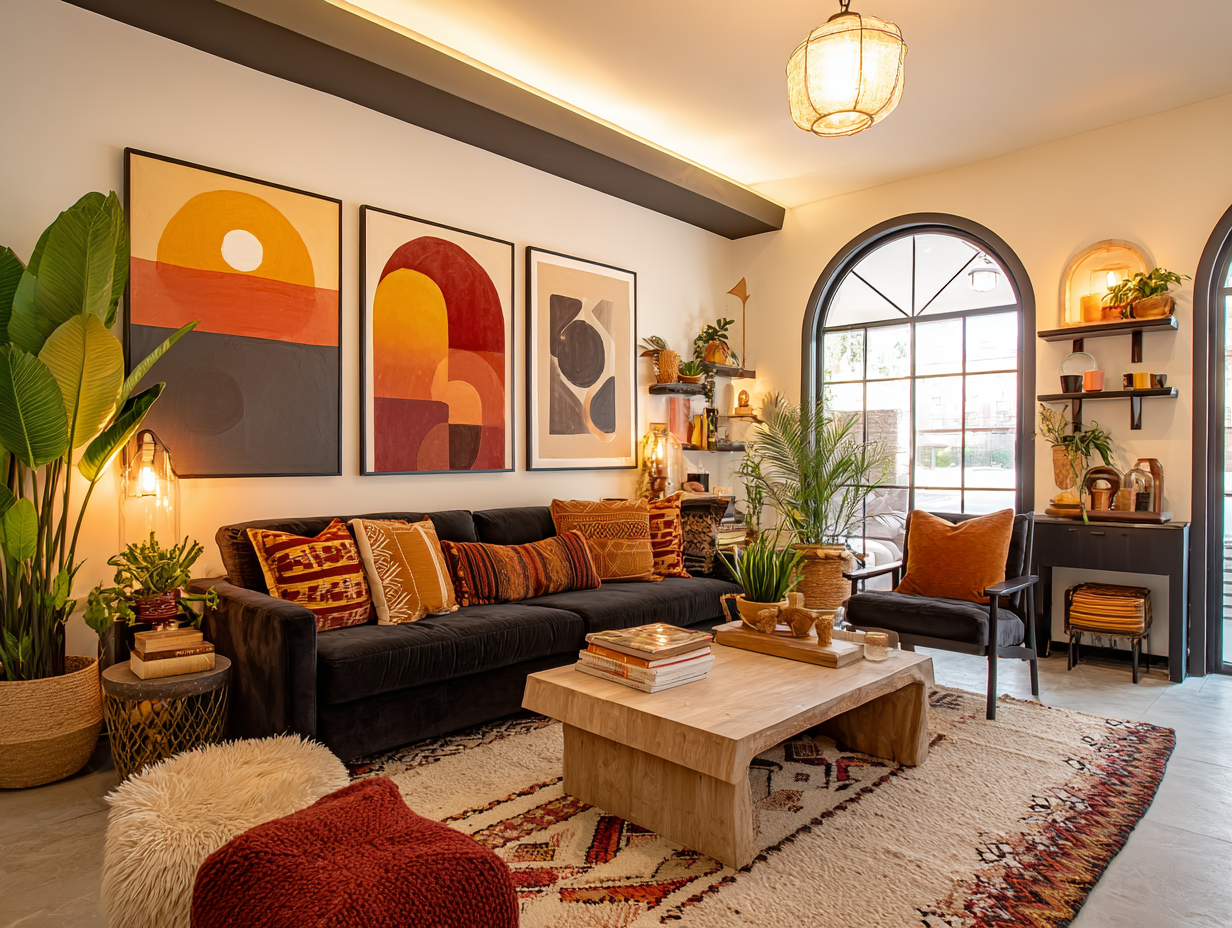
Afrohemian home decor is more than a design trend. It is a visual language that blends African heritage, global craftsmanship, and bohemian freedom into spaces that feel layered, personal, and deeply intentional. Where minimalism often strips a room down to its barest essentials, Afrohemian design does the opposite. It tells stories through texture, pattern, color, and objects that carry meaning. The result is a home that feels lived in, soulful, and grounded in culture rather than fleeting trends.
This style has gained momentum as homeowners look for interiors that feel authentic and expressive. Afrohemian decor resonates especially well with people who value heritage, handmade goods, and global influence, while still wanting a space that feels relaxed and approachable. It can work in modern homes, historic houses, and even coastal interiors when styled thoughtfully.
Please note: The Cameron Team has not been paid or received any other compensation to include any of the products featured on this post, but the author has included affiliate links and content. If you click on a link, they may earn a commission – a high-five for great content!
What Is Afrohemian Home Decor?
Afrohemian, sometimes referred to as Afro-Boho, is a fusion of African-inspired design elements and classic bohemian aesthetics. From the African side, it draws on bold patterns, symbolic motifs, natural materials, and art rooted in storytelling and tradition. From the bohemian side, it borrows a relaxed, collected approach that celebrates individuality and creative freedom.
Unlike traditional African decor, which can feel more formal, Afrohemian spaces are casual and livable. And unlike some bohemian interiors that lean into visual clutter, Afrohemian design often feels more grounded, thanks to its reliance on earthy palettes, natural fibers, and cultural continuity.
At its best, Afrohemian decor avoids imitation. It does not rely on mass-produced “tribal-inspired” items with no context. Instead, it prioritizes craftsmanship, ethical sourcing, and pieces that reflect real cultures and histories.
A Brief History of Afrohemian Style
The roots of Afrohemian decor can be traced to several overlapping cultural movements. One influence is the African diaspora’s reconnection with ancestral art forms and symbolism, particularly during the mid-20th century. As African art and textiles gained visibility in Europe and North America, they began appearing in homes as expressions of pride, identity, and heritage.
At the same time, the bohemian movement evolved. Originally associated with artists, writers, and travelers in 19th-century Europe, bohemian interiors rejected rigid design rules and embraced global influences. As travel became more accessible in the late 20th century, African markets, textiles, and handmade goods found their way into bohemian homes.
Afrohemian decor emerged naturally at this intersection. It reflects both a reverence for African culture and the bohemian belief that a home should be layered with personal meaning. Today, the style continues to evolve, influenced by contemporary African designers, sustainable design movements, and a growing appreciation for artisanal craftsmanship.
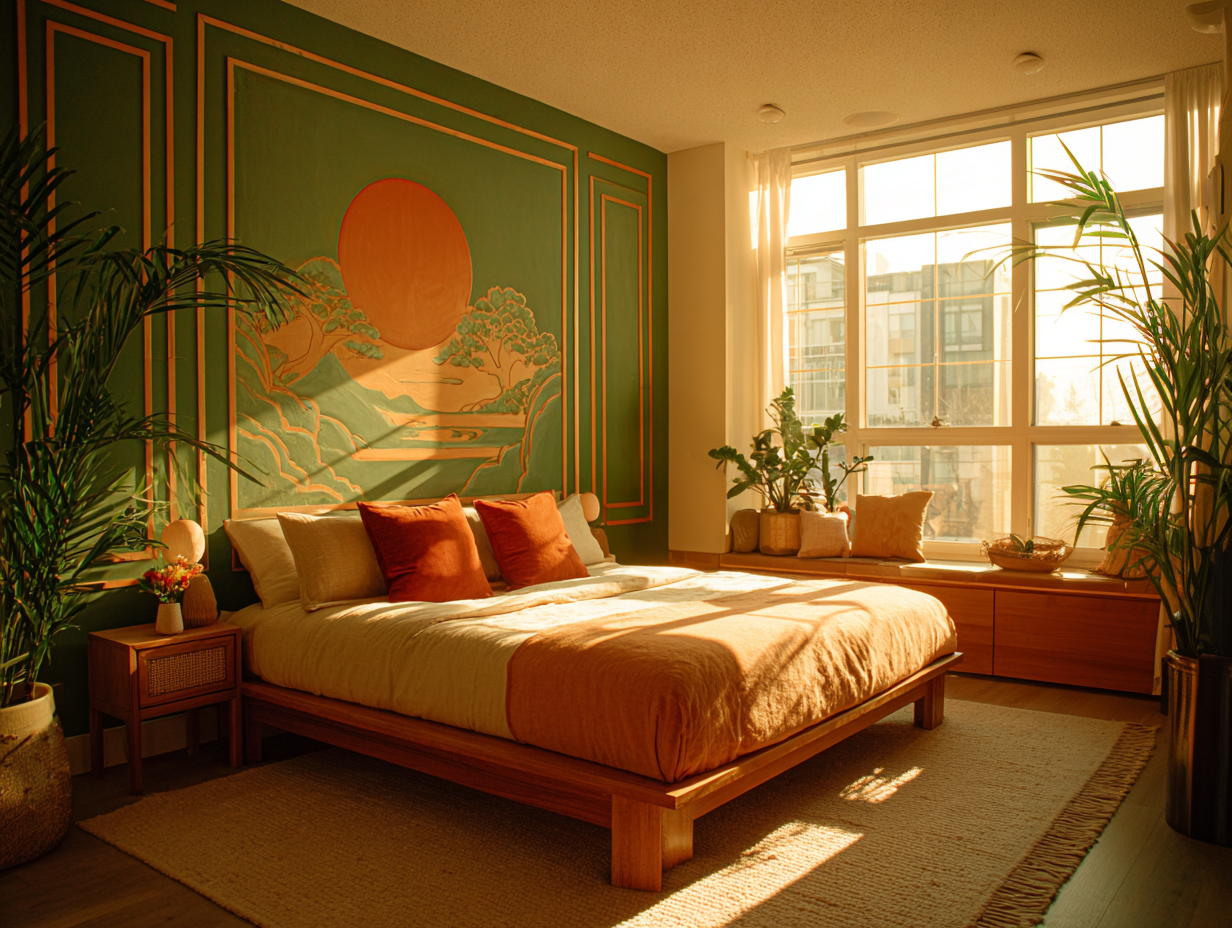
Afrohemian Decor - Bedroom
Key Elements of Afrohemian Home Decor
While no two Afrohemian homes look exactly alike, several common elements define the style.
Natural materials are foundational. Wood, rattan, bamboo, clay, leather, and woven fibers appear throughout Afrohemian interiors, creating warmth and texture.
Pattern plays a major role, especially geometric and symbolic motifs found in African textiles and artwork. These patterns often carry meaning, representing ideas such as community, protection, or prosperity.
Color palettes tend to be earthy and grounded, with shades like terracotta, ochre, clay, deep brown, charcoal, and warm neutrals, often accented by richer hues such as indigo, emerald, rust, or mustard.
Handcrafted objects matter. Afrohemian decor celebrates items that show the human hand, whether that is a carved wooden stool, a woven basket, or a hand-thrown ceramic vessel.
Layering is key. Afrohemian spaces rarely feel sparse. Instead, they build visual interest through textiles, art, plants, and collected objects arranged in a way that feels organic rather than overly staged.
How to Use Adire (Andire) Fabric in Your Home
One of the most recognizable textiles in Afrohemian decor is adire fabric, sometimes spelled andire. Originating from the Yoruba people of Nigeria, adire is an indigo-dyed textile traditionally made using resist-dyeing techniques such as tie-dye, stitching, or wax.
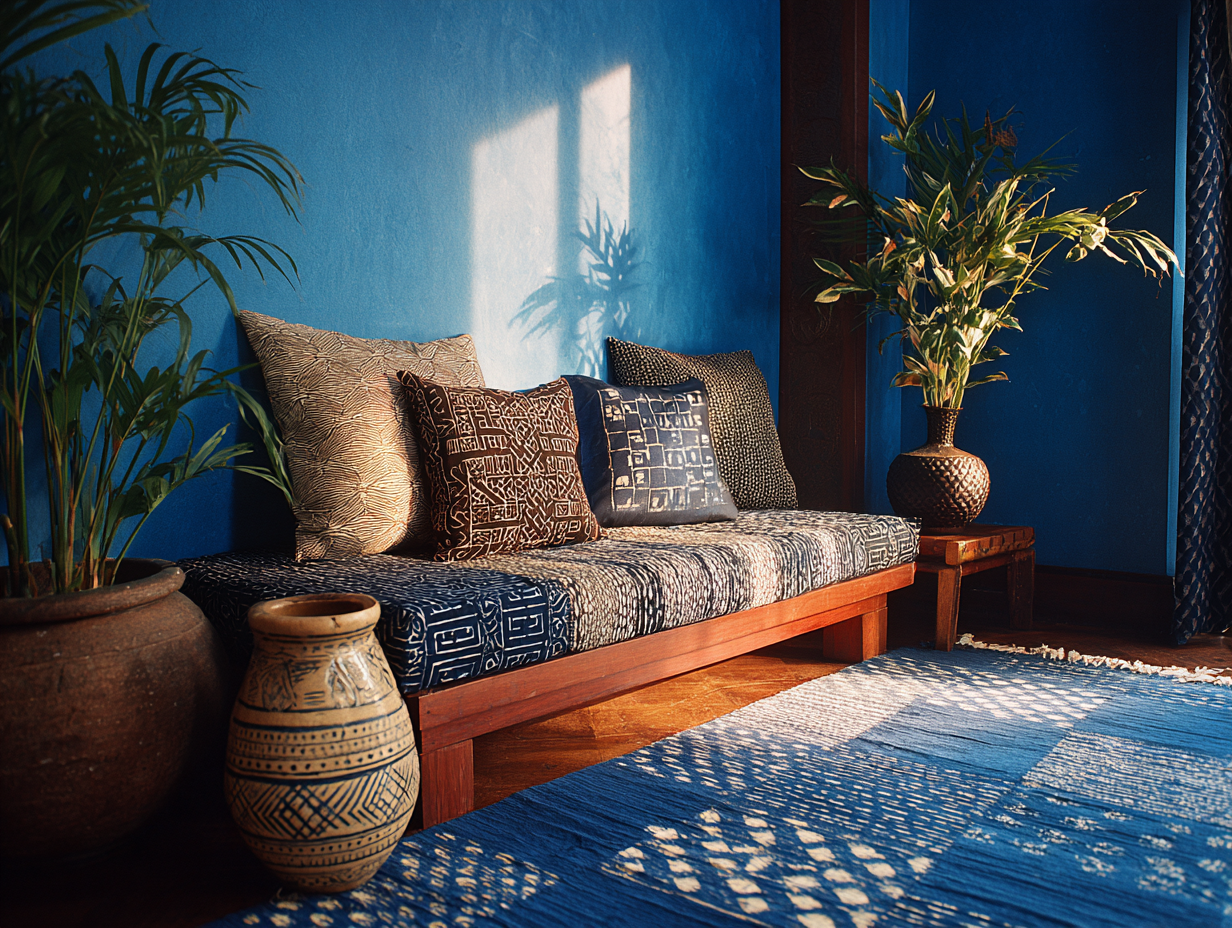
Adire Fabric - Afrohemian Decor
Adire fabrics are known for their deep indigo color and intricate patterns, and many traditional motifs carry meaning tied to community, daily life, and identity. Historically, these textiles were worn as garments, but today they are widely used in home decor.
Easy ways to bring adire into your space:
- Throw pillows: Use indigo adire pillow covers on a neutral sofa to add depth and global character.
- Framed textile art: Frame a panel of vintage-style adire fabric to create a bold, graphic focal point.
- Bed styling: Layer an adire-inspired throw or runner at the foot of the bed for color and texture.
- Dining accents: Try adire-inspired table runners or cloth napkins for a smaller dose of pattern.
Specific product ideas to search for: “indigo adire pillow cover,” “adire textile wall hanging,” or “adire table runner.” You may also see indigo-dyed pillow covers and throws from brands like The Citizenry or St. Frank that complement the look.
Bamboo Beaded Curtains as Functional Art
Bamboo beaded curtains are a signature Afrohemian detail because they blend function and artistry. Across many cultures, beaded curtains have been used for ventilation, privacy, and decoration. In Afrohemian interiors, they add natural texture, soft movement, and a relaxed, collected feel.
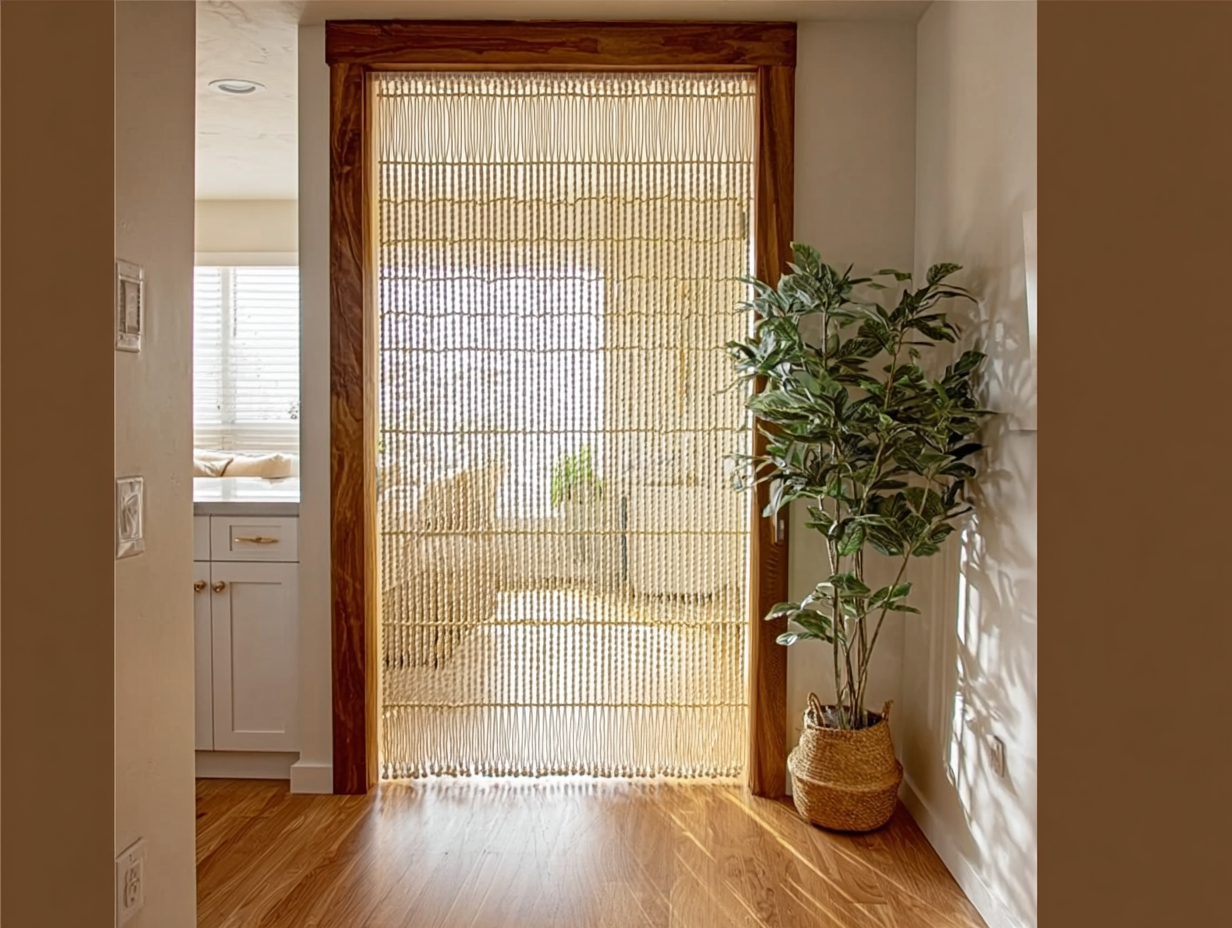
Beaded Curtain - Afrohemian Decor
Ways to use bamboo beaded curtains:
- Doorway accent: Hang a bamboo beaded curtain in a doorway to soften transitions between spaces.
- Room divider: Use it to separate a dining area from a living space while keeping light flowing.
- Textural wall moment: Install a shorter beaded curtain behind a console for a layered backdrop.
Specific product ideas to search for: “bamboo beaded curtain,” “wood bead doorway curtain,” or “handmade beaded room divider.” Look for natural finishes and simple shapes for a more updated feel.
Ethiopian Art for Storytelling and Color
Ethiopian art has a unique place in Afrohemian decor due to its distinct visual language and long artistic history. From traditional religious iconography to vibrant folk art and contemporary paintings, Ethiopian art often features bold colors, stylized figures, and narrative symbolism.
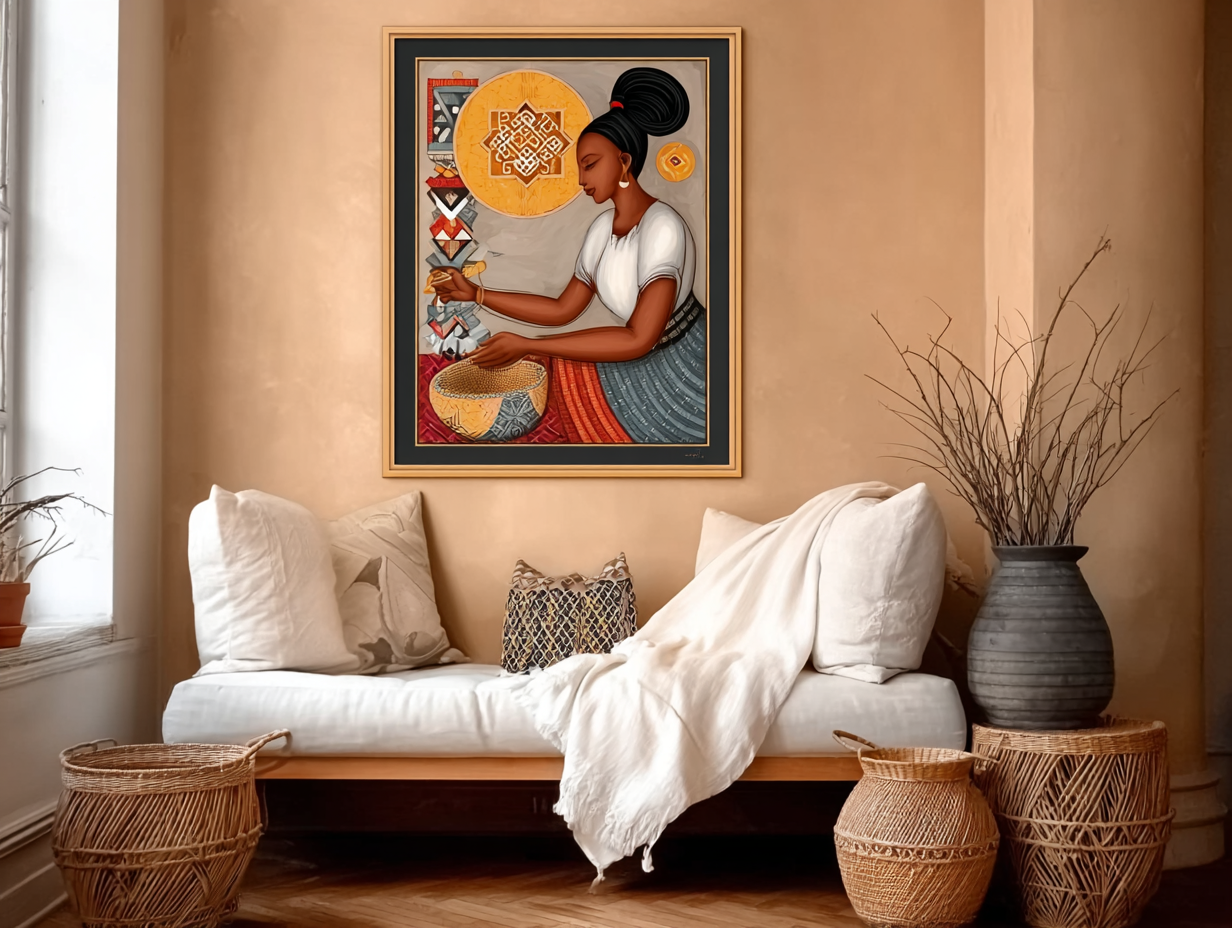
Ethiopian Art - Afrohemian Decor
How to style Ethiopian art at home:
- One large statement piece: Anchor a living room with a single Ethiopian painting above a sofa or credenza.
- Gallery wall mix: Combine Ethiopian art with woven baskets, photography, and textile fragments for a layered look.
- Entryway impact: Place a colorful piece near the front door to create an immediate sense of personality.
Specific product ideas to search for: “Ethiopian painting,” “Ethiopian folk art,” or “Ethiopian Orthodox icon style art.” When possible, buy directly from artists or reputable galleries and marketplaces that identify the maker.
Rattan Accent Chairs and Organic Seating
Rattan accent chairs are a staple in Afrohemian decor because they combine natural materials with sculptural form. Their woven texture adds warmth, and their airy silhouette helps balance heavier upholstered furniture.
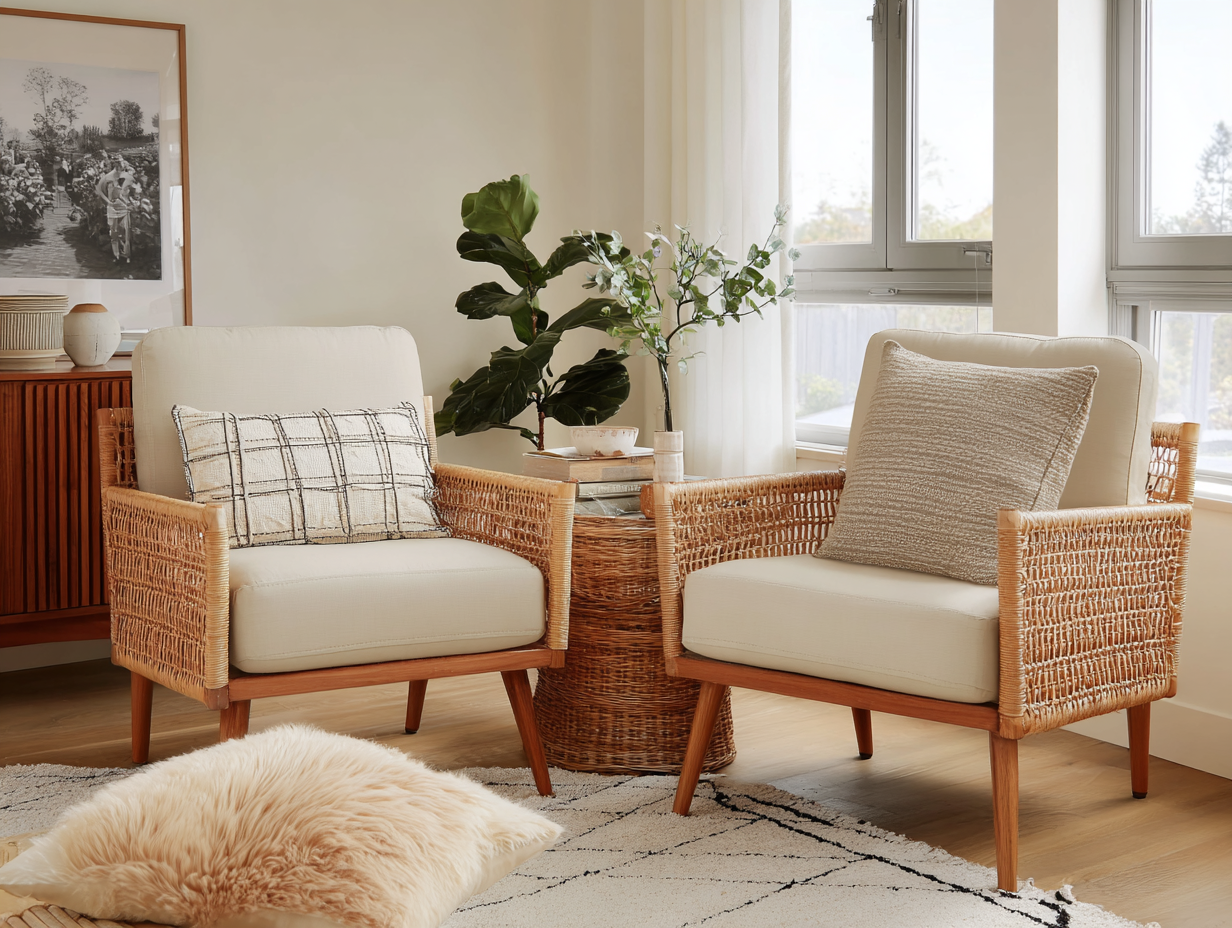
Rattan Chairs - Afrohemian Decor
Ways to use rattan chairs:
- Reading nook: Pair a rattan chair with a small side table, a floor lamp, and a leafy plant.
- Living room balance: Use two rattan chairs opposite a sofa to create a conversational layout.
- Bedroom corner: Add a single rattan accent chair as a functional styling piece for extra seating.
Specific product ideas to search for: “rattan accent chair,” “rattan lounge chair,” or “peacock chair.” Popular mainstream options include silhouettes similar to the Serena & Lily Balboa Chair (or comparable woven lounge chairs), as well as vintage peacock-style chairs for a more dramatic statement.
More Afrohemian Decor Pieces to Add Depth and Texture
If you want your home to feel unmistakably Afrohemian, these additional elements help build that layered, soulful look without making your space feel themed.
Mud Cloth and Kuba-Inspired Textiles
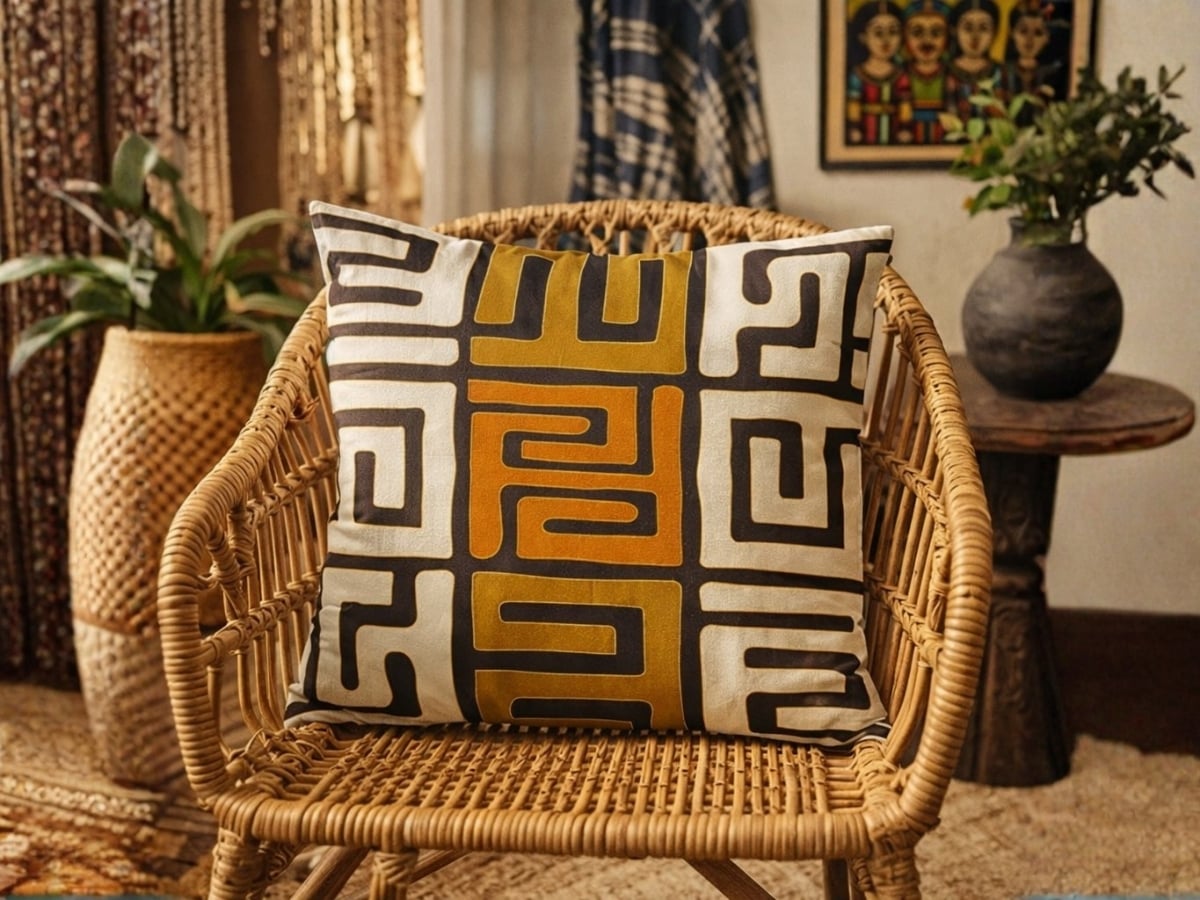
Kuba Print Pillow - Afrohemian Decor
Mud cloth (often associated with Mali) and kuba cloth (from the Congo region) are iconic textiles that add bold pattern and heritage to Afrohemian spaces. Mud cloth is known for graphic, high-contrast designs, while kuba cloth often features intricate geometric embroidery and a rich, tactile look.
Try them here: pillows, throws, bed shams, ottoman upholstery, or framed fabric panels.
Specific product ideas to search for: “mud cloth pillow cover,” “kuba cloth pillow,” “African mudcloth throw,” or “framed mud cloth textile.”
Handwoven Baskets for Storage and Wall Decor
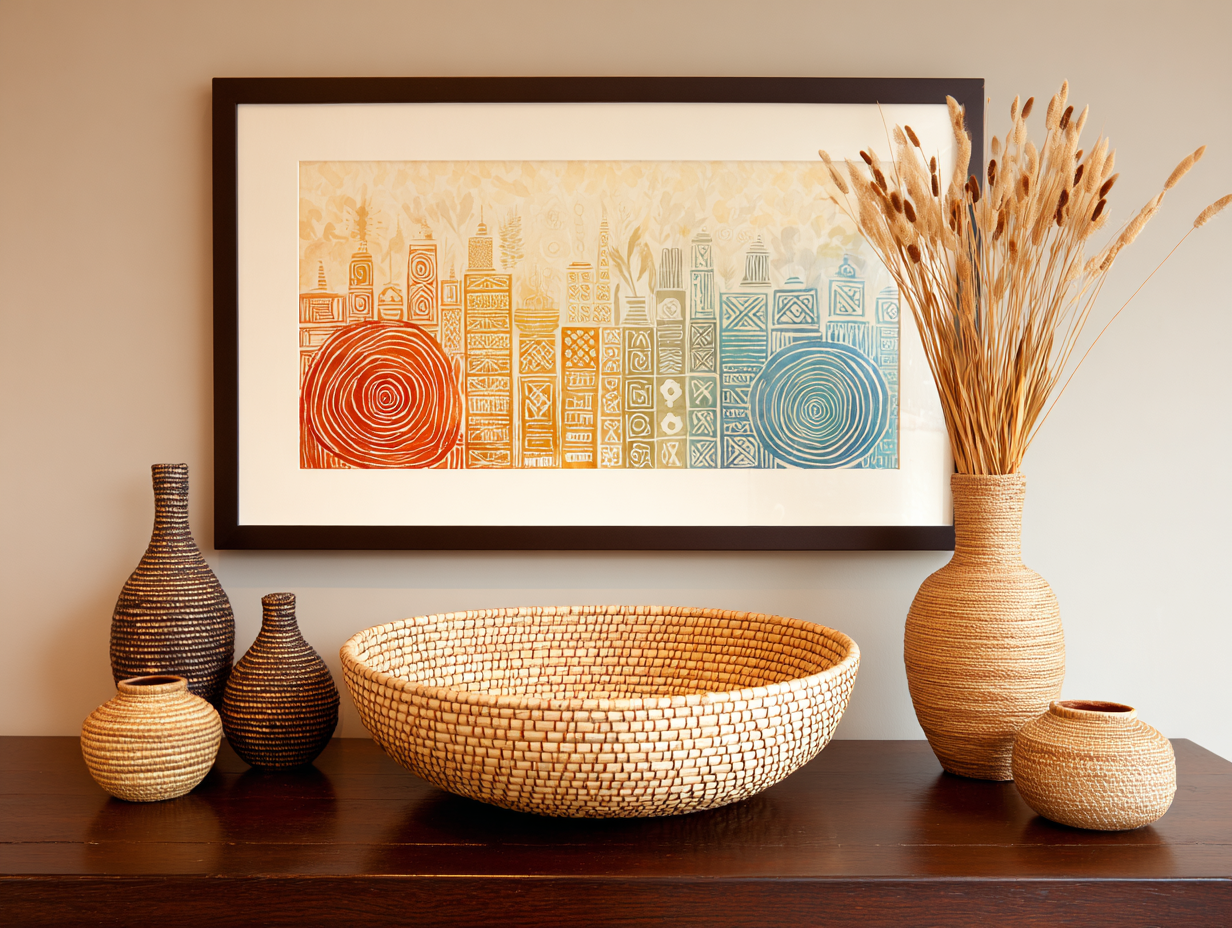
Seagrass Baskets and Vases - Afrohemian Decor
Woven baskets made from seagrass, raffia, or palm are an Afrohemian must-have because they’re beautiful and practical. Use larger baskets as planters or blanket storage, and smaller ones for shelves and tabletops.
Style tips: Create a basket wall with a mix of sizes and weave patterns. Keep the rest of the wall decor simple so the texture reads as intentional.
Specific product ideas to search for: “African woven basket wall decor,” “Rwandan basket,” “Ghana bolga basket,” or “handwoven seagrass basket.”
Carved Wooden Stools and Low Tables
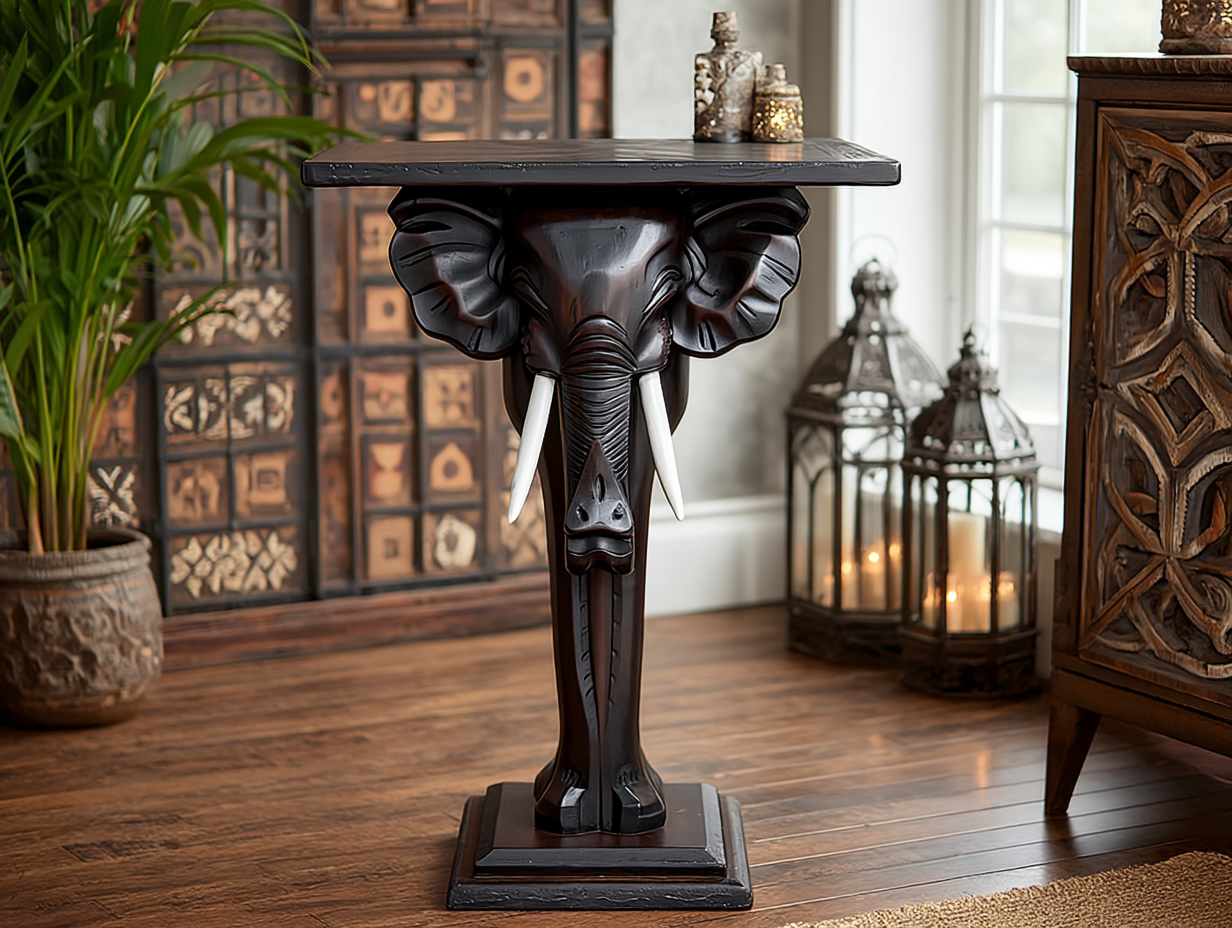
Carved Elephant Table - Afrohemian Decor
Carved wooden stools add sculptural character and can function as side tables, plant stands, or bedside tables. Many traditional African stools carry cultural significance, but even a simple hand-carved piece can bring warmth and authenticity into a room.
Specific product ideas to search for: “hand carved African stool,” “wood tribal stool side table,” or “carved wood accent table.”
Woven Wall Hangings and Macramé With Afrocentric Influence

Woven Wall Decor - Afrohemian Decor
Bohemian decor often includes macramé, but Afrohemian spaces tend to look best when macramé is layered with more grounded, heritage-rich textures. Think woven wall hangings with natural fibers, fringe, and geometric motifs, or wall pieces that incorporate beads and carved wood details.
Specific product ideas to search for: “woven wall hanging natural fiber,” “beaded wall hanging,” or “raffia wall decor.”
Earthy Ceramics, Clay Vessels, and Handcrafted Bowls
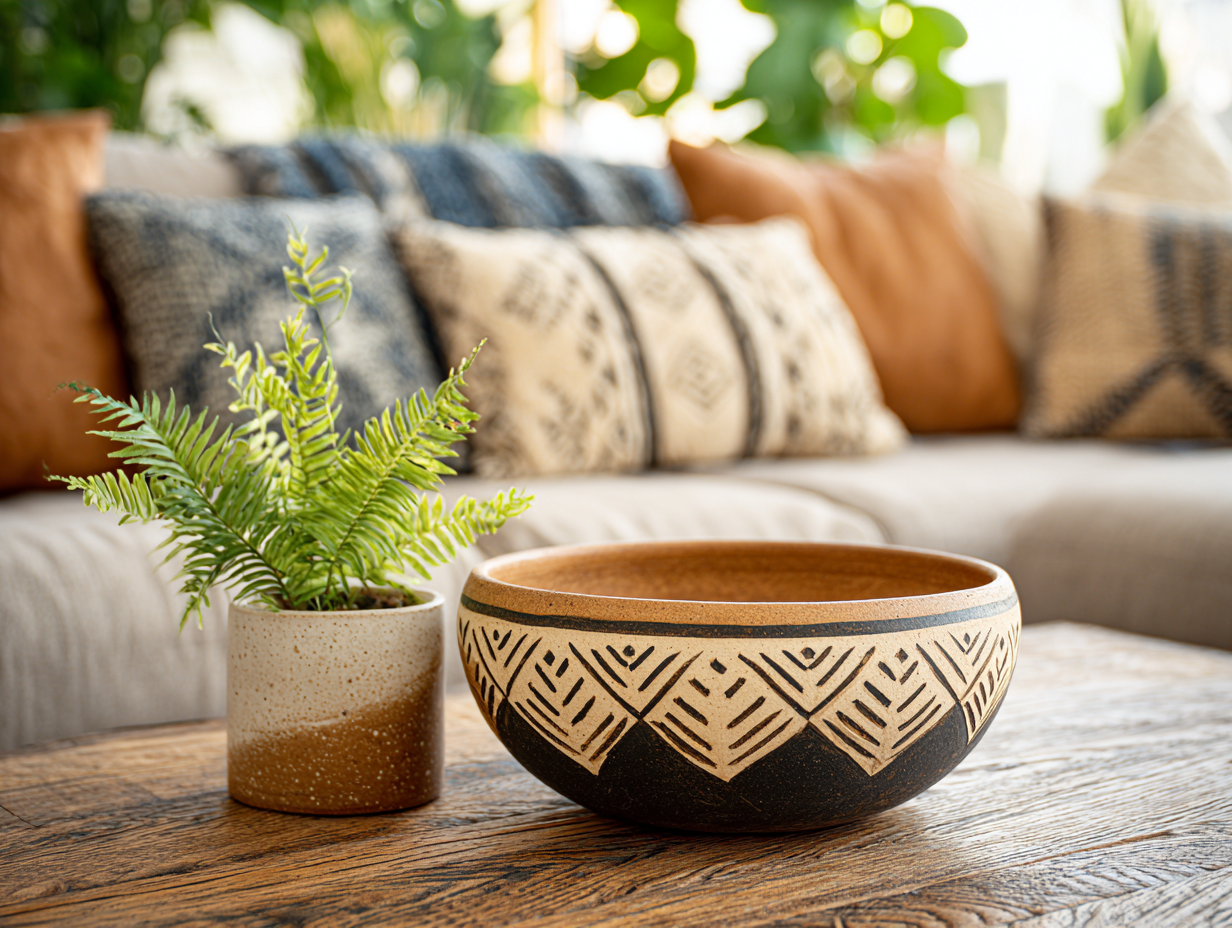
Hand-thrown Clay Bowl - Afrohemian Decor
Ceramics help Afrohemian spaces feel grounded. Look for imperfect shapes, matte finishes, and earthy tones that echo terracotta, sand, and charcoal. Group vessels on a mantel, style them on open shelving, or use larger clay pots as planters.
Specific product ideas to search for: “handmade terracotta vase,” “matte ceramic vessel,” or “hand-thrown clay bowl.”
Layered Lighting With Warmth
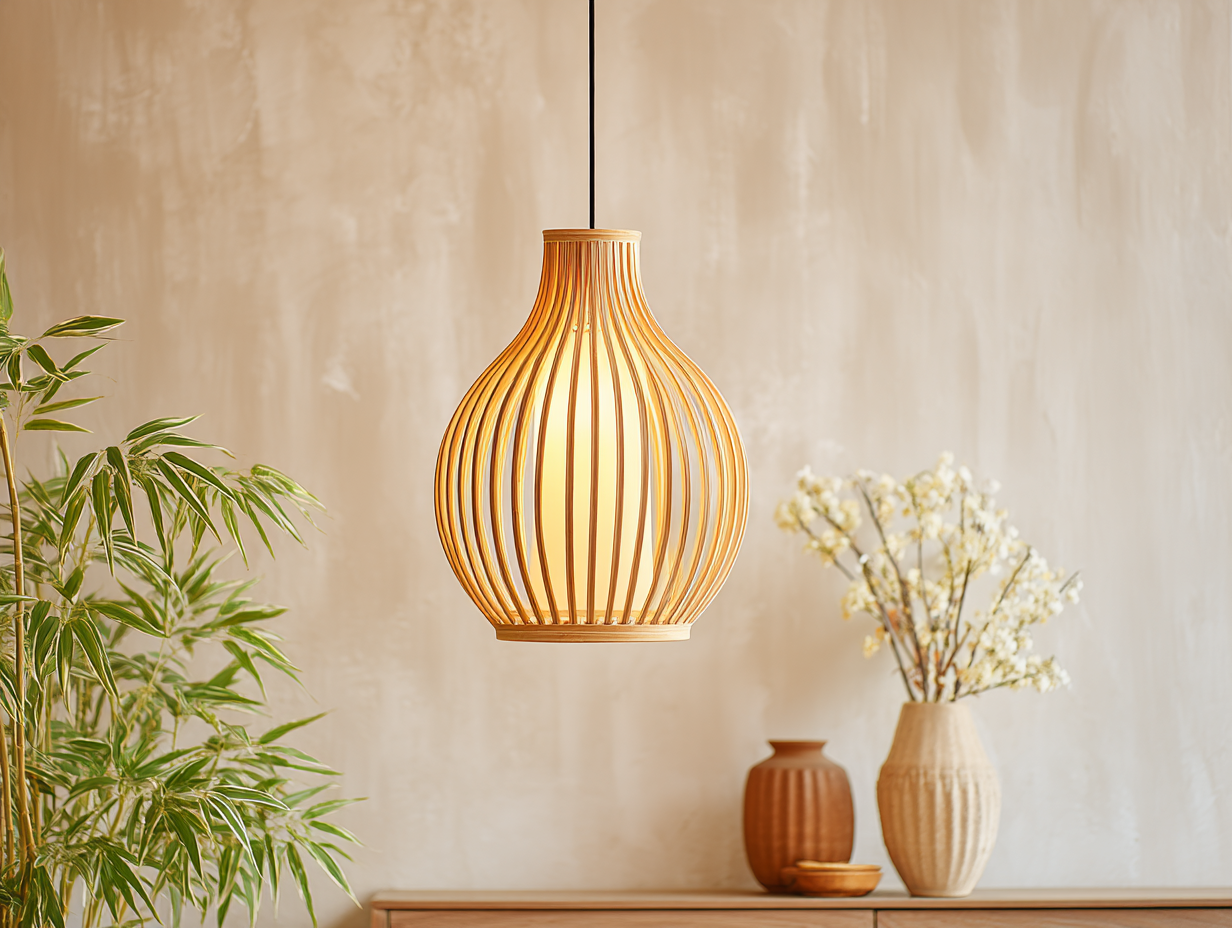
Bamboo Lantern Pendant - Afrohemian Decor
Afrohemian interiors shine when lighting is soft and warm. Swap harsh overhead lighting for layered sources like woven pendants, rattan lampshades, paper lanterns, and table lamps with textured bases.
Specific product ideas to search for: “woven pendant light,” “rattan pendant lamp,” “bamboo lantern pendant,” or “textured ceramic table lamp.”
Plants and Natural Greenery as Living Decor

Rubber Tree - Afrohemian Decor
Plants add the finishing touch to Afrohemian style by bringing movement and life to the room. Larger plants like monstera, rubber trees, and fiddle leaf figs add drama, while trailing pothos softens shelves and bookcases.
Style tips: Use woven baskets as planters, group plants at varying heights, and mix leaf shapes to keep the look layered rather than uniform.
How to Pull the Whole Look Together
The easiest way to make Afrohemian decor feel cohesive is to build from a calm foundation and then layer intentionally.
- Start neutral: Use warm whites, soft beiges, clay tones, or muted browns on large surfaces.
- Add one strong pattern at a time: Begin with adire or mud cloth pillows before moving into rugs or curtains.
- Mix materials: Pair rattan, wood, and clay so your space feels tactile and collected.
- Anchor with art: Ethiopian art or other African artwork can set the emotional tone of the room.
- Keep it personal: Afrohemian style looks best when pieces feel meaningful, not copied from a catalog.
Why Afrohemian Home Decor Feels So Current Right Now
In an era of fast furniture and fleeting trends, Afrohemian home decor offers something richer. It celebrates artistry, heritage, and sustainability, and it invites you to create a space that reflects your story rather than a seasonal aesthetic. By incorporating elements like adire fabric, bamboo beaded curtains, Ethiopian art, and rattan accent chairs, you can build a home that feels warm, expressive, and unmistakably your own.
Check out this article next