
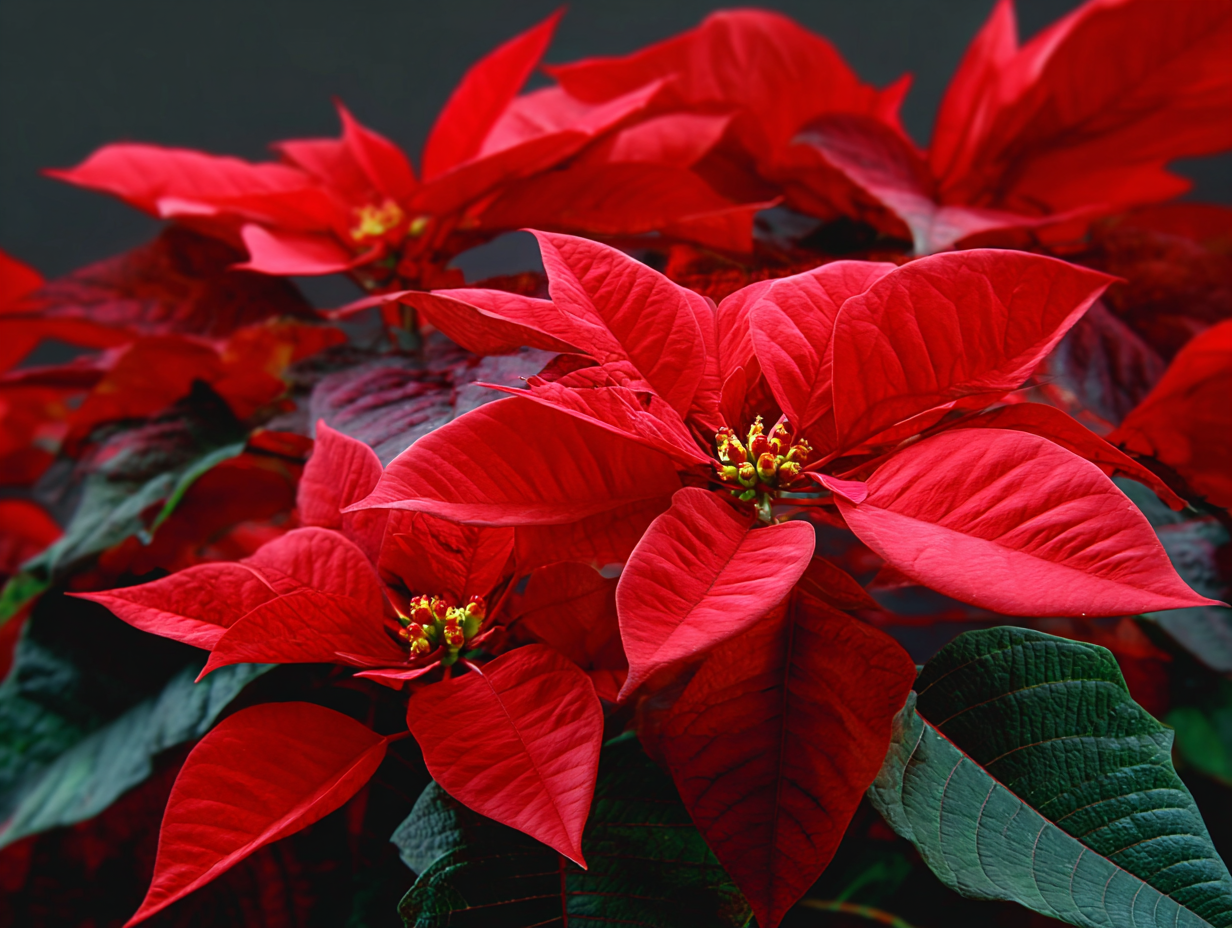
The poinsettia is so closely associated with Christmas today that it can be hard to imagine the season without it. You see it everywhere in December: on front porches, in grocery store entryways, around church altars, in hotel lobbies, and as the “finishing touch” on a dining room table set for holiday guests. That bright burst of red feels like Christmas in plant form.
But the poinsettia didn’t start out as a commercial holiday staple. Its story stretches back centuries and crosses cultures, moving from ancient Mexico to colonial Christmas traditions, then into American greenhouses and living rooms. Along the way, it picked up layers of meaning that made it a perfect fit for the season: humility, celebration, and the idea that something simple can become something extraordinary.
Where the poinsettia comes from: roots in Mexico
Poinsettias are native to Mexico and parts of Central America, where they grow outdoors as shrubs or small trees, not the compact potted plants most people are used to seeing. In their natural environment, they can get quite tall, with long stems and clusters of vivid red bracts (the colored leaves that many people mistake for petals).
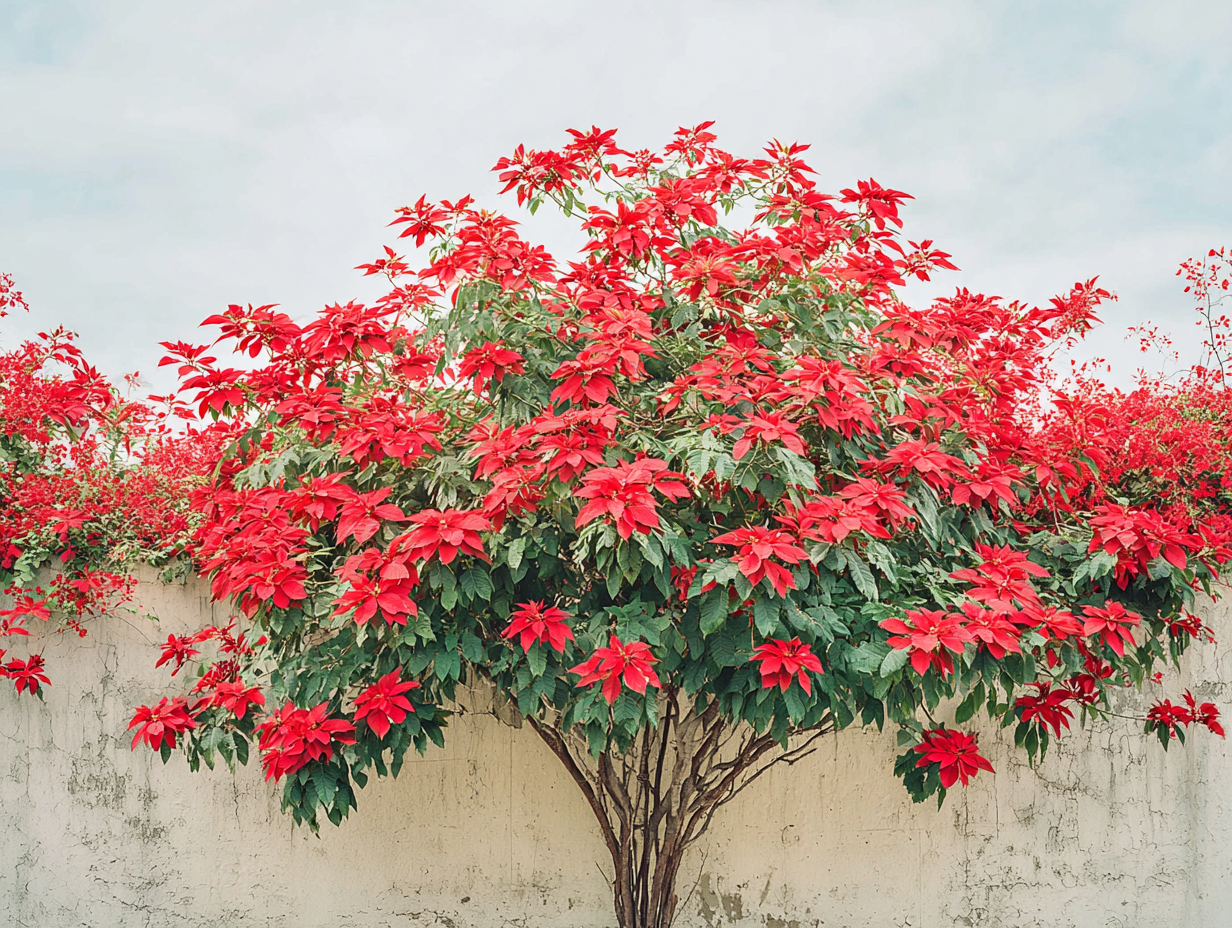
Poinsettia Tree
Long before poinsettias were tied to Christmas, Indigenous peoples in Mexico recognized the plant’s value. The Aztecs called it cuetlaxochitl. They used it for practical purposes, including producing dyes from the red coloration, and they also used the plant’s milky sap in traditional remedies. Just as importantly, red held symbolic power in Aztec culture. It was associated with life and vitality, making the plant feel meaningful, not merely decorative.
This early significance matters because it helps explain why the plant later slipped so naturally into religious tradition. When a plant already carries cultural weight, it doesn’t take much for new meaning to be layered onto it, especially during major spiritual celebrations.
The Christmas legend that made poinsettias famous
The poinsettia’s most famous connection to Christmas is tied to a Mexican legend often told during the holiday season. While details vary by region and retelling, the heart of the story stays the same: a child wants to offer a gift to honor the birth of Jesus but has nothing of monetary value to bring.
In one of the best-known versions, the child is a young girl named Pepita. She feels embarrassed that she can’t afford a present for the Christmas Eve church celebration. Someone, or sometimes an angelic figure, encourages her to gather what she can. She collects simple weeds from the roadside and brings them to the church altar. In the moment they’re placed as an offering, the weeds miraculously transform into brilliant red blooms.
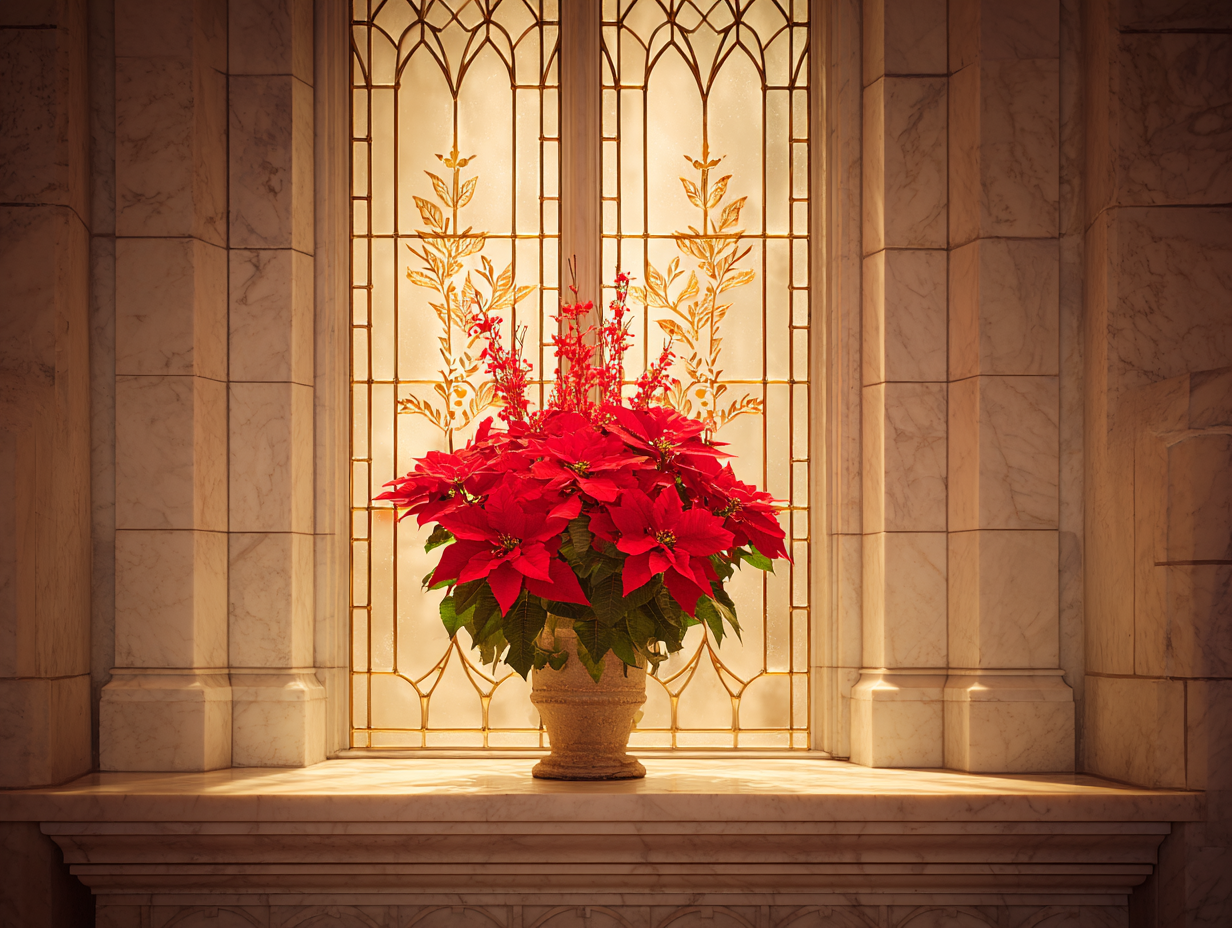
Poinsettia in a Church
These blooms are widely associated with poinsettias, and the legend helped cement the plant as a symbol of Christmas in Mexico and beyond. In Spanish-speaking communities, you’ll often hear poinsettias called Flores de Nochebuena, meaning “Flowers of the Holy Night,” referring to Christmas Eve.
The story resonates because it reflects one of the core ideas many people associate with the holiday: that the meaning of a gift comes from the intention behind it, not the price tag. In other words, poinsettias aren’t just pretty. They represent a kind of heartfelt simplicity that feels central to Christmas itself.
Why the poinsettia looks like Christmas: symbolism in the plant
Another reason poinsettias became a Christmas icon is that the plant’s structure lends itself to symbolism. What we call the “flower” is actually a set of bracts, or specialized leaves, that change color in response to seasonal light patterns. The true flowers are the small yellow clusters at the center.
Over time, Christian symbolism grew around these features. The star-like shape formed by the red bracts has been linked to the Star of Bethlehem. The deep red color has been interpreted as representing sacrifice and love, themes that show up prominently in Christian tradition.
Even the timing feels destined. Poinsettias naturally color up during the shorter days of winter, which happens to coincide with the Christmas season. When something in nature appears to “turn on” its brightest display right as people are celebrating, it’s easy to see why that plant would become part of holiday tradition.
How poinsettias made their way to the United States
The poinsettia’s path into American culture is strongly connected to Joel Roberts Poinsett, a U.S. diplomat and passionate plant collector who served in Mexico in the early 1800s. While there, he encountered the striking red plant and sent cuttings back to his home in South Carolina.
At first, poinsettias were more of a botanical curiosity than a mainstream holiday decoration. They were grown in greenhouses and botanical gardens, shared among horticultural circles, and appreciated for their unusual ability to show bright color in winter. Over time, the plant became commonly known by Poinsett’s name, which helped standardize it in English-speaking markets.
Still, it took decades before poinsettias became a Christmas must-have in the United States. That leap required not just interest, but reliable cultivation and, eventually, marketing on a national scale.
The commercial boom: how poinsettias became a holiday staple
The poinsettia’s transformation into a Christmas superstar largely happened in the 1900s as greenhouse production improved. Growers learned how to produce plants more consistently, encourage fuller growth, and time the color change so poinsettias looked their best during peak holiday shopping weeks.
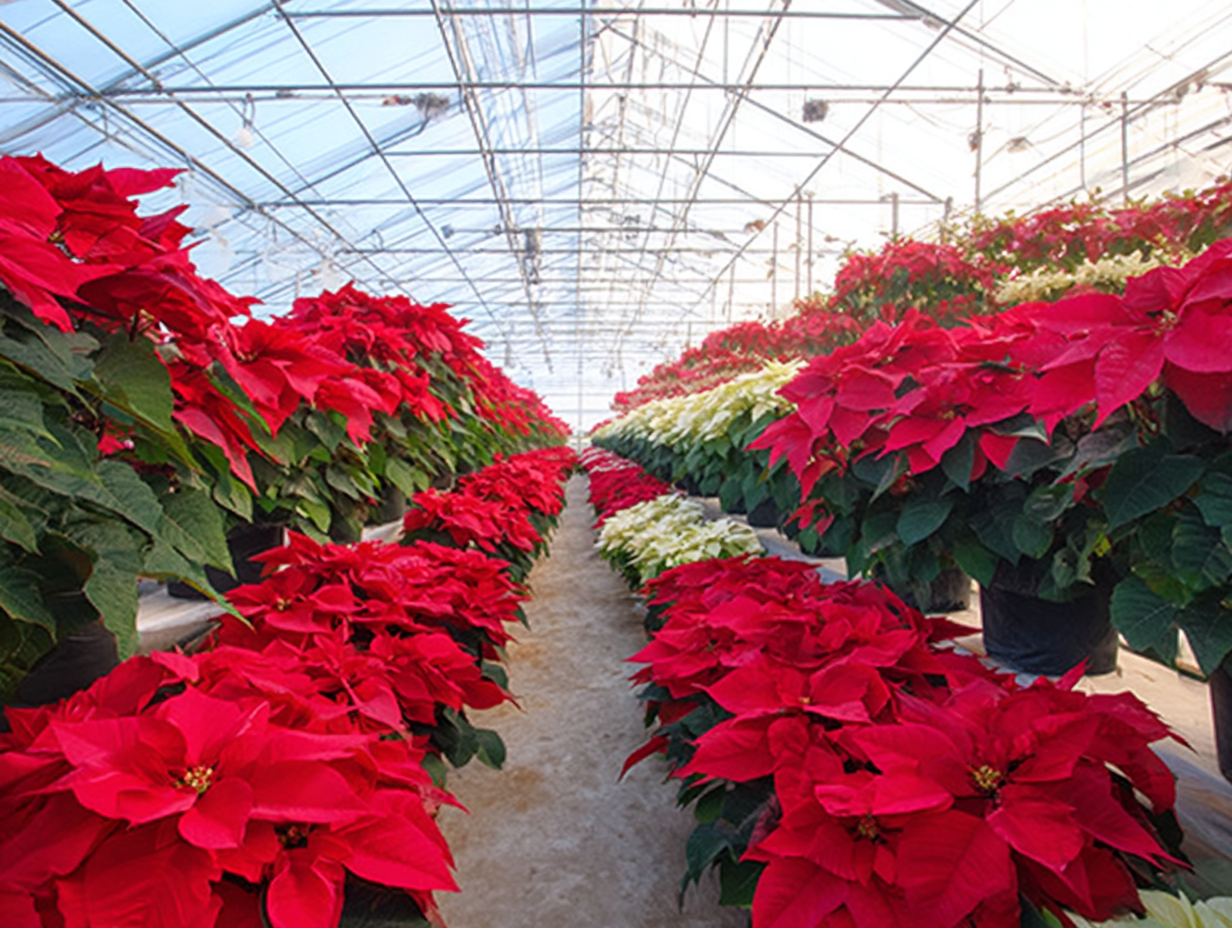
Poinsettia Greenhouse
Selective breeding also played a big role. Early poinsettias could be leggy and fragile, with fewer bracts and a less “finished” look. Over time, growers developed varieties that were more compact, more vibrant, and better suited for indoor display. These improvements made poinsettias more attractive to consumers and easier for retailers to sell in large numbers.
At the same time, poinsettias became part of the public image of Christmas. Churches used them in seasonal services. Families displayed them in entryways and on mantels. Businesses placed them near registers and in window displays. The plant became a visual cue that the holiday season had arrived, similar to how evergreen garland or twinkle lights immediately signal December.
National Poinsettia Day and a lasting tradition
In the United States, December 12 is recognized as National Poinsettia Day, marking the date of Joel Poinsett’s death and honoring his role in introducing the plant to American horticulture. While it’s not an official public holiday, it’s widely referenced in the floral industry and among holiday plant enthusiasts.
It’s also worth noting that December 12 has additional cultural resonance in Mexico and Mexican-American communities, as it aligns with celebrations connected to Our Lady of Guadalupe. This overlap is a reminder that poinsettias carry a dual identity: they’re an American holiday staple, but their roots and some of their deepest seasonal traditions remain distinctly Mexican.
Modern poinsettias: new colors, same Christmas energy
When most people picture poinsettias, they picture red, and red is still the classic choice. But modern poinsettias come in a wide range of colors and patterns, including white, pink, cream, marbled blends, and speckled varieties. Some look soft and frosty, perfect for minimalist décor. Others feel playful and bold, fitting right in with colorful holiday themes.
Even with all the variety, the poinsettia’s role remains consistent: it’s a seasonal signal. It tells your brain, “It’s Christmas time,” the same way cinnamon scents or holiday music does. It’s one of the simplest ways to make a home feel festive without pulling out boxes of decorations.
Why the poinsettia still matters at Christmas
The poinsettia has lasted as a Christmas symbol because it brings together multiple layers of meaning in one easy, beautiful package. It’s rooted in ancient tradition, tied to a beloved holiday legend, and naturally timed to peak when people are already looking for warmth and celebration.

Poinsettia on Christmas Front Porch
It also tells a story that feels especially relevant during the holidays: that what you offer matters more than what you spend. The poinsettia’s origin legend is essentially about showing up with what you have, even if it’s simple, and discovering that it can still be meaningful and beautiful.
So whether you buy one poinsettia for your kitchen counter or line your porch with a row of them, you’re participating in a tradition that spans cultures and centuries. It’s not just a plant people picked because it’s red. It’s a symbol that traveled, adapted, and endured, becoming one of the most recognizable parts of Christmas décor today.
Check out this article next