
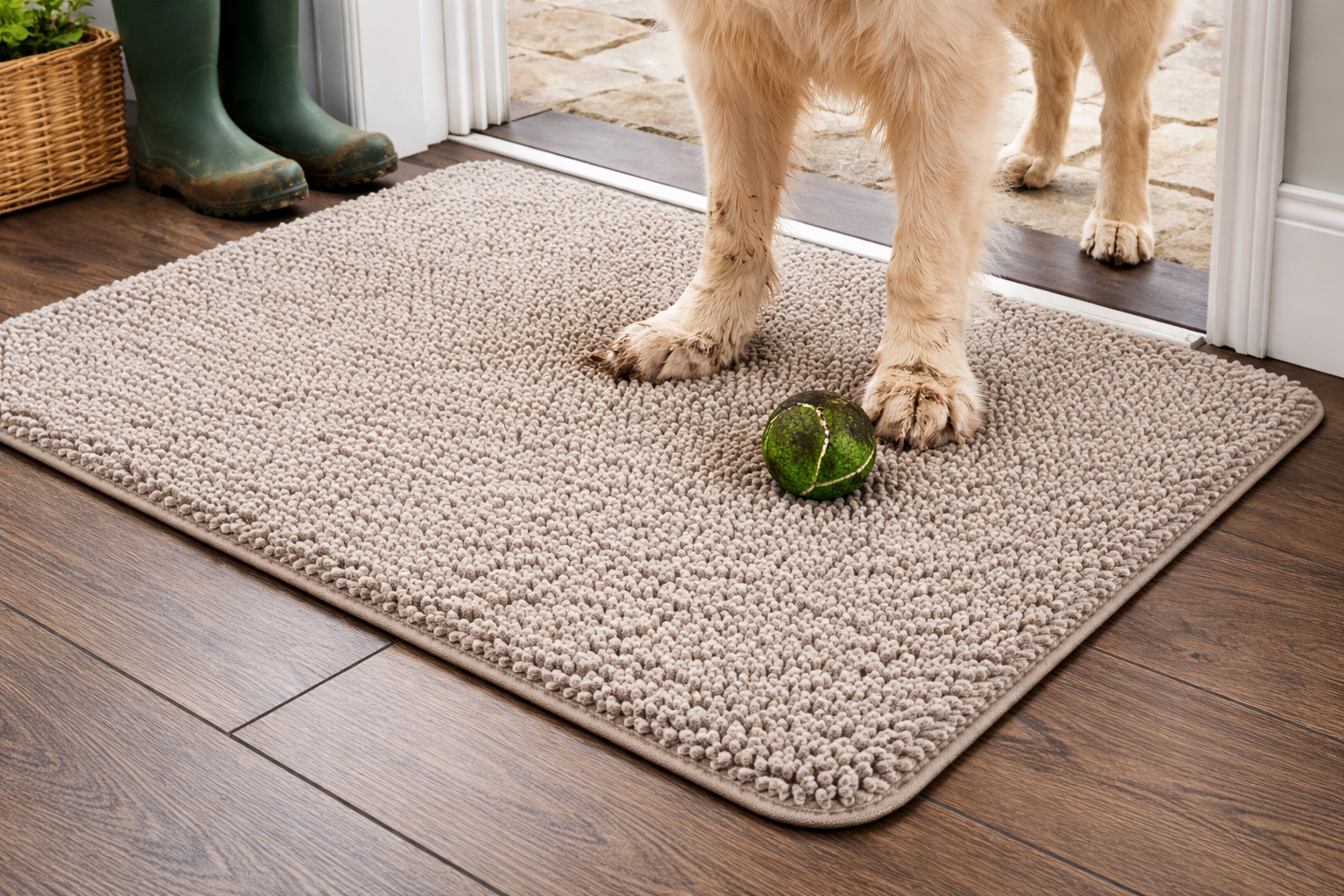
Between rainy days, sandy beach adventures, and dogs who sprint indoors with paws full of surprises, your entryway can be one of the hardest-working areas in your home. A well-chosen door mat can dramatically cut down on tracked-in dirt, moisture, and debris, keeping your floors cleaner and extending the life of your flooring. But not all mats perform the same. Thickness, backing, cleaning style, durability, and even sustainability features vary widely—and those differences matter when you’re working to keep mud at bay.
This guide breaks down six top-performing options, grouped into two categories: ultra-absorbent chenille and microfiber mats, and rugged heavy-duty mats made for tougher outdoor or high-traffic environments. Each section includes details on thickness, backing type, ease of cleaning, color choices, price range, and any noteworthy eco-friendly characteristics.
Please note: The Cameron Team has not been paid or received any other compensation to include any of the products featured on this post, but the author has included affiliate links and content. If you click on a link, they may earn a commission – a high-five for great content!
What to Look For in a Muddy-Paws Door Mat
Before exploring individual products, it helps to understand the key factors that determine whether a mat will hold up under real-world conditions.
Thickness and pile height. Absorbent mats tend to be thicker and cushier, which helps pull moisture from paws and footwear. Low-profile mats, typically around 0.3 to 0.5 inches, are best for doors that sit close to the floor. Mats around 1 inch thick offer excellent absorbency but require more clearance.
Backing material. The best mats stay put. Thermoplastic rubber (TPR), thermoplastic elastomer (TPE), and textured rubber backings help prevent sliding on hardwood, tile, and laminate. This especially matters for homes with energetic pets or children.
Ease of cleaning. Machine-washable mats tend to last longer and stay fresher. Rubber outdoor mats can be rinsed down with a hose. Fast-drying fibers are ideal for homes that deal with frequent messes.
Color and style. High-traffic areas benefit from mid-tone colors and textured patterns that disguise dirt between washes. Neutral colors such as charcoal, taupe, and gray tend to blend easily with a variety of interiors.
Sustainability. Some mats now include recycled materials or certifications that verify safe textile processing. Machine-washability can also extend a product’s lifespan, reducing waste.
Top-Rated for Absorbency
If your biggest challenge is moisture—wet paws, dripping umbrellas, soaked jackets, or muddy boots—absorbent chenille and microfiber mats are the best line of defense. These three options are built to catch water and fine debris before it spreads across the floor.
PURRUGS Dirt Trapping Door Mat
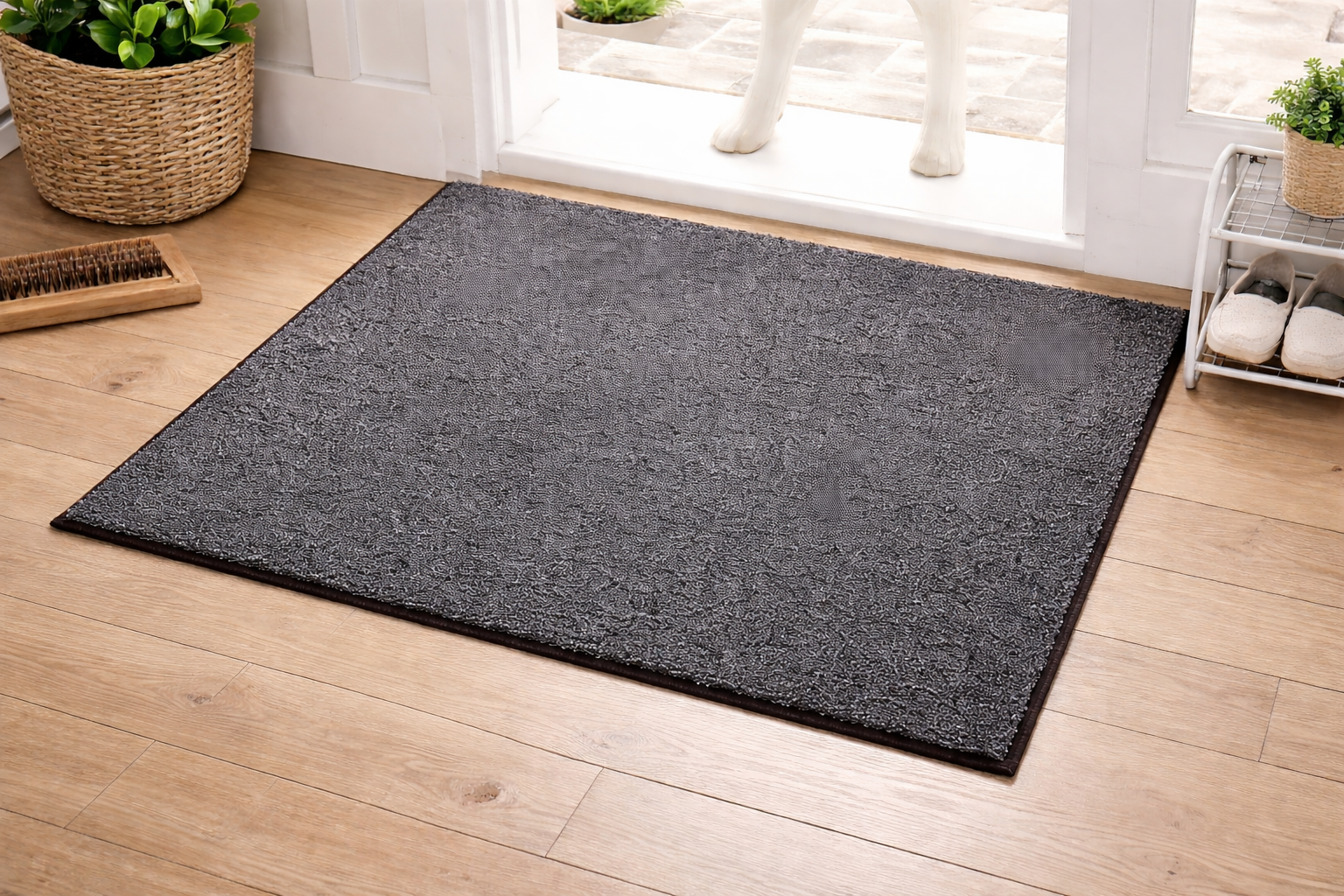
This mat features a dense microfiber surface designed to trap water, dirt, and pet debris quickly. It has a thickness of around 0.4 inches, which keeps it slim enough for most standard door clearances while still providing substantial absorbency. The backing is made from non-slip thermoplastic rubber, giving it good grip on hard floors.
Maintenance is simple—shake off loose debris outdoors or place it in the washing machine for a deeper clean. The fibers hold up well to repeated washing, helping the mat last longer than traditional low-cost entry rugs. Color options tend to lean toward versatile neutrals such as charcoal, gray, and light gray. Pricing generally falls in the mid-range, making this an accessible pick for busy entryways. Some versions also incorporate recycled materials or participate in responsible packaging programs, adding a small sustainability benefit.
Muddy Mat Super Absorbent Microfiber Door Mat
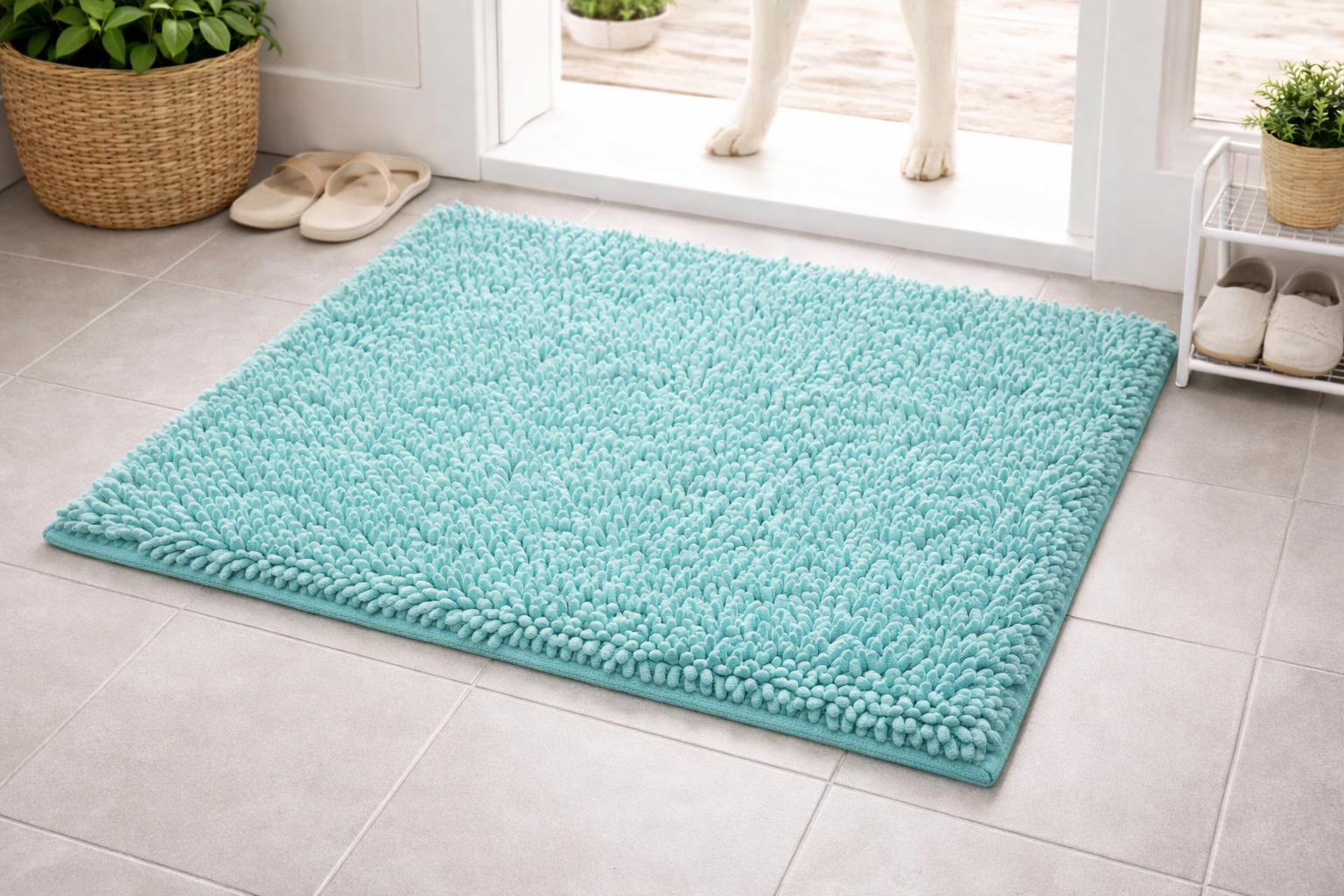
This mat is known for its exceptionally plush chenille surface, designed to capture moisture rapidly. The pile is approximately one inch thick, offering a cushioned feel underfoot and excellent absorption for wet paws and boots. It uses a non-slip TPE backing to help it stay secure on hard surfaces. Because of the thick pile, it’s especially useful near back doors where pets tend to enter after outdoor play.
The Muddy Mat is machine washable and dries quickly, which is essential if your household deals with frequent messes. It typically comes in medium to dark neutral tones optimized for hiding dirt. Pricing usually sits in the mid-to-upper range depending on size. The durable chenille fibers help extend its lifespan, making it a practical option for pet-heavy households.
Smiry Dog Door Mat for Muddy Paws
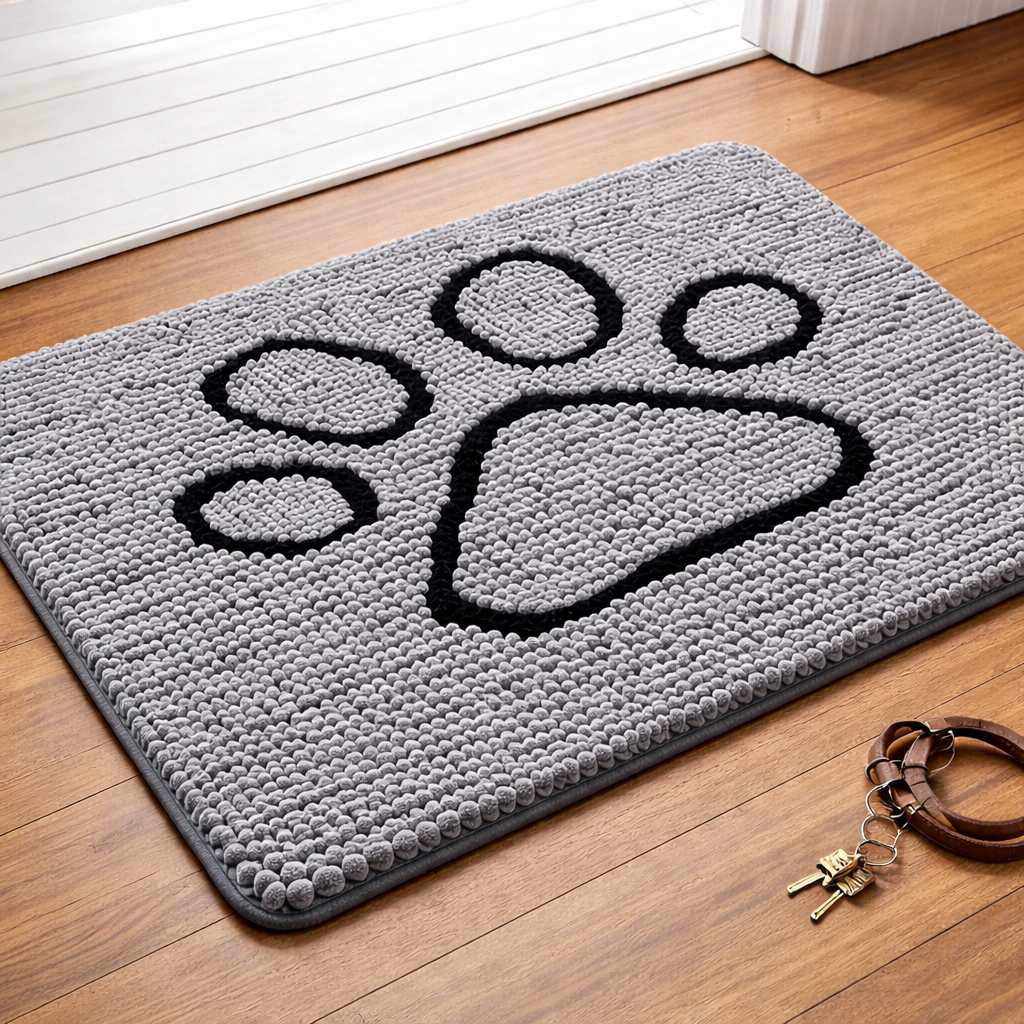
This option offers a soft chenille surface with an approximate one-inch thickness, making it ideal for pulling moisture off paws and shoes. The backing is made from textured rubber for strong grip, which is particularly helpful in busy areas like mudrooms or laundry entrances. The mat is machine washable and designed to dry quickly, so it can be cleaned frequently without wearing down.
Smiry mats are commonly seen in gray and other mid-tone neutrals that blend easily with modern décor. They are also one of the most budget-friendly choices in this category, offering strong absorbency without the higher price tag of premium chenille mats. If you want a thick, comfortable mat that performs like higher-end versions but stays affordable, this is a solid pick.
Heavy-Duty Performance Mats
These mats are built for durability, rugged outdoor conditions, and heavy foot traffic. They excel at scraping, weather resistance, and long-term performance. They are especially useful at front doors, garage entries, and exposed porches.
OLANLY Chenille Dog Door Mat for Muddy Paws
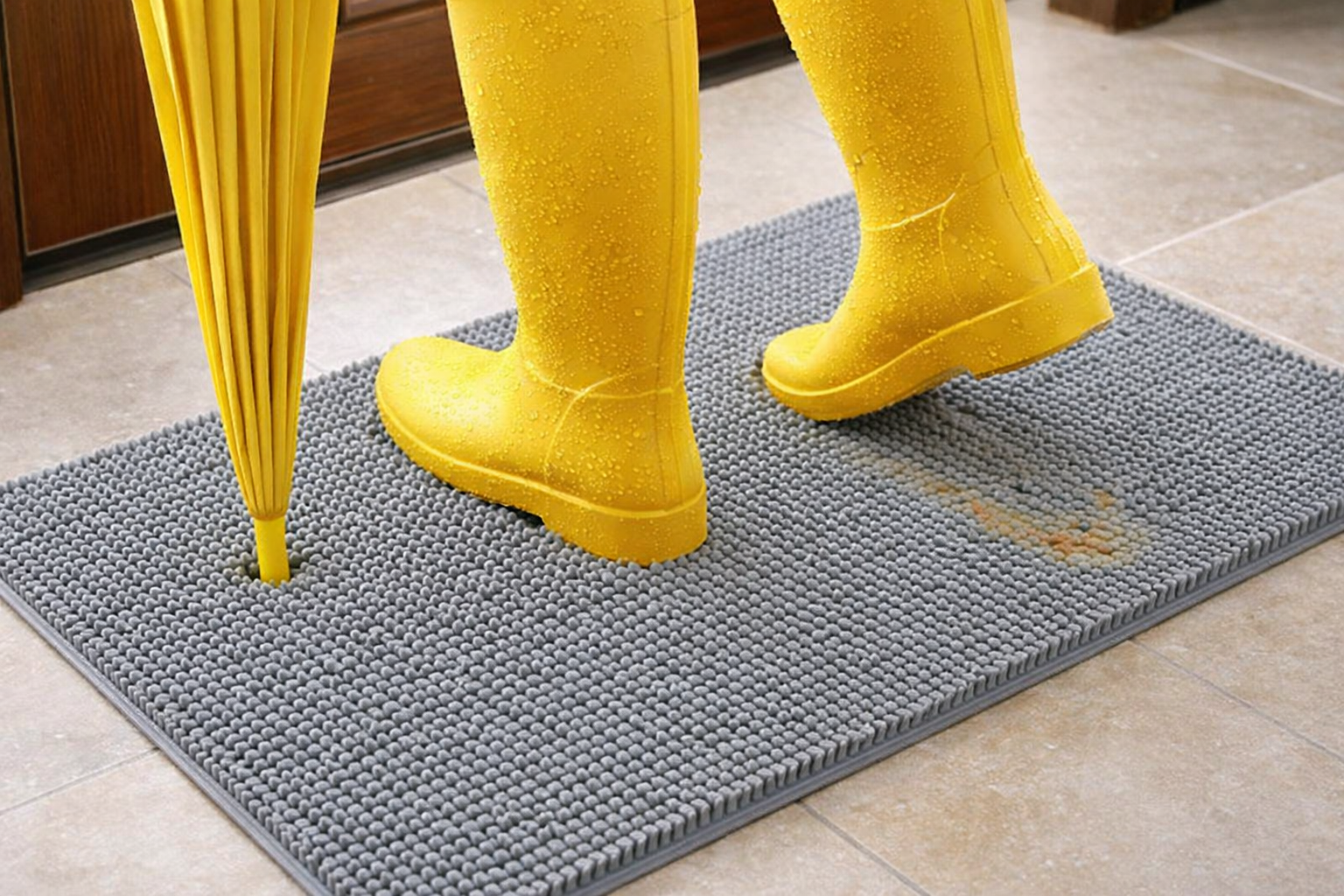
Balancing comfort and performance, this mat features thick chenille fibers paired with a durable rubber backing. At about one inch thick, it absorbs well but still stays slim enough for most doorways. It’s particularly effective in mudrooms or covered entries where boots and paws often bring in grit and moisture.
The mat is machine washable, and its fibers are designed to dry quickly. OLANLY offers multiple color options, including Atlantic Blue and neutral tones. Pricing generally falls in the upper-mid range depending on size and retailer. While not marketed heavily for sustainability, its washability and durability help extend its lifespan.
Gorilla Grip WeatherMax All-Season Doormat
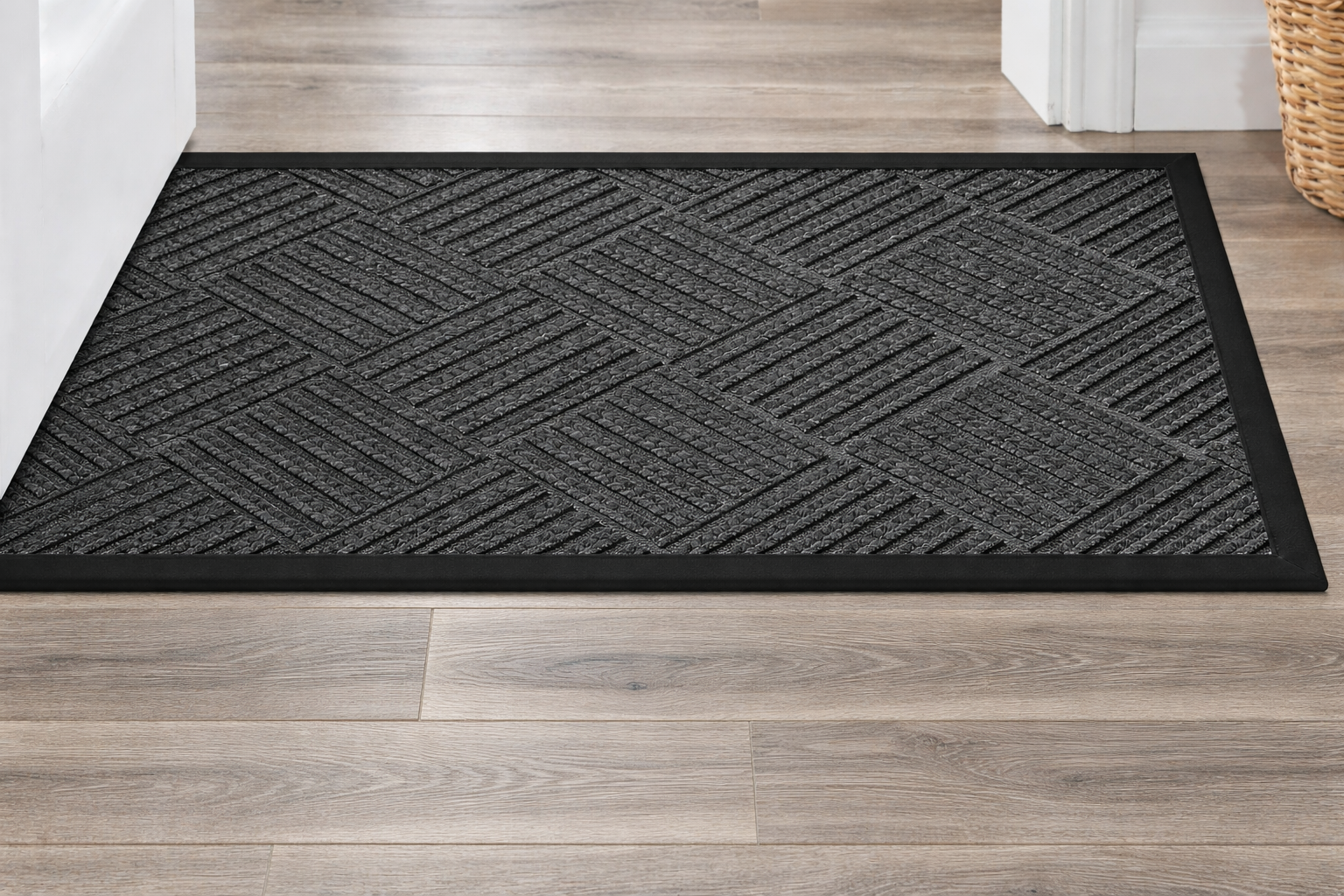
This is one of the most rugged options available. It uses a durable polypropylene surface with deep grooves and a raised border designed to trap dirt and grit. The natural rubber backing adds weight and prevents sliding, even in rain or snow. The low 0.3-inch profile ensures that most exterior doors can open over it easily.
The WeatherMax mat is fully weather-resistant, fade-resistant, and designed for tough environments. It is easy to clean with a hose or light scrubbing, making it ideal for outdoor use. Color choices often include gray-toned patterns and subtle geometric designs. Pricing typically falls in the low-to-mid range. For exposed entries or harsh weather conditions, this is one of the strongest performers available.
Gorilla Grip SoakStopper Indoor Door Mat
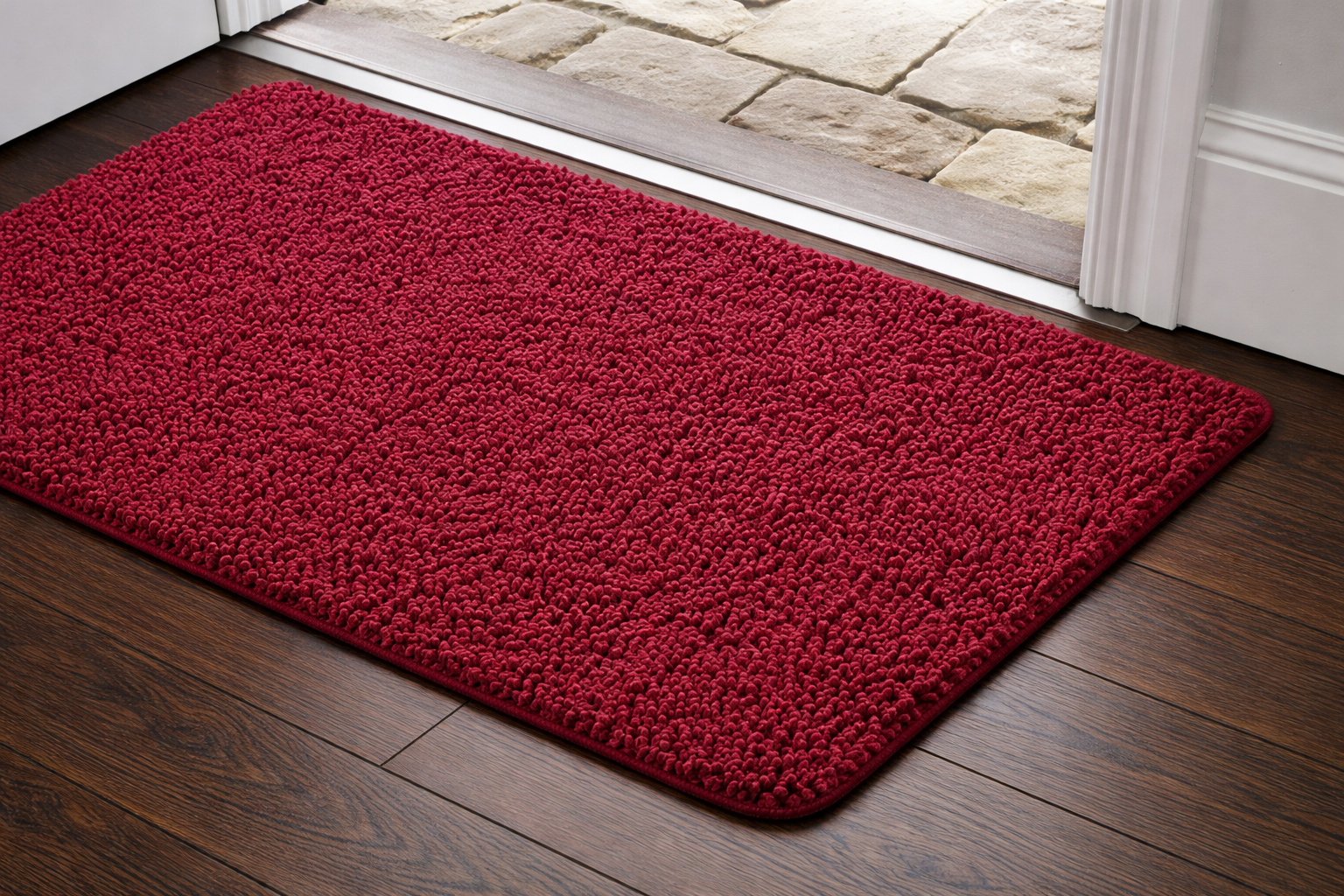
The SoakStopper blends plush comfort with serious moisture control. It features a dense chenille microfiber surface supported by a TPR rubber backing to prevent slipping. The pile is thick enough to absorb water quickly while remaining soft underfoot, making it a favorite for homes with pets.
This mat is fully machine washable, fade-resistant, and built for high-traffic indoor locations. Common sizes are suitable for standard entryways, and it can even double as a comfortable resting spot for pets. The SoakStopper also carries OEKO-TEX Standard 100 certification, verifying that it meets strict safety guidelines for textiles. Pricing typically ranges from mid- to upper-mid depending on size.
Side-by-Side Comparison: Which Mat Fits Your Home Best?
Absorbency-focused mats—such as the Muddy Mat, Smiry, PURRUGS, and Gorilla Grip SoakStopper—excel indoors where water and mud are common. Muddy Mat and Smiry offer the thickest chenille piles, making them ideal for homes with dogs or for back entrances where most messes occur. PURRUGS and SoakStopper provide strong absorbency with slightly thinner profiles, making them better for doors with minimal clearance.
For outdoor durability, the Gorilla Grip WeatherMax stands out thanks to its low profile, deep scraping grooves, and heavy rubber base. The OLANLY mat sits somewhere between absorbent indoor plushness and rugged capability, offering a thick chenille surface with a non-slip rubber backing suitable for covered entries.
Budget also plays a role. Smiry tends to be the most affordable option, while Muddy Mat and OLANLY sit in the mid-to-upper range. PURRUGS and SoakStopper offer strong performance for the price, especially when factoring in certifications and washability.
For sustainability, PURRUGS and the SoakStopper stand out with eco-linked certifications and responsible manufacturing considerations. Machine-washable construction across most models extends longevity and reduces waste compared to disposable mats.
How to Choose the Right Mat for Each Door
Matching the mat to the doorway is key. For a front door exposed to weather, pair a heavy-duty outdoor scraper with a softer absorbent mat inside the threshold. For back doors used by pets, thick chenille mats help soak up moisture fast. For garage or utility entries, rugged low-profile mats hold up best under heavy grit and repeated use. Homes with pets may benefit from placing a plush mat inside patio sliders to catch paw prints and provide a comfortable resting spot.
Final Thoughts
A high-quality door mat may be a small home investment, but it delivers huge daily benefits. Whether you’re battling muddy paws, rain-soaked boots, coastal sand, or everyday debris, choosing the right mat for each entry helps keep your floors cleaner and your home easier to maintain. From soft chenille designs to rugged weatherproof scrapers, there’s a well-performing option for every doorway—and every lifestyle.
Frequently Asked Questions About Choosing the Best Door Mat for Mud
What should I consider when choosing a door mat for my Wilmington home?
When choosing a door mat for your Wilmington home, consider how much debris and moisture you typically track inside. Coastal and yard-heavy living can bring in sand, mud, and water, so it’s important to pick a mat with strong scraping power, fast-drying material, and a non-slip backing. Also think about where the mat will go — inside or outside — since outdoor mats need to be more weather-resistant while indoor mats can prioritize comfort underfoot. The right mat can protect your floors and make clean-ups much easier.
How does the right door mat affect my home’s cleanliness and value in coastal North Carolina?
A quality door mat can help you protect entryway floors, rugs, and interior finishes — which in turn keeps your home looking well cared for. In coastal North Carolina where sand, salt, and frequent storms are common, a mat that traps debris and sheds moisture can reduce wear on hardwood, tile, and carpet. While a door mat doesn’t directly add monetary value, it does help maintain your home’s appearance and can make your space feel more inviting — especially when showing your home to buyers.
Are there unique flooring or weather considerations for mats in Wilmington?
Yes. Wilmington’s coastal weather brings humidity, occasional heavy rain, and sandy soil — all of which can accelerate wear on floors if debris and moisture are tracked inside. Mats made from quick-drying materials like coir, recycled rubber, or polypropylene help keep water off your floors. For homes with pets or boots that get especially muddy, consider double-layer or bristle-style mats that scrape and trap debris deep in the mat, so it doesn’t end up inside your home.
When should I replace my door mat?
You should replace your door mat when it shows signs of excessive wear, fraying, loss of texture, or if it no longer lies flat. Outdoor mats often last longer but take heavier abuse from weather and foot traffic. If you notice your mat isn’t trapping dirt or water like it used to, or the backing no longer stays in place, it’s time for an upgrade. Regular shaking, vacuuming, and occasional rinsing can extend a mat’s life, but replacement every 1–2 years is common for high-traffic entries.
Who should I talk to if I’m unsure which door mat is best for my home?
If you’re unsure which door mat works best for your lifestyle and entryway, start by thinking about where it will be used and how much debris or moisture you typically bring in. Home goods store staff can often guide you based on material and backing type, but your Realtor may also offer insight into what’s worked well in other coastal Wilmington homes, especially if you’re preparing to stage for photos or showings. Ultimately, choose a mat that balances function with welcoming style.
Check out this article next